


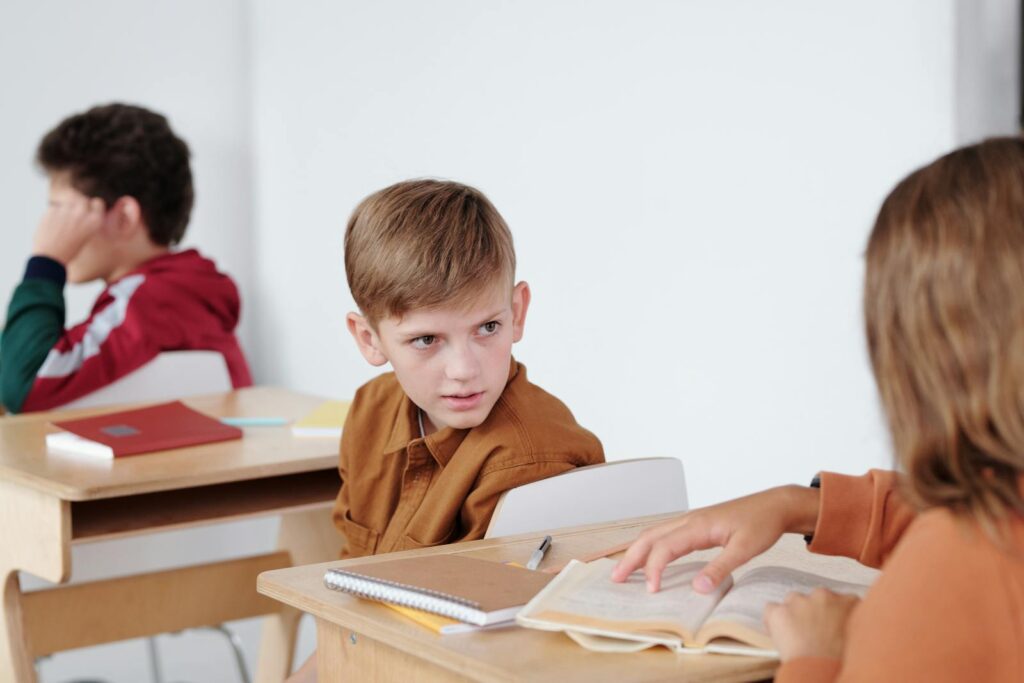
Getting a behavior report from school when your child seems mostly fine at home can feel disorienting fast.
You hear that your child is defiant, disruptive, aggressive, or constantly in trouble during the school day, and your first instinct is usually one of two things: panic or disbelief. Either you start wondering what you are missing, or you quietly think the school must be exaggerating.
For a lot of moms, the hardest part is the mismatch. If your child can follow directions at home, play normally with siblings, and seem generally manageable in your own space, why is school describing a completely different kid?
When a child is misbehaving at school not at home, it does not always mean the issue is simple disobedience. Sometimes it means the school environment is asking your child to manage pressures, emotions, or expectations that are not showing up the same way at home.
That does not make the behavior okay. But it does mean the next step should be understanding it more clearly, not rushing straight to blame.

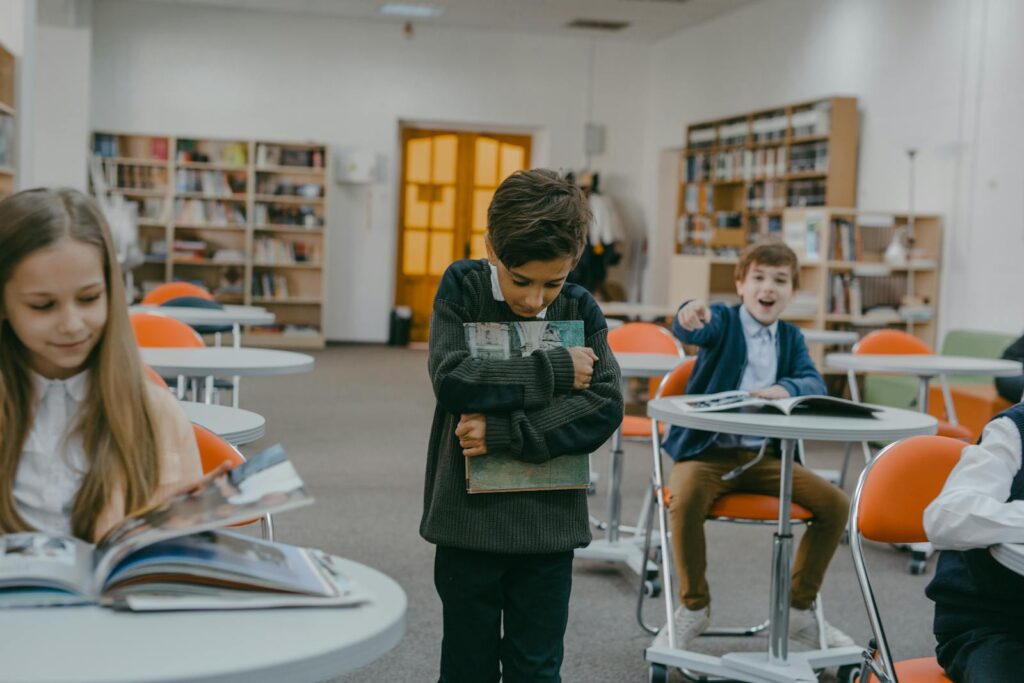
School can pull out struggles home never touches
Home and school ask very different things from children.
At home, your child may have more flexibility, more help, more downtime, and fewer social pressures. Even a busy household can still feel more predictable than a classroom full of noise, transitions, rules, peers, and constant correction.
School is often where kids have to sit still longer, follow group instructions, manage frustration publicly, switch tasks quickly, and keep up socially and academically at the same time. For some children, that environment is energizing. For others, it is exactly where stress starts leaking out.
That is why behavior problems at school can sometimes have less to do with “bad behavior” and more to do with fit. A child who is bored may act out to create stimulation. A child who feels behind may clown around, shut down, or challenge authority before anyone notices they are struggling. A child who is overwhelmed by noise, transitions, or group expectations may look oppositional when they are really overloaded.
From the outside, all of that can get flattened into one label: misbehavior.
But moms usually need more than a label. They need to know what the behavior might actually be pointing to.
Some kids save their hardest feelings for the place that feels least safe
One of the most confusing parts of this kind of situation is that many parents assume real stress would show up everywhere.
But kids do not always fall apart in every setting.
Sometimes they work overtime to hold it together at home, especially if home feels emotionally loaded already. Sometimes they stay compliant with family and release everything at school because school is harder, louder, more demanding, or simply less emotionally personal to them. And sometimes family changes are affecting them more than adults realize, even if they are not openly talking about it.
A new sibling, co-parenting transitions, changes in routine, sleep disruption, friendship issues, or tension between homes can all show up in behavior. Young children especially often do not have the language to say, “I feel insecure,” “I feel overlooked,” or “I do not know where I fit right now.” Instead, those feelings come out through impulse, defiance, aggression, silliness, or acting tough.
That is part of what makes school-only behavior so easy to misread. Adults tend to focus on what the child did, while the child is often communicating something they cannot explain any other way.
Before you panic, get more specific
When the calls or notes from school start piling up, it is tempting to go straight into punishment mode at home.
But the better first move is usually to gather details.
Is this happening during one part of the day or all day long? Does it flare up during transitions, group work, unstructured time, or academic tasks? Is your child having trouble with one teacher, one subject, or one peer group? Do the incidents happen more when they are tired, embarrassed, overstimulated, or trying to impress other kids?
Those questions matter because patterns matter.
A child who only struggles during math may not have a broad behavior issue. A child who acts out during recess drama may be having peer problems, not authority problems. A child who is constantly in trouble after a recent family change may be carrying emotions they do not know how to name.
The goal is not to excuse the behavior. It is to stop treating every behavior problem like proof of a character flaw.
What moms should do next
The most useful response is usually calm, curious, and collaborative.
Talk with the teacher and ask for specifics, not just general descriptions. Find out what happens right before the behavior, how adults are responding, and whether the discipline approach is helping or just escalating the cycle. If the current system is mostly punishment, it may be worth asking whether your child needs more support, more structure, more challenge, or a different strategy altogether.
At home, keep your own response steady. Your child still needs accountability, but they also need to feel that you are trying to understand the problem, not just react to it. A child who already feels misunderstood at school usually does not do better when home becomes one more place where they feel like the “bad kid.”
And if the pattern keeps going, it may be time to look deeper. Persistent school behavior can sometimes be tied to attention differences, learning struggles, sensory issues, anxiety, or other developmental needs that are easier to miss when home happens to be a more comfortable environment.
For moms, that can be the hardest mindset shift of all: realizing that a child acting out at school not at home is not always a sign that nothing is wrong. Sometimes it is the first clue that something is.
The good news is that once you stop asking, “Why is my child doing this?” and start asking, “What is this behavior telling us?” the path forward usually gets a lot clearer.
More from Decluttering Mom: