


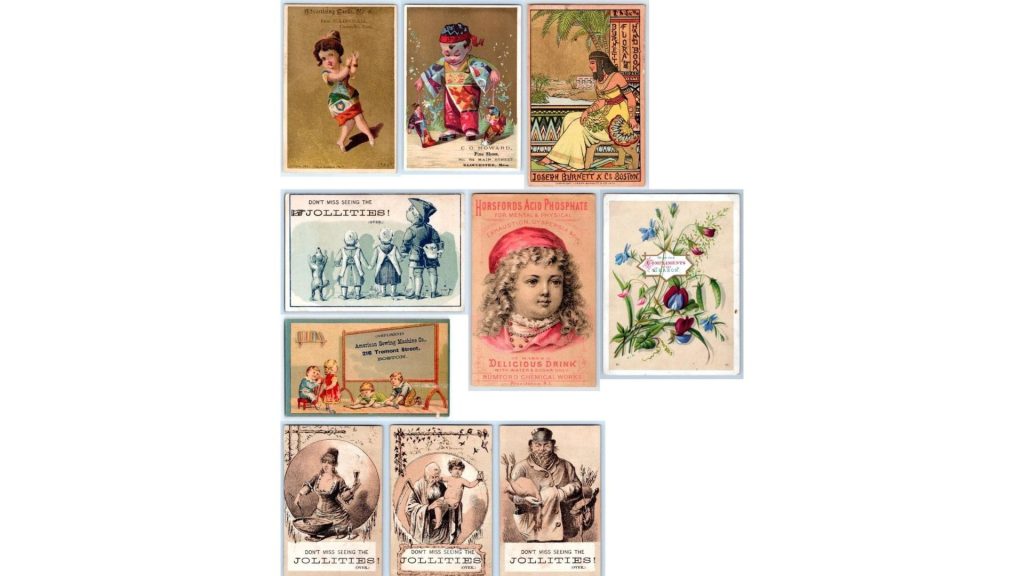
Victorian trade cards, dating from 1870 to 1890, offer a glimpse into the era’s artistry and commercialism. These small, colorful illustrations were the precursors to modern business cards, used by businesses to promote their products or services. Today, collectors value these cards for their unique designs, historical significance, and the stories they tell about the Victorian era’s businesses and lifestyles.
Interest in Victorian trade cards has grown in recent years as collectors and history enthusiasts are increasingly attracted to these tangible pieces of the past. Not only do they offer historical insights, but they also hold considerable value, with rare cards fetching high prices at auctions. Experts believe this trend will continue, making now an ideal time to start or expand a collection.

Arm & Hammer: Baking Soda Promotions
Arm & Hammer, a well-known brand of baking soda, used Victorian trade cards to promote their product during the Victorian era. These cards, featuring the company’s iconic logo, are highly sought after by collectors due to their brand recognition and the company’s enduring popularity. The cards often depicted household uses for baking soda, reflecting the era’s domestic norms.
Today, Arm & Hammer’s Victorian trade cards are not just collectibles but also artifacts of branding history. They highlight the company’s long-standing marketing strategies, providing valuable insights for marketers and brand enthusiasts.
Clark’s O.N.T: Spool Cotton Pioneers
Clark’s O.N.T., a pioneer in the spool cotton industry, utilized Victorian trade cards to advertise their products. The cards often featured beautiful illustrations of women or children, reflecting the company’s target market. These cards are now prized by collectors for their artistic merit and the insights they provide into the era’s textile industry.
The relevance of Clark’s O.N.T. Victorian trade cards extends beyond their aesthetic appeal. Their depictions of women and children illuminate societal norms and gender roles of the Victorian age, providing valuable material for sociocultural studies.
Walter Baker & Co.: Chocolate Delights
Walter Baker & Co., one of the oldest producers of chocolate in the United States, used Victorian trade cards to advertise their cocoa and chocolate products. The cards, often depicting scenes of cocoa processing or consumption, are a favorite among collectors for their vibrant colors and charming illustrations.
Today, these cards are treasured not just for their artistic appeal but also for their historical value. They offer a unique perspective on the history of chocolate production and consumption, making them particularly interesting for food historians and chocolate enthusiasts.
Pears’ Soap: Cleanliness is Next to Godliness
Pears’ Soap, a British brand, used Victorian trade cards to market their transparent soap. The cards often featured religious or moral themes, aligning with the company’s slogan, “Cleanliness is next to godliness.” These cards are popular among collectors due to their moralistic messages and the brand’s historical significance.
Today, Pears’ Soap’s Victorian trade cards hold value for their portrayal of Victorian-era moral and religious values, providing a unique lens into the period’s societal norms. They also shed light on the history of soap advertising.
Dr. Jayne’s Family Medicines: A Cure for All
Dr. Jayne’s Family Medicines, a line of patent medicines, utilized Victorian trade cards to advertise their range of remedies. The cards often featured dramatic scenes of illness and recovery, reflecting the era’s fascination with health and wellness. These cards are now valued by collectors for their dramatic imagery and the insights they offer into the Victorian era’s health beliefs.
Today, Dr. Jayne’s Family Medicines’ Victorian trade cards are not just collectibles but also historical artifacts. They provide insights into the history of medicine and health advertising, making them valuable resources for historians and health professionals.
Lion Coffee: A Taste of Luxury
Lion Coffee, an American coffee brand, used Victorian trade cards to promote their product. The cards, often featuring exotic or luxurious scenes, are sought after by collectors for their vivid illustrations and the brand’s historical significance.
Today, Lion Coffee’s Victorian trade cards hold value not just for their artistic appeal but also for their historical insights. They offer a unique perspective on the history of coffee consumption and marketing, making them interesting for coffee lovers and marketing professionals.
McLaughlin’s Coffee: Morning Rituals
McLaughlin’s Coffee, another popular coffee brand during the Victorian era, advertised their products using Victorian trade cards. These cards often depicted scenes of domestic bliss centered around coffee, reflecting the era’s coffee culture. Today, they are prized by collectors for their nostalgic imagery and the insights they provide into the era’s daily life.
Today, McLaughlin’s Coffee’s Victorian trade cards are not just collectibles but also artifacts of social history. They document the role of coffee in Victorian daily routines and social rituals, providing valuable insights for sociologists and coffee enthusiasts.
Ayer’s Sarsaparilla: Victorian Health Tonic
Ayer’s Sarsaparilla, a popular health tonic during the Victorian era, used vibrant trade cards to advertise their product. These cards often depicted scenes of rejuvenation and vitality, reflecting the era’s interest in health and wellness. Today, they are valued by collectors for their historical significance and the insights they offer into the Victorian era’s health beliefs.
Today, Ayer’s Sarsaparilla’s Victorian trade cards hold value not just for their historical significance, but also for their insights into the history of health and wellness advertising. They provide a unique perspective on the Victorian era’s health trends and beliefs, making them valuable resources for historians and health professionals.