


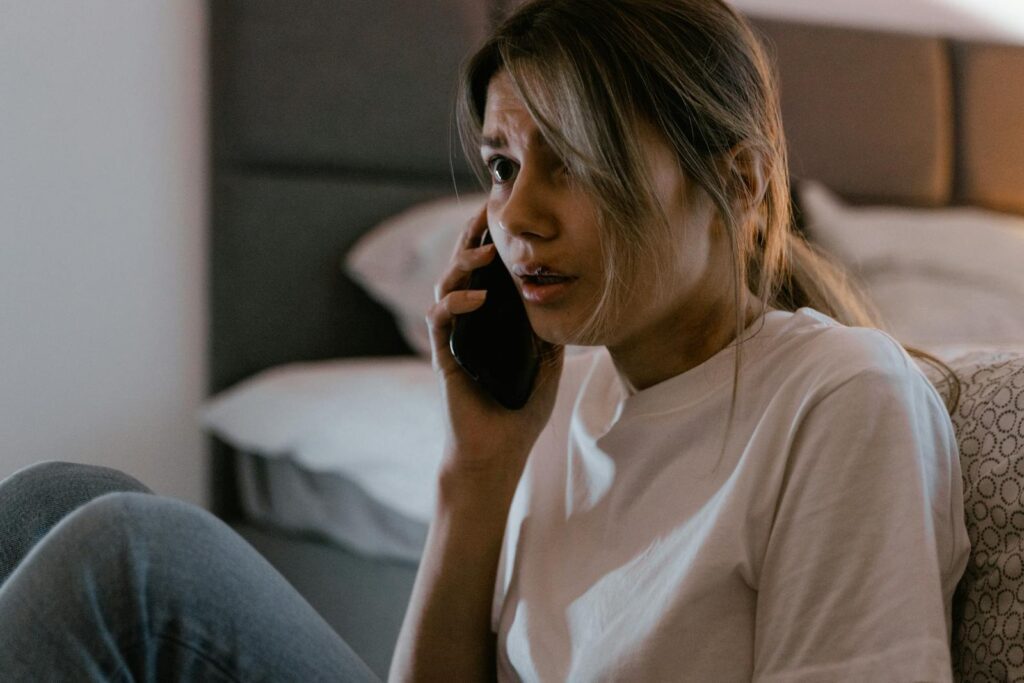
A family trip to Disney is supposed to be the kind of memory you replay on loop for all the right reasons. For one woman, it turned into a moment of icy panic when a stranger called her from her husband’s phone, said his name, and then went quiet. With her kids beside her and fireworks on the schedule, she did what a lot of people would do in that split second of dread: she opened her phone and checked his location.
That instinctive move, to verify a loved one’s safety with a few taps, sits at the crossroads of modern tech, theme-park fantasy, and some very real stories of tragedy on and around Disney property. It is not just about one unnerving call, it is about how families are quietly recalibrating what “safe” means in a place that sells itself as the happiest on earth.

The disturbing call that changed the vibe
The woman’s day had been textbook Disney: rides, snacks, and the kind of tired kids who still insist they are not tired. Then her phone rang. On the screen, it showed her husband’s name, but the voice on the other end was not his. A woman introduced herself, said, “This is Catherine Dillon. This is your husband’s phone, right?” and asked, “Can I talk to your mom?” and “Please let me talk to your mom,” phrases that would later echo in her head like a siren. Those exact words, captured in a viral clip featuring Can, Who, and Please, were not part of any script she had prepared for.
In that moment, the woman did not know if she was dealing with a wrong number, a scam, or the start of the worst day of her life. What she did know was that her husband was somewhere on Disney property, and she had a location-sharing app that could tell her exactly where. While the caller, identified as Catherine Dillon, tried to explain that a crash had “killed a man named Robert,” the wife’s thumb was already moving, pulling up his dot on the map and silently begging it to stay still inside the park boundaries.
Why a theme park no longer feels like a bubble
Part of what made that call so chilling is the way it punctured the illusion that Disney is a sealed-off bubble where nothing truly bad happens. The company has spent decades building a reputation for control, from the spotless sidewalks to the carefully managed storylines. Yet recent incidents have reminded guests that real life does not stop at the turnstiles. A person found dead at Walt Disney World’s Contemporary Resort near Magic Kingdom Park died by suicide, according to officials, a stark reminder that even the most curated spaces cannot wall off personal crises.
Elsewhere on property, a man on a camping vacation at Disney’s Fort Wilderness was taken to a hospital and, as a sheriff later confirmed, Walt Disney World after he was pronounced dead at 8:26 a.m. Another report described an incident in an area known as Cottontail Curl and noted that, according to Walt Di, the guest suffered “multiple blunt impact injuries.” These are not the stories that make it into vacation planning groups, but they sit in the background of every parent’s quiet calculation about risk.
From viral reel to real-world anxiety
The call that set off the wife’s panic did not stay a private moment. It surfaced in a viral reel that stitched together the audio of the stranger’s voice with the woman’s own narration of what it felt like to hear someone else holding her husband’s phone. The clip, which repeats the questions “Can I talk to your mom?” and “Who’s that?” and “Please let me talk to your mom,” has been shared widely, with viewers zeroing in on the way Catherine Dillon calmly explains that a crash had killed a man named Robert. For people who have ever waited for a loved one to text “Made it,” the audio hits like a punch.
Online, the reaction has been a mix of empathy and armchair analysis. Some commenters, including one user in a One discussion about a separate death at a park hotel, have been quick to accuse others of overreacting or speculating, arguing that “those who can’t make it in life, report on Disney.” Others see the reel as a kind of public service announcement about why location sharing and quick access to emergency numbers matter, especially in sprawling places like Walt Disney World, where it can take time for help to arrive.
When a dinner reservation turns into a wrongful death case
The unease that shadows that phone call is amplified by a separate, very real tragedy tied to Disney property. Tangsuan, a doctor with severe food allergies, traveled to Florida for a conference and spent time at Disney Springs with her husband, Jeffrey Piccolo, and her mother. According to a complaint, the family ordered their meals at a Disney World restaurant and asked staff multiple times about allergens. When the dishes arrived without the usual “allergen free flags,” they asked again, a detail later highlighted in a filing that noted the family ordered carefully and still ended up in crisis.
After eating, Tangsuan began to suffer a severe allergic reaction. She used her EpiPen in an effort to stop it while a bystander called 911, but she later died. Her husband, who had agreed to Disney’s terms of service through a streaming subscription, suddenly found that the company was arguing he could not bring a wrongful death lawsuit in court because of an arbitration clause tied to that account, according to Tangsuan’s complaint. For families already juggling food allergies on vacation, the idea that a dinner reservation could intersect with fine print from a streaming app is the kind of plot twist nobody wants.
Disney’s legal pivot and what it signals to guests
The backlash to that arbitration strategy was swift enough that Disney changed course. After public scrutiny, the company said that, after reviewing the matter, it would not rely on Disney+ terms to keep the case out of court. In a statement, representatives acknowledged that, After a doctor suffered a fatal allergic reaction at a Disney World restaurant, they had initially tried to steer her widower’s wrongful death claim into private arbitration, but later told the court they would let it proceed. The shift was framed as a discretionary move, not an admission of fault, but it still marked a rare public retreat from a hardline legal position.
Piccolo’s lawyers later said that the company had decided, “As such, we’ve decided to waive our right to arbitration and have the matter proceed in court,” a line that appeared in filings and was noted in coverage of the case. That decision, tied directly to Piccolo and his claim for damages including medical and funeral expenses, signaled that Disney understood the optics of forcing a grieving husband into a closed-door process. It also underscored how far the company is willing to go to manage risk, a reality that sits uneasily beside the marketing of Disney World as a place where families can let their guard down.
More from Decluttering Mom: