


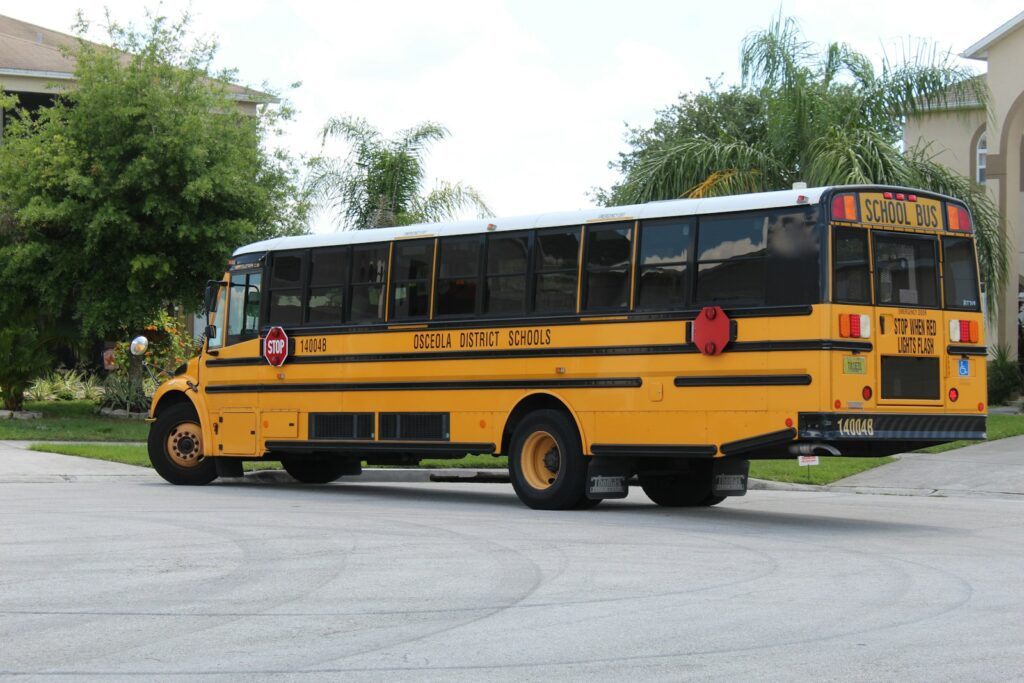
Kandie Sherman thought she was doing the right thing when she let her daughter’s friends and their family park a converted school bus beside her home in Vassar, Michigan. What began as a short-term favor so the kids would have a safe place to stay has turned into a legal and emotional mess that now has Sherman sleeping in her car. Her story shows how quickly a kind gesture can spiral once friendship, housing insecurity, and the court system collide.
Rather than a driveway arrangement that quietly wrapped up, Sherman says she is locked out of her own house while the family in the bus stays put. A personal protection order, or PPO, now keeps her away from her property, and the woman who opened her yard to help is the one looking for a place to shower and plug in her phone.


From open door to drawn-out standoff
According to Sherman, the family living in the bus were friends of her child who needed somewhere to go, so she agreed to let them park and live on her land in Vassar, Michigan, near her home. She described the bus as a full-time residence for the family, not just a vehicle tucked by the curb, and said the agreement was meant to be temporary while they figured out something more stable. That decision, framed as a neighborly favor, is now at the center of a dispute that has left her outside her own front door, a twist she did not imagine when she first allowed the school bus on.
As time went on, Sherman has said, she asked the family to move the bus and leave, only to find that they refused to go. Her account describes an arrangement that started informally, without the kind of written agreement that might have spelled out how long the bus could stay or what would happen if things went south. Instead, the relationship deteriorated, and what began as a favor to her daughter’s friends hardened into what she calls an eviction nightmare, with the bus still parked by her home and the people inside insisting they have a right to remain.
The PPO that flipped who stays and who goes
The conflict took a sharp turn once the family in the bus went to court and secured a personal protection order against Sherman. She has said that the PPO not only bars her from going near the bus, it also effectively keeps her away from her own house, since the vehicle sits so close to the home that she would violate the order by returning. In her telling, the legal document that was supposed to shield the petitioners from alleged harassment instead left the homeowner sleeping in her car while the guests stayed put on her land, a dynamic echoed in local coverage that described how the personal protection order from both bus and residence.
Reporting on the dispute notes that Sherman is now navigating the courts from the outside looking in, trying to figure out how to challenge the PPO and regain access to her own address. She has spoken publicly about the strain of living out of her vehicle while the family she once tried to help continues to occupy the space by her home, telling one outlet that the order has flipped the script so completely that she is the one effectively displaced. The petitioners, by contrast, have argued in filings that they needed the protective order because of Sherman’s alleged behavior, a claim she disputes but must now fight through legal channels that move far slower than a tow truck.
Police, property rights, and a system built for slow fixes
Local authorities have been blunt that this is not a quick police matter but a civil dispute that has to run through the courts. Sherman has said that when she called for help, officers told her that as long as the family had been staying there and claimed the bus as a residence, it was essentially an eviction problem, not a trespassing case. In one account, the city’s police chief and interim city manager explained that once people have been allowed to live on a property, even in a vehicle, removing them usually requires an eviction process through rather than a quick call to law enforcement.
The drawn-out nature of that process is exactly what has left Sherman in limbo. While she waits on hearings and paperwork, the family in the bus continues to stay on her property, and the PPO keeps her from simply walking back into her own house. Coverage of the case has described how she is now sleeping in her car and leaning on friends for basics like showers, a stark contrast to the early days when she thought she was the one providing shelter. One report on the situation in Vassar, Michigan, recounted how the PPO has left while the bus residents remain beside her home, underscoring how property rights can get tangled once informal arrangements collide with formal legal protections.
More from Decluttering Mom: