


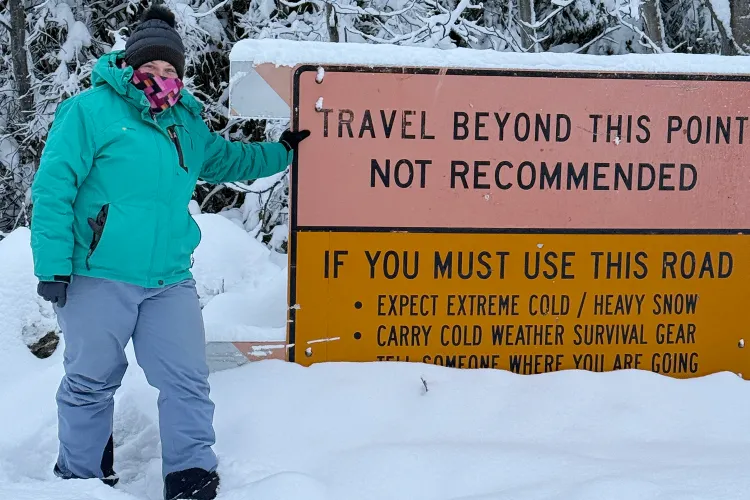
Life in rural Alaska looks like a postcard until you zoom in on the details that do not make it into the travel brochures. For Olivia Jones, who lives semi off-grid with her family and their sled dogs near the tiny community of Eagle, the beauty comes bundled with a daily risk calculation. She has learned that three parts of her routine, from the river at her doorstep to the nearest doctor, carry the kind of stakes most people only see in disaster movies.
Her days are shaped by weather, wildlife and distance in ways that feel almost old-fashioned, yet the dangers are very current. The same isolation that lets her raise dogs and kids under the northern lights also means that when something goes wrong, help is not just around the corner. Instead, Olivia and her husband Jan have had to build their own safety net, one careful choice at a time.
The river that can erase a town

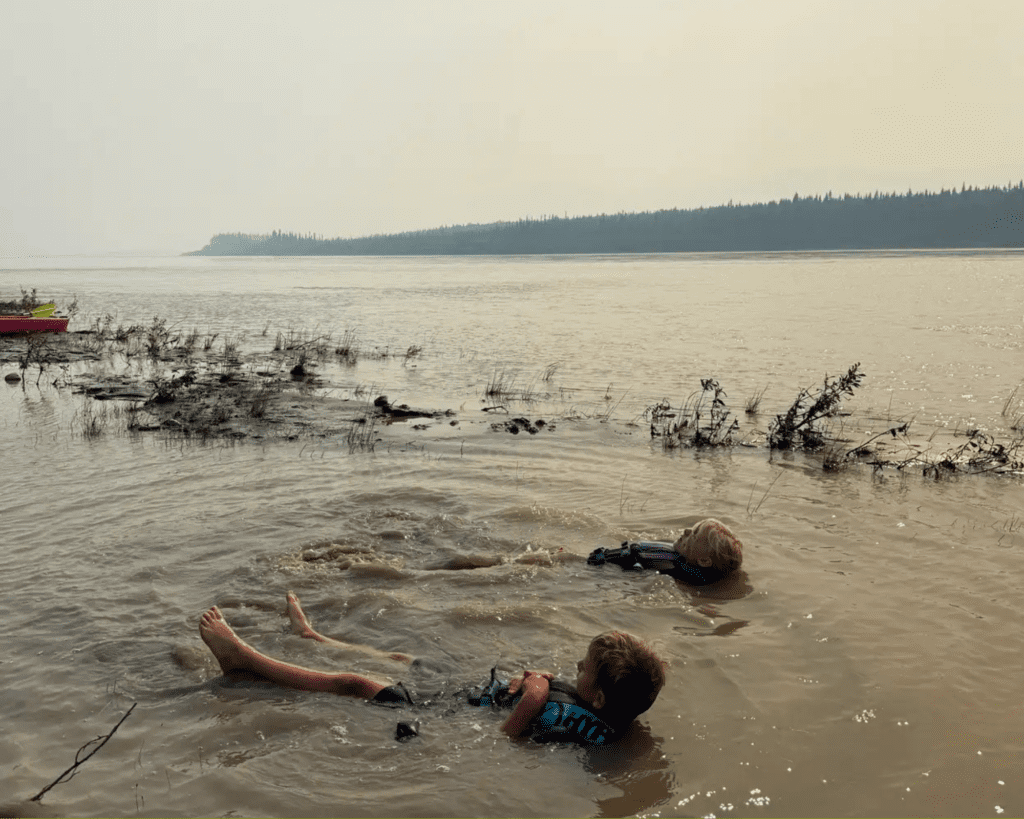
From the outside, living along an Alaskan river sounds idyllic, but for Olivia Jones it is the first and most unpredictable threat. She and Jan settled near Eagle with their sled dogs, drawn by the quiet and the space, only to learn that the water they rely on can turn violent without much warning. Neighbors told her about a flood in 2009 that, in their words, “took out the whole town,” a story that hangs over every spring thaw and every stretch of unseasonably warm weather. That memory has turned the river from a backdrop into a constant variable in how they plan their days and where they are willing to build or store anything they cannot afford to lose.
Olivia describes how she and Jan have been warned that if the water starts to rise in a certain way, they should not hesitate, they should simply go. The couple has been in Eagle long enough to know that in a place this remote, there is no levee system or quick-response crew standing by, only neighbors watching the same ice and listening for the same cracks. Her account of the 2009 disaster, passed down by people who watched the current rip through homes, underlines why they treat the river with a mix of respect and suspicion, a mindset that matches broader concerns about living semi off-grid in a landscape where water can redraw the map overnight.
When the road out is a plane or a snowmachine
The second big risk in Olivia’s life is not a single dramatic event, but the basic fact that getting anywhere is hard. Eagle is the kind of place where “running to the store” can mean planning around weather windows and fuel, and where a broken truck is more than an inconvenience. Much of Alaska is defined by this kind of remote isolation, and Olivia’s family feels that every time they need supplies, parts for their sleds or a simple appointment that would be routine in a city.
In winter, the options narrow even more. A snowmachine might be the only way to reach another settlement, and that assumes the trail is passable and the temperature is not so low that a breakdown becomes life threatening. Earlier accounts from people who have lived off-grid in Alaska describe how even basics like indoor plumbing and hauling water turn into logistical puzzles when the nearest hardware store is a flight away, a reality echoed in one long-time resident’s blunt reminder that “it is not easy at all” to keep a household running under those conditions, especially when off-grid chores collide with bad weather.
Health care that is there, but not really
Olivia is clear that the third major danger in her daily life is medical, and it is not about exotic wilderness injuries. She points out that there is a health clinic in Eagle, but it is only staffed part time, which means that a serious emergency has to line up with the right day and the right hour. If it does not, the family is on its own to stabilize the situation and then figure out how to get out, whether that is by small plane, boat or a long overland trip. She has described how, in practice, that means accepting that if someone in the family has a major accident or sudden illness, they may have to “figure it out yourself” until they can physically move the patient to a larger town with a hospital.
That gap between nominal access and real access is a familiar theme in rural Alaska, where many communities technically have clinics but rely on distant hubs for anything beyond basic care. Olivia’s experience lines up with broader warnings that in much of Alaska, distance and weather can turn a treatable problem into a crisis, especially when the nearest full-service facility is a flight away and storms can ground planes for days. Her comments about the part-time clinic and the need to “get yourself out” mirror what others have said about the health risks of remote clinics that cannot cover every scenario.
Living with bears, moose and everything in between
On top of water and distance, Olivia has to factor in the wildlife that shares her backyard. She and Jan live with their sled dogs in a part of Alaska where grizzly bears, black bears and moose are not rare sightings, they are neighbors. One account of her life notes that she and her family have learned not to “mess with” the bears, a simple phrase that carries a lot of weight when you are talking about animals that can weigh several hundred pounds and move faster than a snowmachine over short distances. For a family raising children and dogs, that means constant vigilance around food storage, trash and even where the kids are allowed to play.
The risk is not theoretical. Another report about a photographer who found himself inches from a 700 pound grizzly highlights how quickly a calm moment can flip into a survival test, and how a split second decision can make the difference between walking away and becoming a statistic. Olivia’s choice to keep her distance and build routines that minimize surprise encounters fits with that reality, and with the broader understanding that in rural Alaska, people are the visitors and the animals set the rules. Her approach to bears and other wildlife, summed up in that line about not messing with them, reflects a hard earned respect that anyone considering living near grizzlies would be wise to adopt.
The mental math of choosing this life
For all the hazards, Olivia and Jan are not trapped in Eagle, they are choosing it, which might be the most revealing part of her story. They have been in the area long enough to understand the stakes, yet they stay, raising their children and caring for their sled dogs in a place that demands constant preparation. She has talked about how, before moving north, she relied on a phone as her lifeline, a way to call for help or simply stay connected, and how that assumption had to be rebuilt from the ground up once they settled into a semi off-grid routine. In Eagle, the lifeline is more likely to be a well maintained snowmachine, a stocked pantry and a neighbor who knows how to run a chainsaw.
That tradeoff, between risk and reward, is familiar to anyone who has weighed a move to Alaska. Guides to life in the state point out that along with the lack of a state income tax and the wide open spaces, there are serious downsides, including the fact that much of Alaska is so remote that basic services are thin and some areas have higher crime rates than outsiders expect. Olivia’s experience, from the part-time clinic to the river that once wiped out a town, fits neatly into those warnings about life in Alaska, and yet she still frames her home as worth the trouble.
More from Decluttering Mom: