


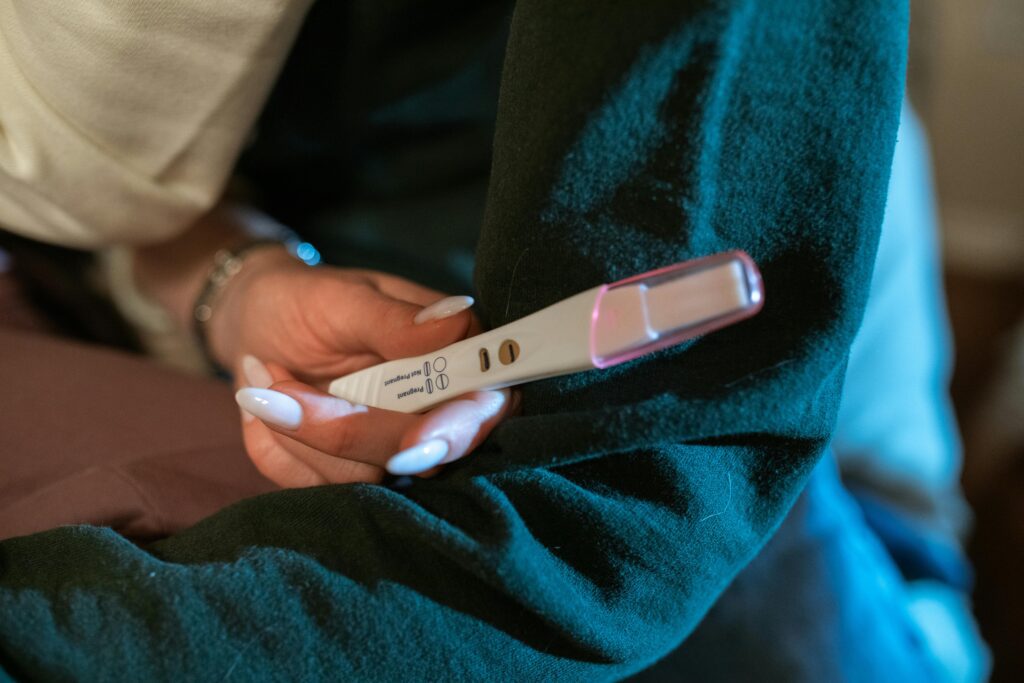
A 27-year-old woman is facing an unexpected crisis after discovering she’s pregnant with her second child, despite years of infertility struggles with her first. Her husband has made it clear he may never want more children, leaving her torn between keeping the baby and preserving her marriage.
When the pregnancy test came back positive, she didn’t feel joy—instead, she experienced overwhelming sadness, guilt, and fear about what this meant for her relationship. Her situation reflects a reality many don’t discuss: surprise pregnancies after infertility can trigger complex emotions rather than pure celebration.
The emotional whiplash of transitioning from infertility to an unplanned pregnancy creates a unique psychological struggle. For those who’ve already grieved the loss of future children and built new identities around that reality, an unexpected positive test can feel more like a threat than a miracle—especially when it threatens the stability of a marriage already strained by fertility challenges.
Sudden Second Pregnancy After Infertility: Emotional Reactions


A positive pregnancy test after infertility rarely brings uncomplicated joy, especially when it arrives unexpectedly. The emotional landscape shifts dramatically when someone who fought through their fertility journey discovers they’re pregnant again without treatment or planning.
Shock and Disbelief: Processing the Positive Test
The woman stared at the positive test with a mixture of confusion and panic rather than celebration. After years of treatments, appointments, and careful planning during her infertility journey, this pregnancy happened on its own timeline. She couldn’t reconcile how her body had failed her for so long, only to suddenly succeed when she wasn’t trying.
Many women experiencing pregnancy after infertility struggle with disbelief rooted in past losses and disappointments. The nervous system stays on alert, expecting bad news rather than good. This woman questioned whether the test was accurate, whether it would last, and whether she could trust what she was seeing.
The shock intensified because she and her partner hadn’t discussed expanding their family yet. Their first child had come after extensive fertility treatments, and they assumed any future pregnancy would require the same level of medical intervention and emotional preparation.
Sadness and Guilt: Navigating Mixed Emotions
Instead of excitement, she felt an overwhelming sadness about the timing and circumstances. She wasn’t emotionally ready to return to the vulnerability of pregnancy. The guilt hit harder when she thought about others still struggling with secondary infertility who desperately wanted what she had just stumbled into.
She thought about the women in her online support groups on Facebook who were still fighting for their second child. How could she share this news with people who understood her past pain but were still living in it? The celebration felt impossible when she carried so much empathy for those left behind in the trenches.
Her own infertility identity hadn’t disappeared just because she had one successful pregnancy. This surprise pregnancy after infertility felt like it invalidated her entire fertility journey, as if the years of treatments and heartbreak suddenly didn’t matter.
Fear for Marriage and Relationship Dynamics
The positive test brought immediate worry about how this would affect her marriage. She and her partner had finally found stability after the emotional toll of their IVF journey and the demands of parenting their first child. Adding another baby felt like it would disrupt the fragile balance they’d worked so hard to achieve.
She feared her partner’s reaction. They hadn’t agreed to try for another child, and this pregnancy removed his agency in that decision. The woman worried he would feel trapped or resentful, that this unplanned development would create distance between them rather than bring them closer.
Financial concerns compounded her anxiety. Their first child’s arrival through fertility treatments had already strained their budget. Another baby meant more expenses they hadn’t prepared for, more sleepless nights, and less time for their relationship to recover from the intensity of early parenthood.
Life After Unexpected Pregnancy: Identity, Coping, and Connection
An unexpected pregnancy after infertility creates a complex emotional landscape where joy collides with guilt, and personal identity undergoes dramatic shifts while navigating relationships within the fertility community.
Identity Shift After Years of Trying
Women who spent years working with a reproductive endocrinologist suddenly found themselves in unfamiliar territory when surprise pregnancies arrived. The identity built around infertility treatments—tracking cycles, enduring egg retrieval procedures, managing PCOS symptoms—became obsolete overnight. One woman who underwent multiple IUI rounds described feeling unmoored when her pregnancy arrived naturally, as if the struggle that defined her had vanished without resolution.
The transition proved particularly jarring for those who had already explored alternatives like surrogacy or adoption. Their entire sense of self had reorganized around being someone for whom natural conception seemed impossible. When genetic testing confirmed viable pregnancies, many struggled to reconcile their new reality with the person they’d become through years of fertility challenges. Some women reported feeling like imposters in pregnancy groups, neither fully belonging with those who conceived easily nor with their infertility support networks.
Coping With Guilt Toward the Infertility Community
The guilt hit hardest when women didn’t permit themselves to feel excited about their unexpected pregnancies. Many felt they hadn’t “earned” their success through IVF or extensive medical intervention. One mother recalled spending her first month alone, refusing to complain about morning sickness because she felt undeserving of community support after conceiving without active treatment.
Friends still undergoing fertility treatments added another layer of complexity. Women found themselves hiding their pregnancies or downplaying their happiness around those still scheduling egg retrievals or waiting for genetic testing results. The survivor’s guilt became overwhelming for some who had bonded deeply with others facing PCOS, failed IUI cycles, or considering surrogacy and adoption as their only remaining options.
Support Systems and Building Community
Despite initial hesitation, many women eventually found that community remained essential regardless of how conception occurred. Some created new support networks specifically for surprise pregnancies after infertility, recognizing their experience differed from both typical pregnancies and planned fertility successes. These groups acknowledged the complicated emotions without judgment.
Partners played varying roles in processing the news. Some husbands celebrated immediately while their wives struggled with mixed feelings about timing, especially when c-section recoveries from previous births were still recent. The disconnect in emotional responses created tension in marriages already strained by years of fertility treatments and the financial burden of procedures their insurance hadn’t covered.
More from Decluttering Mom: