

Ava Lys has spent years organizing homes, and a few months ago she boiled all of that experience down to a single idea she jokingly calls the universal theory of organization. She says it is one rule that makes any space easier to organize and, better yet, easier to keep that way. Then she set out to prove herself wrong, and so far she says the rule has not failed on drawers, shelves, cupboards or closets.

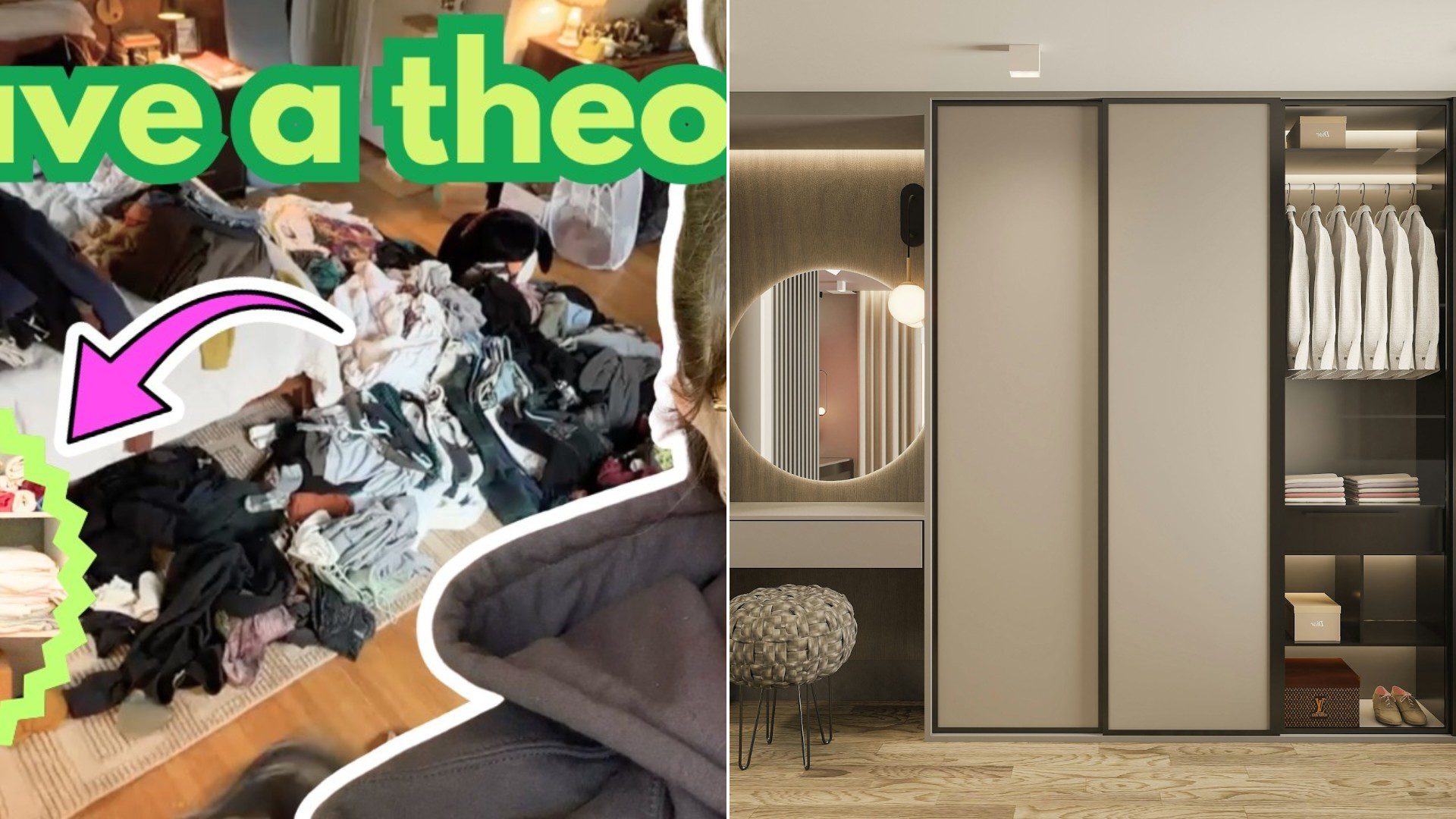
For her latest test on the Ava Lys YouTube channel, she picked the biggest challenge yet: her walk-in bedroom closet and her dresser. She also piled on a seasonal swap, packing away summer clothes and bringing out fall and winter ones. Her hope was to free up enough room so her boyfriend could finally have more than about 2% of the closet.

The One Rule Behind Everything
Her theory is simple to say out loud. How often you use something should match how easy it is to reach. High-use items belong in easy-access spots, and low-use items belong in harder-to-reach spots.
In her view, that idea is what all the bins, tips, hacks and storage gadgets are really trying to achieve. She admits that applying the idea to a real room is trickier than stating it, so she follows a process to keep from wandering down rabbit holes.
Step One and Step Two Before Touching Anything
The first step is to decide what the space is actually for. In her closet, the main job is getting dressed in the morning and putting everything away when she gets home, so she needs room for clothes and laundry. The closet also holds her workout gear, travel items and bedding, and she noticed it was holding a giant stuffed penguin that had no reason to be there.
The second step is to list what is not working. She pointed out a spot where clutter piles up, a cat tree her cat never uses, and weekend travel bags she grabs often but finds annoying to reach. Bulky purses sat in a prominent spot even though she carries the same one nearly every day, and a cubby of rarely worn t-shirts turned into a heap whenever she needed one from the bottom.
Emptying Everything and Sorting Into Piles
Then came what she calls the overwhelming part: taking everything out so it could be sorted. She admits she started to question her own method, so she stepped away for pasta, a walk outside and a cup of coffee, and says her attitude turned around quickly. Her advice is that a break is fine when a project starts to feel like too much.
Normally she splits everything into two piles, things she uses often and things she rarely or never uses. Because she was also doing a seasonal refresh, she kept summer and winter items apart, which gave her four piles spread across her bed. She says the trick is not to think too hard at this point, since nothing is leaving the house yet. She also admits a pair of cute shoes that never stay on her foot were hard to judge.
By the end of the first day she had been at it for a few hours, so she saved the junk drawer and her cameras for the next day. Day two brought the final sort, with items she does not use headed to a giveaway pile and everything else folded for the closet or dresser.
Putting It Back by How Often She Uses It
Before restocking, she followed her own rule on the biggest offender. A heavy safe that she opens only a couple of times a year was sitting in prime closet space, so she moved it to a corner of the basement. That one change opened up room right away.
Her most-used fall and winter clothes went into the easiest spots, at arm height. Jeans and her everyday hoodies went there, while less-worn sweatshirts moved up a shelf. Work clothes for painting and construction got their own place instead of blending in with the rest, and shoes she rarely wears, especially heels, moved to a lower shelf. Bags she uses less often were packed inside each other and placed on the top shelf, so the two she grabs constantly stay easy to reach.
She also made some changes she calls unconventional. Instead of keeping all of one category together, she split categories by use. Her t-shirts now live in three places: work shirts she wears less often up high, cute shirts for going out in a drawer, and sleep shirts she wears most on an open shelf. The sleep shirts are still piled up, but she says it works because she just grabs whatever is on top. Belts got the same treatment, with the ones she wears most hung on hooks and the rest stored away so nothing has to be pulled down to reach another.
Her cameras, a gift from her dad as he moves out of his studio, did not fit the closet at all, so they went to a spare drawer in her office and craft room. Summer clothes went into bins in the basement, with lower-use items packed separately from high-use ones so that swapping them back in spring should go faster. She also left her boyfriend’s section alone for now, saying people should be involved in organizing their own things so they know where everything is.
The Verdict on the Rule
Her verdict is that the rule held up even in a much bigger space. In total, she says she opened up literally half the space in her closet and dresser, and she can now hang clothes on hooks instead of piling them on the cat tree. The half of the dresser she cleared is meant for her boyfriend.
She also learned a few lessons. She caught herself overthinking whether a shelf at one height beats a shelf at another, and decided the rule works best as a general guideline rather than something applied perfectly to every item. She adds that it does not fit things you do not use, such as decor and art, or emergency gear like a fire extinguisher that you need within reach but rarely touch.
Try It in Your Own Home
If you want to borrow her approach, you can start with one drawer or one shelf instead of a whole closet. Decide what the space is for, note what annoys you, split your things into often and rarely, and then put the often pile where your hand lands first. Ava also says to hold off on buying any new storage until the end, because that is when you can see what is truly missing. In her closet, she was able to rethink and reuse what she already had.
She says she is basing all of this on her own experience and invites viewers to weigh in, whether the rule is helpful, makes sense or seems silly. She is calling it citizen science, and plans to keep testing it in other areas of her home.
More Stories You May Like
- Impulse Buy Kitchen Gadgets Sit Unused In Your Drawers, So Try The One Year Rule And Sell Or Donate Anything You Have Not Touched Since Last Year
- Grandparents Give $172 Billion A Year To Their Families And 90% Help Financially, Spending More Than A Typical Monthly Social Security Check
- Designer Says A $70 Pair Of Properly Altered Trousers Can Look More Elegant Than A $400 Pair And Names Nine Wardrobe Items Women Should Remove After 60