

A married couple walks into a bank expecting a routine errand, and instead the husband gets a smirking warning from three female tellers about his wife and their account, complete with a snide “Like it’s OUR money.” The moment is quick, but it lands hard, because it exposes how easily strangers feel entitled to judge a couple’s finances and paint the woman as the problem. It is the kind of offhand comment that sounds like a joke, yet quietly reinforces who is assumed to own what, and who is treated like a risk.
That tiny scene has been bouncing around online because it hits a nerve about money, marriage, and everyday sexism. It is not just about one Woman and her husband, it is about how institutions still talk to people as if the man is the default decision maker and the woman is a potential threat to “his” balance. When three tellers pile on with the same stereotype, it stops feeling like banter and starts looking like a script.
The bank visit that said the quiet part out loud

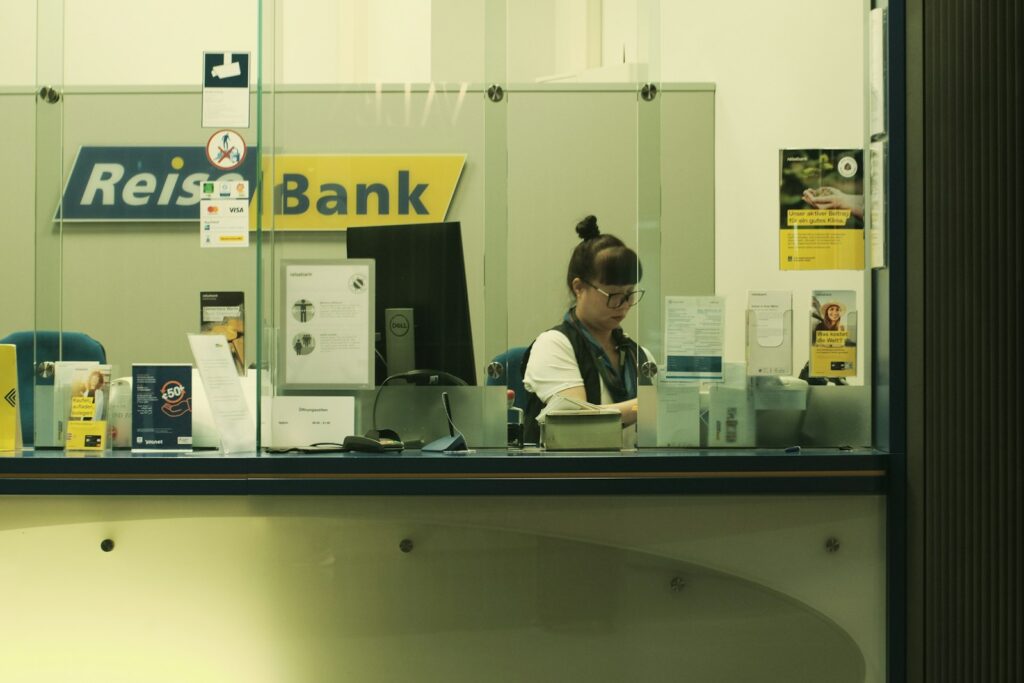
In the story that has been circulating, a married couple walks up to the counter together, ready to handle a simple transaction. Instead of treating them as a team, the three female clerks focus on the husband and warn him about his own wife, joking that he should be careful or she will spend everything, “Like it’s OUR money.” The punchline is not subtle. The tellers are effectively telling him to guard the account from the person standing right beside him, as if she is a teenager with his credit card instead of an equal partner.
That detail, that the warning comes from three women, is part of what makes the moment so jarring. It shows how deeply the stereotype runs that even women working behind the counter can feel comfortable reinforcing it, turning the wife into a walking red flag. The phrasing echoes the way the anecdote is referenced in pop culture snippets, where a Woman goes in her husband and the reaction is instantly framed around suspicion of her motives. The joke is supposed to be that she treats the account like shared property, but the real joke is that the bank staff seem to think that is outrageous.
“Like it’s OUR money”: why that one line stings
On the surface, “Like it’s OUR money” sounds like a throwaway line, the kind of thing people say with a shrug and a laugh. Underneath, it carries a whole worldview about who is allowed to feel ownership over a bank balance. The tellers are not just teasing the wife for spending, they are mocking the idea that she might see the account as joint, that she might say “our” without asking permission. The husband is positioned as the real owner, the one who needs to be warned, while she is cast as someone trying to sneak into a pot that is not really hers.
That framing is not accidental. It mirrors the way some people talk about generosity and control, where gifts or shared resources come with strings attached. Advice columns about financial manipulation spell out how people use money to keep power, listing patterns in neat little counts like 13 ways that “kindness” can be weaponized. In those breakdowns, numbers like 213 and 198 sit next to examples of partners who insist on calling everything “my” money, even when both people contribute. The bank tellers’ joke fits right into that culture, where a woman claiming “our” is treated as presumptuous instead of normal.
How strangers feel entitled to judge couples’ finances
What really jumps out in the bank story is not just the sexism, it is the confidence. These three clerks do not know the couple’s history, who earns what, or how they split bills, yet they feel free to warn the husband about his own spouse. That entitlement is familiar to anyone who has ever had a server hand the check to the man by default, or a salesperson ask a woman if her “husband will be paying.” The assumption is that the man is the financial adult in the room, and the woman is either a dependent or a threat.
Online, versions of the anecdote pop up in different languages and contexts, sometimes folded into comment threads or profiles where a Woman walks into a bank and “Then the” staff react with the same tired script. The repetition is the point. It shows how normalized it is for outsiders to project their own fears about money onto a couple they have just met. Instead of asking how the account is set up or whether both partners are authorized, the tellers jump straight to a story where the wife is the one to watch.
Internalized sexism from women behind the counter
There is another uncomfortable layer here, which is that the warning comes from three women, not a group of old-school male bankers. It is tempting to assume that only men enforce sexist norms, but anyone who has worked in a customer-facing job knows how often women are encouraged to play along with “jokes” that keep the customer comfortable. In this case, the clerks lean into a stereotype that hurts them too, treating a wife’s claim to shared money as suspicious while validating the husband’s control.
That kind of internalized bias shows up in other corners of culture as well, including how women’s stories about sex and money are packaged and sold. A book like Callgirl by Jenny Angell is marketed as a “true story,” then quietly labeled a novel a few pages in, blurring the line between a woman’s “real” experience and a product built to satisfy certain expectations. On the front cover it ( this book ) clearly states “true story,” but inside on the 3rd page there is a note saying that the novel is embellished, and the reader is nudged to hunt for clues to her “real” story throughout the book. The same culture that treats a wife’s financial agency as a punchline also turns women’s financial and sexual choices into entertainment, then questions their authenticity.
Money, control, and the quiet power plays in relationships
Strip away the bank counter and the fluorescent lighting, and the tellers’ warning is really about control. They are telling the husband to guard the account, to see his wife as someone who might take advantage if he is not careful. That message echoes the way some partners use money as leverage, offering help or access with one hand while keeping tight control with the other. When a woman is framed as the one who needs to be watched, it distracts from the more common pattern where the person who holds the login and the card has the real power.
Guides on financial manipulation spell this out in blunt terms, listing specific behaviors where generosity is used to keep someone dependent. In those breakdowns, the numbers 213 and 198 are not just random figures, they sit next to examples of people who insist on paying for everything so they can later say, “I paid, so I decide.” The bank anecdote slots neatly into that logic. The tellers are not warning the wife that she deserves equal access, they are warning the husband that he should not let her think of the balance as shared. It is a tiny reinforcement of a much bigger pattern.
Why “it’s our money” is actually the healthy default
For couples who have chosen to merge their finances, the idea that both partners say “our money” is not radical, it is basic. They pay rent from the same account, save for a car together, and argue over the same grocery bill. In that context, the wife in the bank story is not overreaching when she treats the account as joint, she is simply reflecting the reality of their life. The tellers’ joke only makes sense if you start from the assumption that the man’s name on the account makes it his by default, even if the wife’s paycheck lands there too.
Financial counselors often encourage couples to be explicit about how they see their money, whether they choose fully joint accounts, separate accounts, or a hybrid. The healthiest setups tend to be the ones where both people have clarity and access, not where one person is quietly locked out. When a woman uses her at a gas station and wakes up to find her bank account empty, the story is framed as a warning about fraud, with phrases like “From Kansas City To Texa, The Pattern Repeats” and “Stories like that Fayetteville trip are not one-offs.” Yet the same logic applies inside a marriage. In Kansas City, She checked her balance and saw what had vanished. If only one partner has real visibility into the account, the other is left hoping there is nothing ugly hiding in the transaction history.
How pop culture keeps recycling the same joke
The bank anecdote does not live in a vacuum. It shows up as a quick line in online chatter, then gets echoed in entertainment where a Woman walks into a bank and “Then the” staff react with a wink and a nudge. The rhythm is familiar enough that it can be dropped into unrelated conversations, like a background reference in a piece about a movie poster or a meme about financial red flags. The repetition turns the scenario into a shorthand: wife equals spender, husband equals victim, bank staff equals Greek chorus.
That shorthand is powerful because it is so easy to slip into. A casual mention that a woman treats the account “Like it’s OUR money” can get a quick laugh from people who have heard the same joke a hundred times. Over time, those laughs add up. They teach people that a wife who expects equal say over a joint account is pushy, while a husband who insists on control is just being responsible. Pop culture loves a tidy stereotype, and this one is tidy enough to fit in a single caption.
What the husband’s silence says about complicity
One detail that often gets glossed over in retellings of the bank story is how the husband responds. Does he laugh along with the tellers, shrugging off the jab at his wife, or does he push back and say, “It is our money”? His reaction matters, because silence in that moment is not neutral. If he lets the joke stand, he is effectively agreeing that the account is his and that his wife is lucky to be allowed near it.
That dynamic shows up in other financial horror stories too, where one partner only realizes how little power they had after something goes wrong. When a woman discovers her account has been drained after a routine purchase, the narrative focuses on the external scam, with lines like “The Pattern Repeats” and “Stories like that Fayetteville trip are not one-offs.” Inside a relationship, the pattern can be quieter but just as damaging. If the husband in the bank anecdote shrugs off the tellers’ warning, he is sending a message about whose side he is on, and his wife is hearing it loud and clear.
Why small comments at the counter still matter
It would be easy to dismiss the bank story as a minor annoyance, the kind of thing you roll your eyes at and forget by the time you reach the parking lot. But small comments add up, especially when they all lean in the same direction. When three clerks in a row feel comfortable warning a man about his wife’s access to “his” money, they are not just making a joke, they are reinforcing a script that tells women to be grateful for whatever access they get and tells men that suspicion is smart.
More from Decluttering Mom: