Last winter, a 72-year-old woman named Nora stood at the bottom of her fourteen stairs and looked up at a second floor she had not used in two years. Three closets, a spare room full of what she calls “the archives,” and twenty years of Christmas wrapping paper were waiting.

She has lived alone for seven years, and she says she has “a knee that predicts the weather and a back that files complaints.” Over the past year she cleared her whole house by herself, and she never once lifted anything heavier than a gallon of milk.
In a video on the Senior Home Tips channel, she shares the eleven rules that made it possible.
Rule One: Nothing Heavier Than A Gallon Of Milk Keeps Her Out Of The Emergency Room
A gallon of milk is about eight pounds. If Nora cannot carry something in one hand while holding the railing with the other, “it doesn’t move today.”
She skips big moving boxes and uses shoe boxes, grocery bags with handles and the canvas tote bags she has collected from banks and churches over the years. She has at least thirty. A tote only holds so much before it drags, she says, “and that’s the point. It tells you when to stop.”
Books are the sneakiest, she adds. A friend’s box of books had to be unpacked on the stairs because she could not lift it, so now it is ten books per grocery bag, no more.
Rule Two: She Sorts Sitting Down, Because Standing In A Closet Left Her Dizzy And Cranky
Nora once tried reading box labels bent over in a closet with one bulb. After twenty minutes she was dizzy and had decided nothing.
Now she brings one small bag or one drawer to the kitchen table, where the light is good and the chair has arms. She sits, has her coffee and takes things out one at a time.
A fourteen-year-old neighbor named Tyler does the stairs twice a month for ten dollars an hour, paid in cash and cookies. “He carries, I sit and decide.”
Rule Three: Four Bags Only, Because Piles Become Permanent Furniture
Nora says piles are for people with big floors and young backs. She once had a “maybe” pile in the spare room that sat so long it got its own dust.
Instead she uses four different colored bags: keep, give, trash and ask. The ask bag holds things that might matter to her daughter, sister or nephew, and it lives in the hall closet until they visit.
The trash bag is always a small kitchen bag, never a contractor bag, because “a big bag full of trash is just a heavy box without corners.” When it is full, it goes straight to the can.
Rule Four: Fifteen Minutes And Then She Stops, Even When She Is On A Roll
She sets her late mother’s loud hen-shaped egg timer and stops when it rings. Her math is simple: fifteen minutes a day is almost two hours a week, which she says is a closet a week and a room a month.
She tells of a man at her church who cleared his whole garage in one Saturday at seventy. He felt wonderful, then spent nine days on the couch with his back. His wife called it the most expensive garage she had ever seen.
While the timer ticks, she asks one question: “If this were in a store today, would I walk over and buy it?” If not, it goes in the give bag, with no arguing.
Rule Five: Call Before You Haul, Or Your Recliner Rides Home Again
Her neighbor Ruth spent a morning loading a good recliner into a truck and driving it across town. The young man at the thrift store back door said they were not taking furniture that month, and it rode home again.
Before anything leaves, Nora calls and asks three questions: what do you take, what don’t you take, and do you pick up. She says many places will collect furniture from your porch for free if you give them a week.
She keeps a list on her refrigerator of which place takes coats, towels, paint, tools or books. “One phone call saves you a trip, and at our age, a trip is a whole day.”
Rule Six: Give It To A Person, And A Loaf Of Banana Bread Comes Back
When a young couple across the street moved into their first house with two plates and one frying pan, Nora gave them baking pans, a set of dishes and three cookbooks. The next week the wife returned with banana bread baked in one of those pans.
She also put a card table of kitchen things on her porch with a “free, help yourself” sign, and it was empty by four o’clock. Nothing was carried except the table.
Rule Seven: Her Sister’s Yard Sale Made $41 And Cost $50
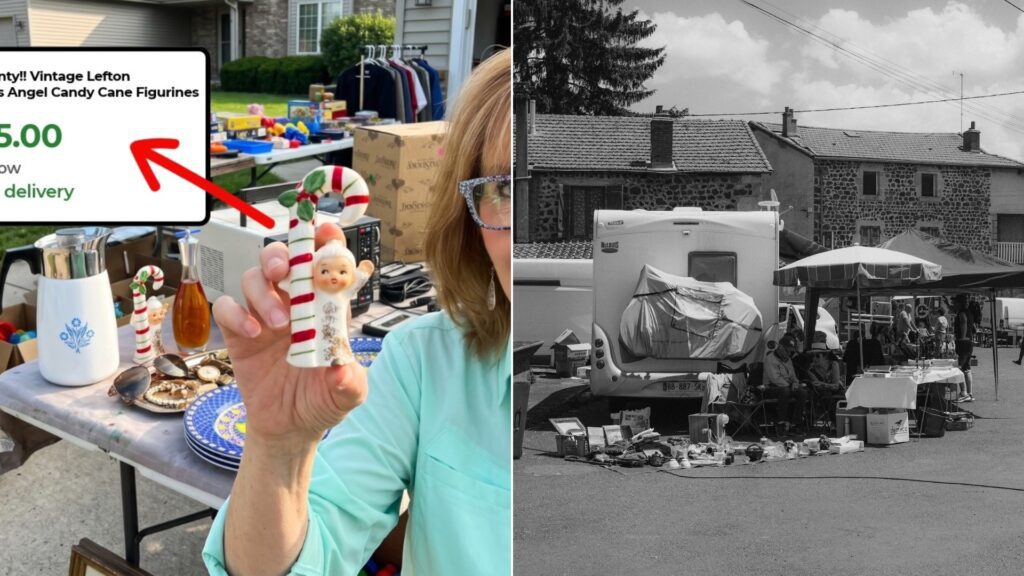
Nora’s sister Peggy spent three weeks preparing a yard sale and sat out for two days. She made forty-one dollars and spent fifty on lunch and lemonade for her helpers.
Nora says most of our things are worth very little to anyone else, and dark wood furniture and glass curio cabinets sell for a fraction of what they cost. For a truly valuable item like real silver or fine jewelry, she suggests one honest appraisal, and for a whole household, an estate sale company. For a closet, “just give it away.”
Rule Eight: Start Under The Bathroom Sink, Not With The Sentimental Boxes
Her first fifteen minutes went to old bottles, three hair dryers and hotel lotion from 1998. “Nobody cries over a hotel lotion,” she says, and that is how you build the muscle.
The linen closet and a junk drawer with four flashlights and no batteries came next, and photographs came last. By then she had made two hundred decisions. She kept her mother’s three figurines and her husband’s flannel shirt, but not his forty-two coffee cans of screws.
Rule Nine: Pay By The Hour, Or You May Give Away The Wedding Album
Nora makes every decision herself and hires young legs for the carrying. She finds help through teenagers on her street, a church youth group and her senior center’s vetted list of odd-job workers.
She pays by the hour because “when someone’s paid by the job, they want to rush,” and rushing is how a wedding album ends up in a box of old magazines.
Rule Ten: Never Tell A Stranger You Live Alone
A woman in her coffee group raised this one. When arranging pickups, Nora says “we” instead of “I,” as in “We’re clearing out the spare room. Can you pick up Thursday?”
Boxes on the porch and a truck in the driveway tell the street the house is changing, and she is fine with that, as long as nobody knows who is inside. When the truck comes, she invites Ruth over for coffee.
She also turns away anyone who knocks offering cash for gold, antiques or whole estates. A hardware store owner told her those buyers read a driveway the way he reads a paint chip.
Rule Eleven: One In, One Out, Forever
A basket by her back door catches anything replaced, and every Tuesday it goes to the church closet. A shredder sits on the kitchen counter, junk mail goes straight into a recycling bag, and bills go in one wooden tray emptied every Friday.
Today her spare room holds a bed, a chair, a lamp and a window. When her daughter visited at Easter, she said, “Mom, it echoes.” Nora took it as a compliment.
“Every box you clear is one box your children won’t have to clear in a hurry on a sad weekend,” she says. “That’s not a chore. That’s a gift.”
More Stories You May Like
- Woman Tests Her One Rule To Organize Anything On A Huge Walk In Closet So Her Boyfriend Can Finally Have More Than 2% Of It
- Minimalist Mom Says A Mail Spot That Took Another Mom 45 Minutes To Organize Could Be Done In 10 And Shares The Clutter Catcher Basket Trick
- Woman Gave Away Her Whole Decluttered Pile To A Struggling Stranger From Facebook Instead Of Selling It And Says It Made Her Day