


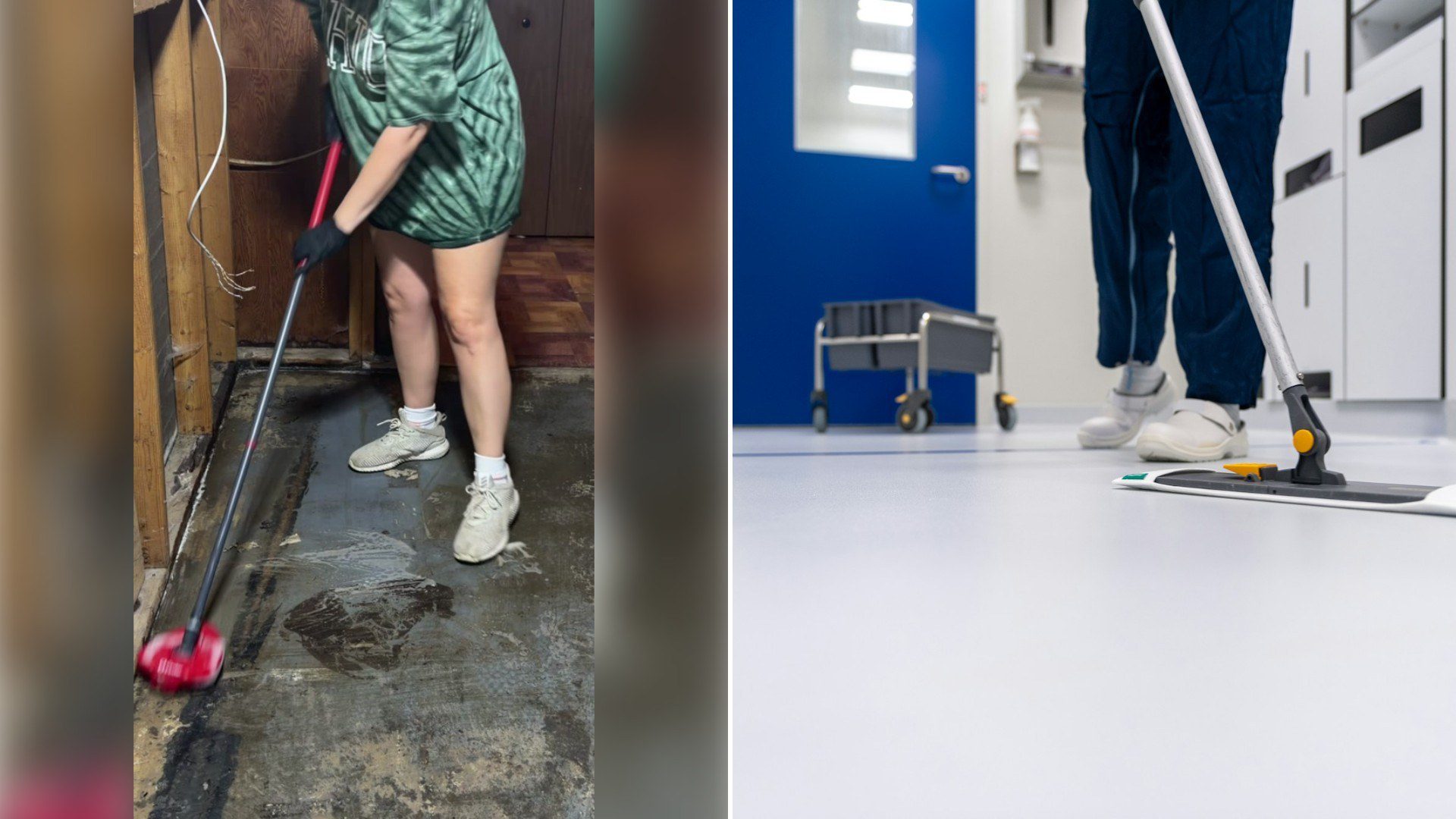
Some cleaning projects are quick wins — a wiped counter, a made bed, a tidied shelf that takes minutes to reset. And then there’s the kind of project that becomes a genuine test of endurance, the sort of undertaking that stretches across multiple sessions and leaves you sore the next day just from the sheer physical effort involved. That’s exactly the territory one woman found herself in while documenting the laborious process of deep cleaning a filthy basement floor, a project so involved it had already reached its seventh recorded installment by the time this particular clip was posted.
The video captures the grind in real, unfiltered detail — scrubbing, treating stains, working through years of accumulated grime on a surface that clearly hadn’t seen this level of attention in a very long time. Rather than relying purely on visual transformation, she added voiceover commentary throughout, narrating her own physical exhaustion and personal motivation as she pushed through the work. That narration turns what could have been a straightforward before-and-after cleaning video into something closer to a personal endurance story, giving viewers insight into not just what she was doing, but how genuinely hard it was to keep going.
@lizzierebuilds Planning for an update video later today. It was a rough night so enjoy my hours of cleaning into one minute 👌 #cleaningtiktok #satisfyingcleans #moppingfloors
Her caption captured that exhaustion with a mix of humor and genuine satisfaction: “Part 7 and I have a feeling that I will be having a hard time lifting my arms tomorrow but it was wo… #cleaningtiktok #cleaningmotivation #satisfyingcleans #CleanTok.” The honesty of admitting the physical toll, rather than glossing over it, seems to have played a real role in the video’s reach. It pulled in roughly 1.2 million views from an account with about 111,200 followers, a solid multiplier that suggests the ongoing series had built genuine momentum and pulled in new viewers curious to see how far the project had come. As @lizzierebuilds shared in her post, documenting a project across multiple parts rather than compressing it into a single tidy video allowed viewers to genuinely track the scale of the undertaking and appreciate just how much effort went into each stage.
Multi-part cleaning and renovation series have become a particularly effective content format, largely because they turn a single project into an ongoing narrative that viewers can follow and root for over time. Rather than watching one polished transformation video and moving on, audiences get invested in the process itself, checking back to see how a specific basement, garage, or room progresses across weeks or even months. That serialized structure builds a kind of loyalty and anticipation that a single standalone video simply can’t replicate, and it also gives creators room to be honest about setbacks, exhaustion, and the genuinely difficult parts of a big project rather than only showing the satisfying final result.
There’s also a quiet motivational quality to watching someone push through a project this physically demanding without giving up partway. For viewers dealing with their own daunting to-do lists, seeing tangible proof that seven distinct sessions of hard, unglamorous labor eventually add up to real progress can serve as its own small dose of encouragement to keep going on whatever project they’ve been putting off.
The specific appeal of “CleanTok” content more broadly lies in its blend of visual satisfaction and genuine relatability. Watching years of grime lift off a basement floor delivers the same kind of dopamine hit as any other satisfying transformation content, but the added layer of physical struggle and honest narration makes it feel less like a polished performance and more like an authentic documentation of real, difficult labor. Viewers aren’t just watching a floor get clean — they’re watching someone push through genuine exhaustion to get there, which adds an emotional stake that pure aesthetic transformation content often lacks.
For anyone tackling a similarly large, physically demanding cleaning project of their own, a few lessons from this kind of extended undertaking are worth keeping in mind. Breaking an overwhelming project into distinct, trackable stages — much like this seven-part series — rather than trying to power through in a single exhausting session, tends to make large-scale cleaning far more sustainable and far less likely to be abandoned halfway through. Pacing physical effort with proper breaks, stretching, and hydration matters more than people often expect, especially for scrubbing-intensive tasks that place real strain on the arms, back, and knees over extended periods. And documenting progress along the way, even privately rather than for an audience, can provide the same kind of motivating momentum this creator clearly drew from, turning an exhausting chore into something that feels more like meaningful progress toward a genuinely satisfying end result.
It’s also worth noting how transparency about physical exhaustion, rather than hiding it, tends to build a stronger connection with an audience than a purely polished transformation video ever could. Admitting upfront that her arms would likely be sore the next day didn’t undercut the impressiveness of the work — if anything, it made the effort feel more real and more earned. Viewers responded not just to the visual transformation of the floor itself, but to the honest acknowledgment of what it actually cost her to get there, which is often the missing ingredient in cleaning content that otherwise feels too effortless to be believable.