


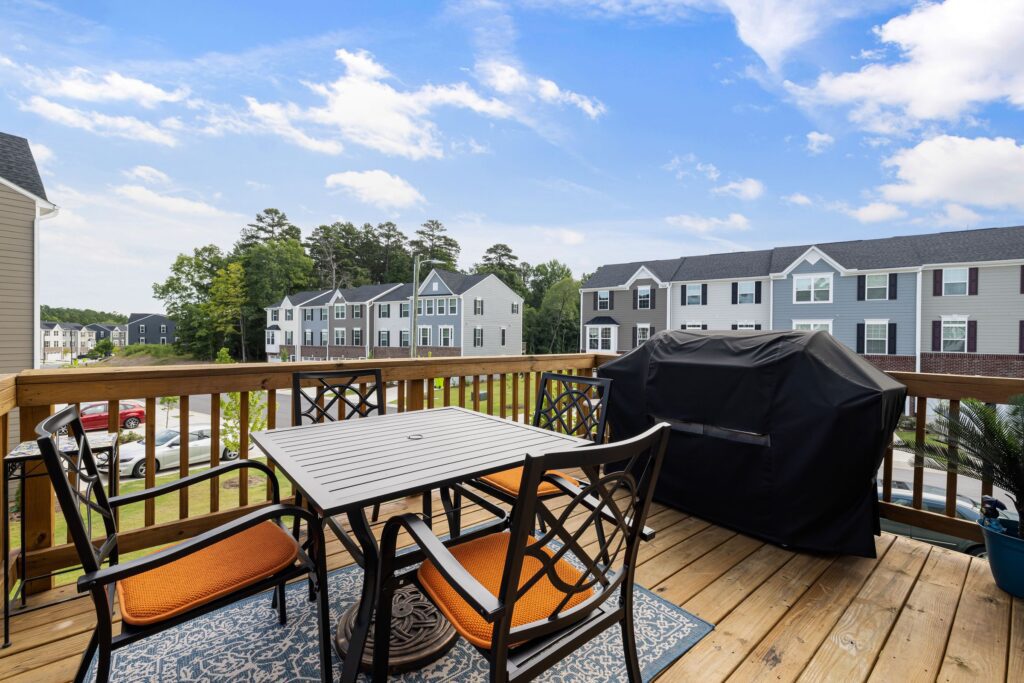
Here’s a number that stops most homeowners cold: between 2000 and 2008, at least 30 people died as a direct result of deck collapses in the United States, and more than 75 percent of everyone standing on a deck when it gave way was hurt or killed in the fall, according to forensic engineering data published by the Pennsylvania Society of Professional Engineers. That’s not a freak-accident statistic. It’s what happens when ordinary backyard structures quietly lose their strength over years of sun, rain, and use, and nobody notices until the weight of a birthday party or a Labor Day cookout finally asks more of the wood than it can give. The unsettling part is that of the roughly 40 million decks in this country that are now over 20 years old, a huge share were built to codes and habits that engineers have since learned aren’t nearly cautious enough. The good news, and it’s real good news, is that deck failures are almost never a mystery once you know what to look for. They follow a short, predictable list of causes, and every single one of them is something you can spot from your own backyard with about twenty minutes and a flashlight.
Why So Many Decks Are Quietly Failing
Decks don’t usually collapse because of one dramatic flaw. They fail because several small, ordinary problems stack up over the years until the structure simply runs out of margin. According to the North American Deck and Railing Association, there are now more than 60 million decks in North America, and an estimated 30 million of them have already outlived their useful structural life. That’s roughly half the decks in the country quietly aging past the point their builders ever accounted for.
The single biggest culprit is the ledger board, which is the horizontal beam that bolts your deck directly to your house and, in most designs, carries a huge share of the deck’s total weight. NADRA cites industry data indicating that an estimated 90 percent of deck collapses trace back to a failed ledger connection, most often because the board was attached with nails instead of proper lag bolts or through-bolts, or because flashing was installed incorrectly and let water seep behind the ledger for years without anyone knowing (NADRA). Nails can work themselves loose or bend under repeated flexing in a way that bolts simply don’t, and once that connection starts to give, the whole deck is essentially hanging on by habit rather than by engineering.
Beyond the ledger, the recurring themes engineers point to again and again are rot from trapped moisture, corroded or undersized fasteners, missing or inadequate joist hangers, and decks that are simply asked to hold more people and more weight than they were ever designed for. As Adam Rought of Green Shield Deck Builders put it, “even a surface that feels stable can mask onset rot, mildew, or weakened structural integrity” (NADRA). That’s the part that catches people off guard. A deck can look perfectly fine on top while the framing underneath is quietly failing.
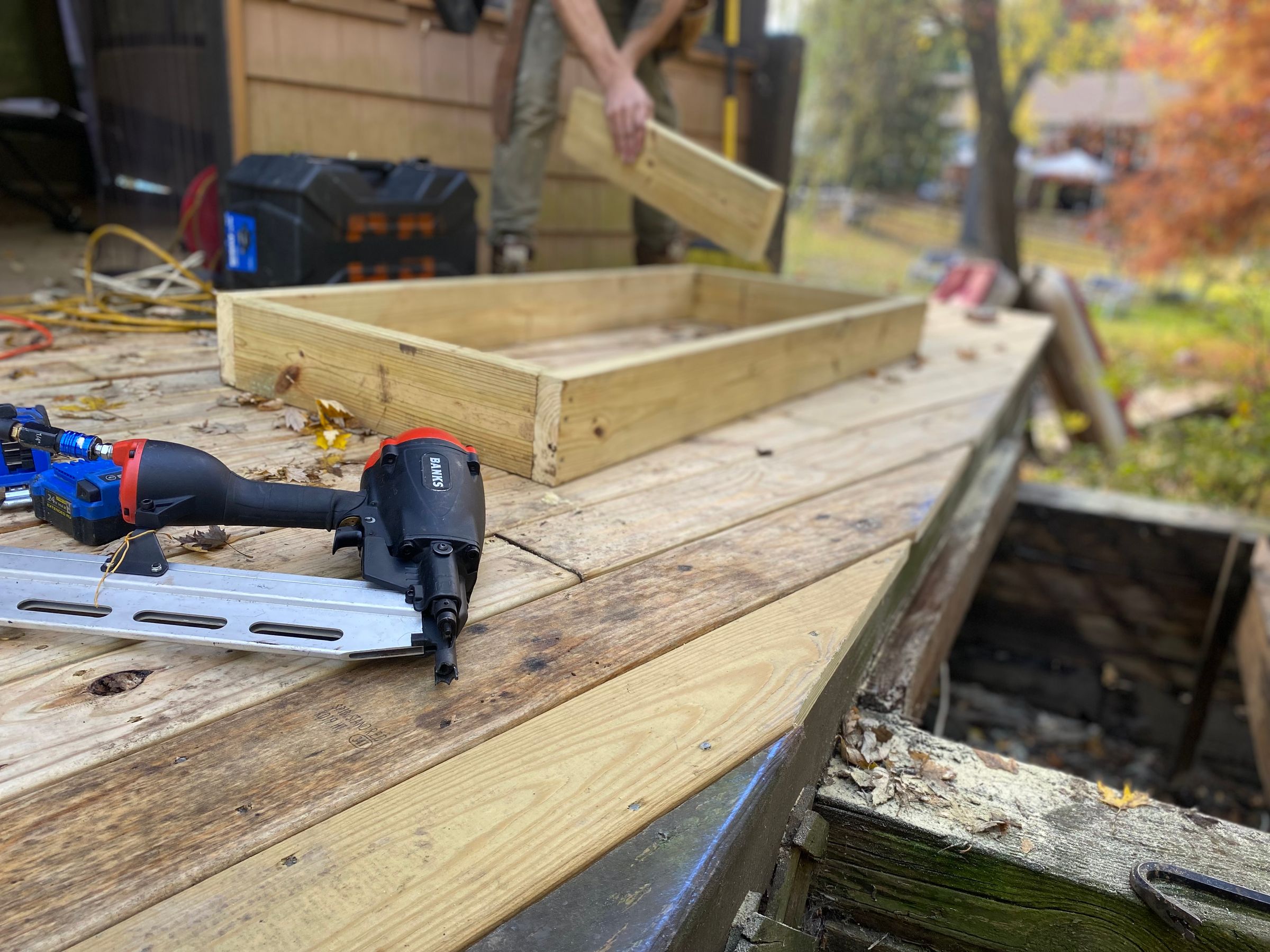

Fall Is the Right Time to Look
There’s a reason inspectors and builders both point to autumn as the smart season for a deck checkup. You’ve just finished a summer of heavy use, before the wood dries out and tightens up for winter, and before ice, snow load, and freeze-thaw cycles get a chance to work their way into any cracks or gaps that formed over the past few months. Catching a problem now, while the weather is still mild and the ground isn’t frozen, gives you time to actually fix it rather than just patch it before the holidays arrive with a full guest list. Think of it the same way you’d think about cleaning your gutters or checking your furnace: not glamorous, but exactly the kind of unglamorous task that prevents the genuinely bad day.
Five Signs Your Deck Isn’t as Safe as It Looks
You don’t need an engineering degree to do a meaningful safety check. You need about twenty minutes, a flashlight, a flathead screwdriver, and the willingness to get down on your hands and knees for a closer look. Here’s exactly what to check.
1. Bounce, Sway, or Spring Underfoot
Walk the full length and width of your deck slowly, paying attention to how it feels rather than how it looks. A healthy deck should feel solid and still. If you notice noticeable bounce, spring, or side-to-side sway, especially near the middle of the span or where multiple people tend to gather, that’s often a sign of undersized joists, failing beam connections, or a ledger that’s beginning to separate from the house.
2. Gaps, Rust Streaks, or Soft Wood at the House Connection
This is the single most important spot on your entire deck, precisely because it’s the point NADRA identifies as responsible for the vast majority of collapses. Get down and look closely at the seam where the deck meets your house. You’re looking for any visible gap between the ledger board and the wall, rust streaks bleeding down from the fasteners, or wood that looks darker, swollen, or discolored, which usually signals trapped moisture underneath.
3. Wobbly Railings or Posts
Grab every railing section and give it a firm push, the way you’d lean into it if you were setting down a drink or steadying yourself. It shouldn’t move. A railing that wobbles, flexes, or feels like it’s held on by little more than a few screws is a genuine fall hazard, and it’s also often a sign that the posts beneath it weren’t properly bolted through to the framing.
4. Rusted, Missing, or Corroded Hardware
Crouch down and look underneath the deck at the joist hangers, bolts, and any visible metal connectors. You’re checking for heavy rust, corrosion, cracking, or hardware that’s simply missing where it should be holding a joist to a beam. Corroded fasteners lose their strength gradually and invisibly, which is exactly why this step matters even if nothing looks obviously broken.
5. Soft, Spongy, or Discolored Wood Anywhere in the Structure
Take your flathead screwdriver and gently probe the ledger, posts, beams, and any wood that sits close to the ground or against the house, pressing about a quarter inch into the surface. Solid wood resists the probe. Wood that’s soft, spongy, or crumbles easily is compromised by rot, even if the surface paint or stain looks perfectly fine, which is exactly the trap Rought was describing.
If any one of these five checks gives you pause, that’s your cue to call a licensed contractor or structural engineer rather than talking yourself out of it. A load capacity question, in particular, is worth taking seriously if your gatherings have grown larger over the years, since a deck built for a small family barbecue may never have been engineered for the crowd it now regularly holds.
Turning Worry Into a Habit
What makes deck safety different from so many other home maintenance worries is how solvable it actually is once you understand the pattern. These structures don’t fail because of bad luck or freak weather; they fail because a handful of specific, checkable things went unnoticed for years at a stretch. A loose ledger bolt, a rusted hanger, a patch of hidden rot near the ground, each one is small on its own, and each one is something an ordinary homeowner can find with a flashlight and a Saturday afternoon. Make this walk-around part of your fall routine, the same way you’d check your smoke detectors or clean your chimney, and you turn a source of quiet dread into a short list you simply handle. That’s really the whole trick: not eliminating risk through worry, but replacing it with a habit sturdy enough to hold up your next gathering, and the one after that.