


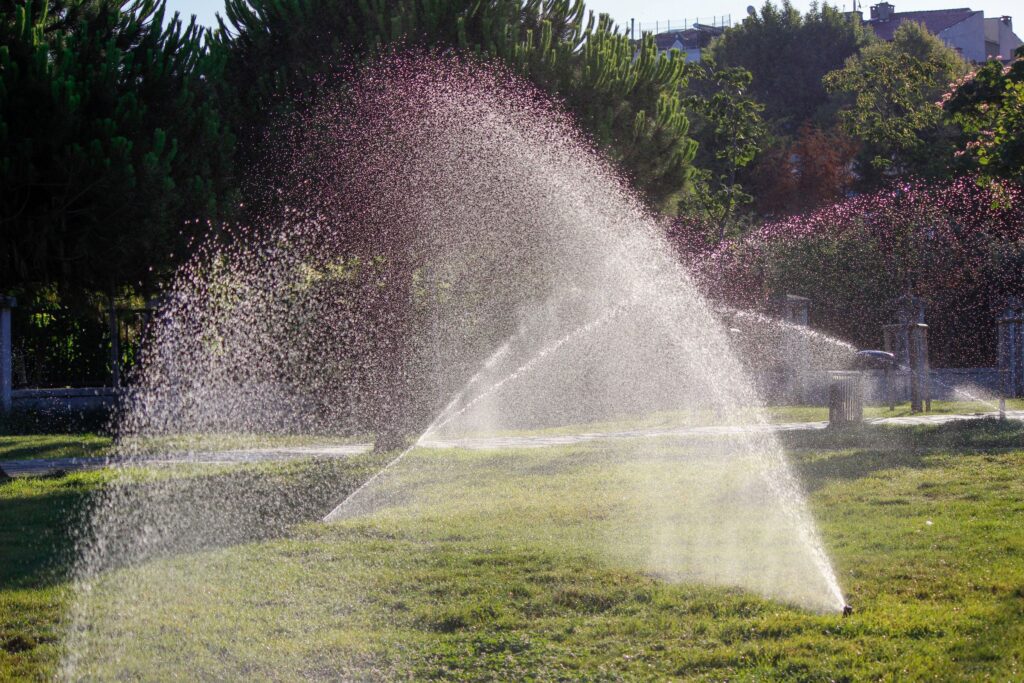
Here’s a number that stopped me in my tracks: if you water an average-sized lawn for just 20 minutes a day, every day, for a week, you’ve used roughly as much water as running your shower nonstop for four straight days, or taking more than 800 showers, according to the EPA’s WaterSense program. That’s not a typo, and it’s not an exaggeration dreamed up to scare you off your sprinklers. It’s a real calculation from the same federal program that certifies water-efficient toilets and showerheads, and it means the quiet little routine of “just running the hose for a bit” is one of the biggest water decisions most of us make all summer. The truly maddening part isn’t even the volume, it’s that roughly half of that water never reaches a single blade of grass. It evaporates, blows sideways in the breeze, or runs straight off into the gutter. So before you feel one ounce of guilt about your garden, let’s talk about where all that water is actually going, because I promise the fix is a lot simpler than ripping out your lawn.
The Real Math Behind Your Green Grass
Twenty minutes doesn’t sound like much when you’re standing in the yard watching the sprinkler arc back and forth. But a typical sprinkler system pushes out somewhere between one and two gallons per minute per head, and most residential setups run several heads at once across multiple zones. Multiply that by seven days, and the gallons add up fast, fast enough that the EPA uses it as its go-to example of how outdoor water use quietly outpaces everything happening inside the house. On a national level, the agency notes that outdoor use makes up somewhere between 30 and 70 percent of total household water consumption depending on where you live, with hotter, drier regions leaning toward that higher end. If you live somewhere with real summer heat, your lawn may genuinely be drinking more than your entire household combined.
Where All That Water Actually Goes
This is the part that changed how I think about my own sprinkler timer. The EPA states plainly that as much as 50 percent of the water used outdoors is lost to wind, evaporation, and runoff, and that a household with an automatic irrigation system that isn’t properly maintained can waste up to 25,000 gallons a year. Twenty-five thousand gallons is enough to fill a standard backyard swimming pool, gone, without a single extra minute of green in your yard to show for it. Researchers at Colorado State University Extension back this up with their own field data, finding that most home irrigation systems only achieve a 30 to 40 percent efficiency rating, even though 70 to 80 percent is entirely achievable with basic attention and maintenance. In other words, most of us are operating our sprinklers at less than half their potential, and neither the water bill nor the lawn is telling us so directly.

The Sneaky Culprit Hiding at the Edge of Your Lawn
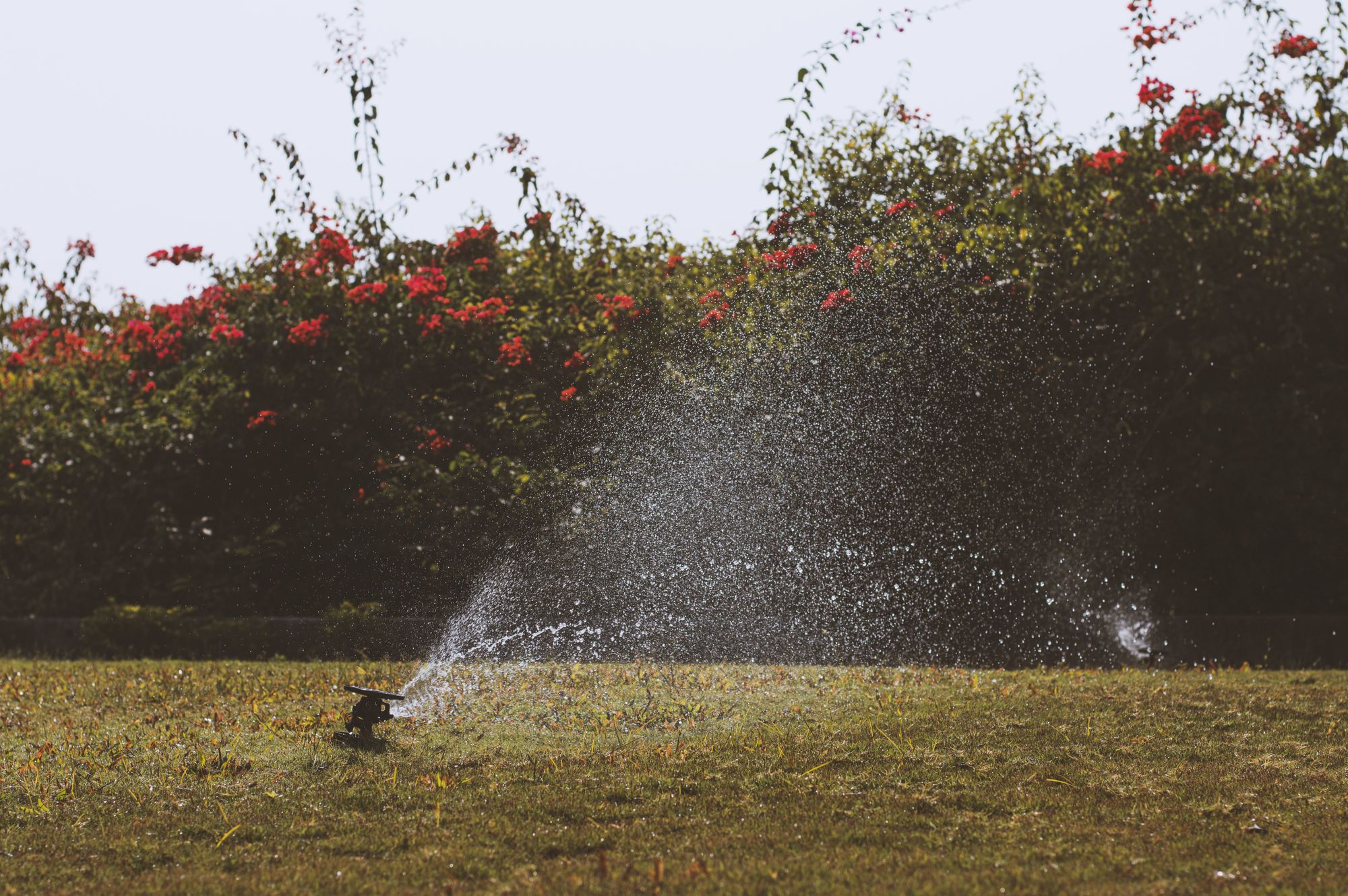
A huge share of that waste comes down to something almost embarrassingly simple: sprinkler heads that have drifted out of alignment and are now watering the driveway, sidewalk, or fence line instead of the grass. It happens gradually, a head gets bumped by a lawnmower, settles unevenly in the soil, or was never quite angled right to begin with, and suddenly you’re irrigating concrete every single day without noticing. The University of Minnesota Extension calls this out specifically, showing how “misdirected irrigation spray” onto hardscaping is one of the most common and most fixable sources of waste in a home system. Worn nozzles and heads set too low, where the grass itself blocks the spray pattern, cause the same kind of quiet loss. None of it announces itself. Your lawn still looks fine, the meter just keeps climbing.
When You Water Matters as Much as How Much
Timing is the other half of this story, and it’s the one most of us get backwards without realizing it. Watering during the heat of the afternoon means a good portion of that spray evaporates before it ever soaks into the soil, which is exactly why the EPA recommends watering in the early morning or evening, after the sun goes down, when temperatures are cooler and wind tends to be calmer. The University of Minnesota Extension echoes this, pointing out that morning watering allows the soil to actually absorb the water before evaporation and midday heat compete for it. If your sprinklers are set to run at noon because that’s just when the timer’s always been set, that alone could be costing you real money for very little benefit.
The EPA’s Actual Fix: Let a Smart Controller Do the Thinking
Here’s where the good news comes in, because the EPA doesn’t just diagnose the problem, it hands homeowners a genuinely practical solution. Swapping a standard clock-based timer for a WaterSense labeled irrigation controller can cut an average home’s irrigation water use by up to 30 percent and save roughly 15,000 gallons a year, according to the program’s own figures. These controllers come in two flavors worth knowing about: weather-based models that adjust your watering schedule using local conditions, and soil moisture-based models that check the ground itself and skip watering when it’s already damp enough. Either way, the days of your sprinklers running full blast the morning after a rainstorm are over. Scaled up, the EPA estimates that if every American home with a sprinkler system used a WaterSense controller, the country could save 390 billion gallons of water and $4.5 billion in water costs annually, enough to cover the yearly household water needs of five million homes. That’s the kind of number that makes a $100 to $200 controller feel less like a splurge and more like one of the smartest home upgrades you can make.
A Simple DIY Irrigation Checkup You Can Do This Weekend
You don’t need a professional or a special certification to catch most of this waste yourself, and honestly, a slow afternoon walk around your yard while the system runs is one of the most satisfying little chores you can check off your list. Turn on each zone and watch it work from start to finish. Look for heads spraying onto the driveway, patio, or sidewalk rather than the grass, and nudge or replace them so the water lands where it’s meant to. Check for heads that are cracked, clogged, or barely trickling, since a broken head can waste enormous amounts of water while leaving a bone-dry patch of lawn right next to it. Peek at your outdoor spigot and any exposed connections for slow leaks while you’re at it. And if your system waters everything on one identical schedule, consider grouping areas by sun exposure and soil type, what the EPA calls hydrozones, so the shady side of the yard isn’t getting soaked just as heavily as the spot baking in full sun all afternoon. It takes maybe twenty minutes, which, fittingly, is about the same amount of time your sprinklers run each day anyway.
What I love about this particular fix is that it doesn’t ask you to choose between a beautiful lawn and being a responsible steward of water, it just asks you to pay attention to the plumbing you already have. A little morning timing, a few straightened sprinkler heads, and a smarter controller can turn that wasted half of your water bill into grass that’s actually greener for the effort. Your lawn was never the problem. The blind spot in how we’ve all been running our sprinklers was.