Outdoor Furniture Is Now One of the Fastest-Growing Categories in Home Spending
Global spending on outdoor furniture is on track to climb from roughly $53 billion in 2025 to nearly $87 billion by 2033, according to Grand View Research, a compound annual growth rate north of 6%. A separate analysis from Straits Research pegs the market at $56 billion in 2025, headed toward $91 billion by 2034, with dining sets alone accounting for nearly a third of every dollar spent. Two different research firms, two slightly different numbers, but the same unmistakable direction: the patio isn’t an afterthought anymore. It’s a room. And people are furnishing it like one. If you’ve felt a small twinge of guilt about how much you just paid for a set of outdoor dining chairs, you’re not imagining things, and you’re not alone.
Why Your Backyard Became a Line Item in the Family Budget
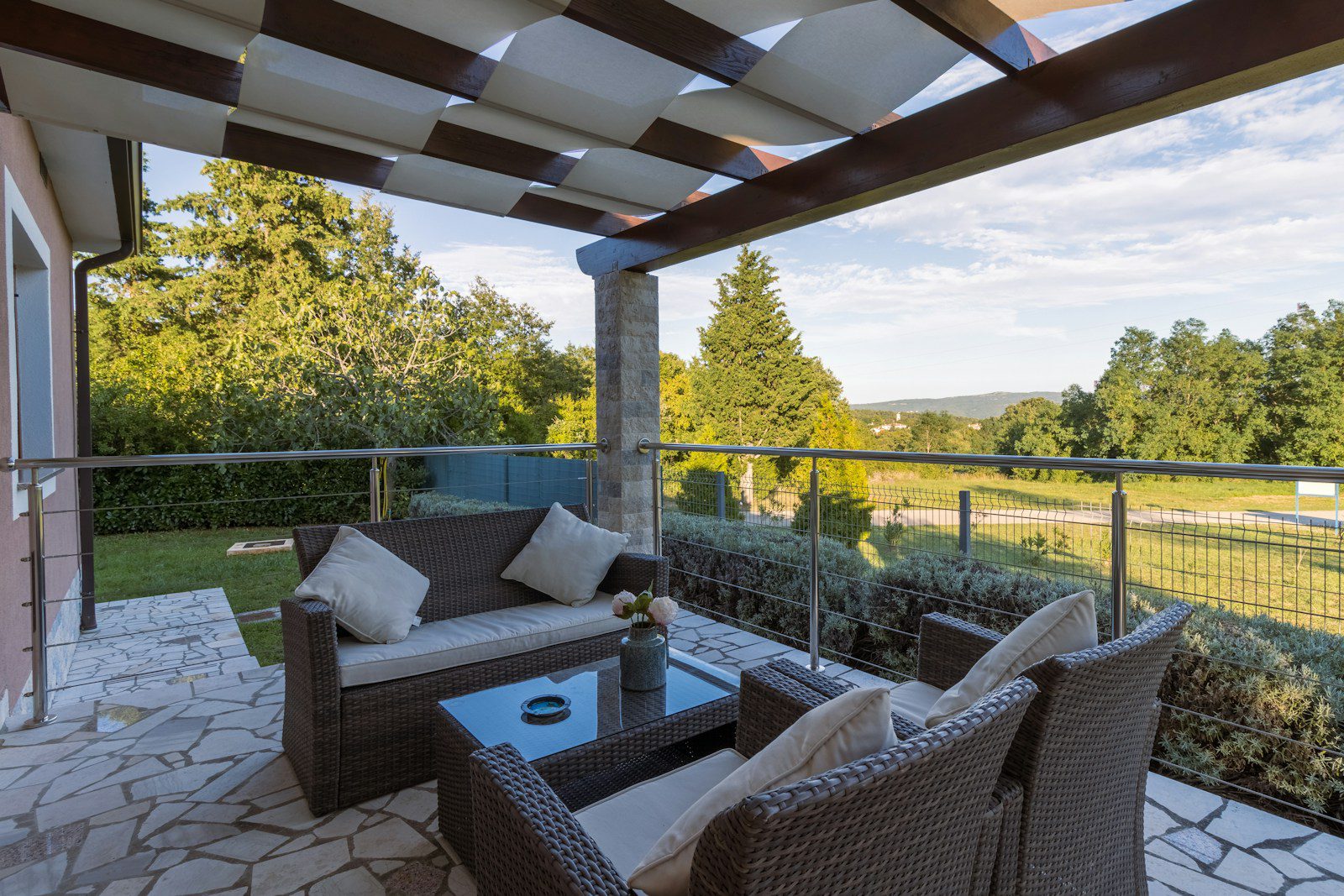
For a long time, outdoor furniture was the stuff you bought once, left out through every season, and quietly replaced when it finally gave up. That mindset has shifted. Homeowners are now treating their decks, patios, and even small balconies as genuine extensions of the house, complete with dining zones, lounge areas, and sometimes an outdoor kitchen that costs more than the interior remodel did a decade ago. Grand View Research points to rising disposable income and a booming real estate market as two of the forces behind the growth, while Straits Research highlights the outdoor dining and entertaining trend specifically, noting that dining sets are the single largest product category in the entire market.
Both reports also flag something worth paying attention to if you’re planning a purchase: wood still holds the largest share of the market, but metal is the fastest-growing material category. That tells you something real about where consumer preference is heading, and it’s worth understanding before you spend real money on a set that’s supposed to last.
What Actually Holds Up Out There
Every material has a personality once it lives outside full-time, and knowing that personality before you buy saves you from an expensive lesson later. Teak is the gold standard for a reason. It has natural oils that resist rot, insects, and moisture, and it weathers to a soft silvery gray if you leave it untreated, which honestly looks gorgeous in the right setting. It’s also genuinely expensive, and cheaper “teak-look” woods like acacia or shorea don’t share those same oils, so they need more maintenance and won’t age nearly as gracefully.
Aluminum, especially powder-coated aluminum, is the quiet workhorse of outdoor furniture. It doesn’t rust the way iron or steel does, it’s light enough to rearrange without throwing your back out, and a good powder coat holds its color for years. Wrought iron and cast iron look substantial and classic, but they’re heavy, they conduct heat in direct sun, and once rust starts at a chip or scratch, it spreads. If you love the look, budget for touch-up paint and plan to actually use it.
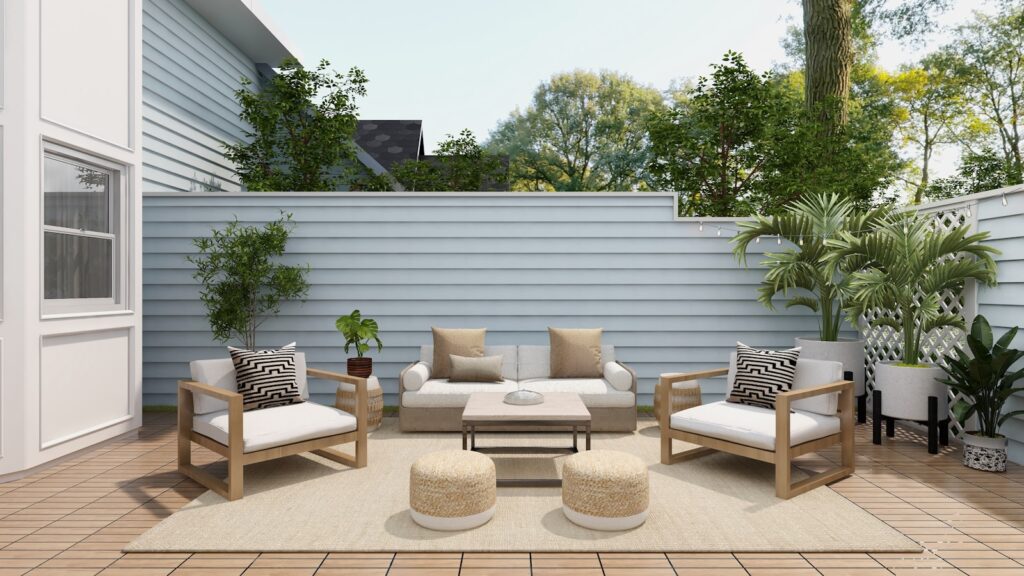
Resin wicker, the kind woven from high-density polyethylene rather than natural rattan, has come a long way. Good HDPE resin resists UV fading and won’t crack the way old-style plastic wicker did, but there’s a wide quality gap between a well-made version and a bargain one, and you genuinely cannot always tell by looking. Cushions and slings deserve their own conversation entirely. Solution-dyed acrylic fabrics, the kind you’ll recognize by the name Sunbrella even if you don’t buy that brand specifically, are dyed all the way through the fiber rather than printed on top, which means the color doesn’t fade the way it does on cheaper polyester. It’s also treated to resist mildew and water in a way ordinary outdoor fabric just isn’t.
Where to Spend and Where to Save
Not every piece in your outdoor room needs the same budget, and figuring out where to splurge versus where to economize makes a real difference in how the whole set holds up. Spend more on the frame. A well-built frame in solid teak, powder-coated aluminum, or marine-grade polymer is the bones of the piece, and it’s the part you genuinely cannot fix later without essentially replacing the item. This is especially true for anything that gets heavy daily use, like your main seating group or the dining table you’ll actually eat at three nights a week.
Where you can reasonably save is on accent pieces and things with a shorter expected lifespan anyway. Side tables, accent stools, and decorative pieces that don’t bear much weight or see constant sun exposure are fine to buy at a lower price point, because even if they need replacing in a few years, you haven’t sunk much into them. Cushions are a middle ground. It’s worth spending on quality fabric for cushions that stay outside all season, but you can often save by buying replacement cushion covers separately rather than an entirely new set once the originals fade or tear.
One thing worth resisting is the urge to buy the cheapest full set you can find just to fill the space quickly. Bargain sets tend to use thin-gauge metal, unfinished or poorly sealed wood, and fabric that fades within a single summer. You’ll likely be replacing the whole thing within two or three years, at which point the “savings” evaporates and then some.
Making the Investment Last
Here’s the part people skip, and it’s the part that actually protects your money. Covers and proper storage add years to outdoor furniture, full stop. A breathable, water-resistant cover, the kind with mesh vents that let moisture escape rather than trap it against the frame, prevents the mold and mildew that build up under a sealed tarp. Look for covers with drawstrings or buckles at the bottom so wind doesn’t send them tumbling across the yard the first stormy night.
Cushions are the most vulnerable part of any set, and they deserve the most protection. A deck box or storage bench that keeps cushions dry between uses does more for their lifespan than almost anything else you can do. If you don’t have storage space, at minimum bring cushions inside or under a covered porch during extended rain and through the winter months in colder climates. Even solution-dyed fabric will eventually break down if it sits saturated for weeks at a time.
For metal furniture, a light coat of car wax on painted or powder-coated surfaces once or twice a season adds a protective barrier against moisture and UV. For wood, an annual oiling for teak, or a fresh coat of sealant for other wood types, keeps the material from graying unevenly or drying out and cracking. None of this takes more than an afternoon, and it’s the difference between furniture that looks tired after two summers and furniture that still looks intentional after ten.
The Bigger Picture
What the growth numbers really tell you is that outdoor furniture has quietly graduated from a seasonal purchase to a real category of home investment, the kind people research, budget for, and expect to last. That shift changes the calculus. When you’re furnishing a room you actually plan to use for years, the smart money goes toward materials engineered to survive weather, honest attention to which pieces deserve the splurge, and the unglamorous habit of covering and storing things properly when they’re not in use. Do that, and the backyard you’re investing in now becomes the one you’re still enjoying, with the same furniture, well past the point when everyone else’s bargain set has already gone to the curb.