

Garages and basements have a funny way of becoming the place where decisions go to wait. A box gets set down for later, then a second box lands on top, and suddenly it has been ten years. The good news is that a lot of what is hiding down there is safe to toss, and clearing it out can free up room for the car, the workbench or the holiday decorations. The better news is that a few forgotten treasures might be worth real money. Here are ten things you can feel good about throwing away, followed by three that deserve a second look before anything goes to the curb.

1. Frayed or Damaged Extension Cords
That tangle of old extension cords in the corner may be a fire and shock hazard waiting to happen. The Electrical Safety Foundation International says plainly: never use a cord that feels hot or is damaged in any way. It warns that touching even one exposed strand can cause a shock or a burn. Look closely at each cord for cracked insulation, bent prongs, exposed wire or a plug that wobbles. The foundation also says to check that a cord is marked for indoor or outdoor use and is rated for what you plug into it. Replacement cords are inexpensive, so there is no reason to gamble with a worn one. Before the damaged ones go out, snip off the plug ends so no one pulls them from the trash, and ask your local waste service whether cords belong with electronics recycling.
2. Smoke Alarms Past Their Prime
Smoke alarms that have been on the ceiling since the previous decade may not be doing their job. The U.S. Fire Administration says smoke alarms need to be replaced 10 years from the manufacture date, whether they run on a 9 volt battery or are hardwired, and that you should test them monthly. If you have an old unit tucked in a drawer or a box of spare detectors in the garage, check the manufacture date printed on the device. Anything older than ten years should be retired and replaced. Ask your local waste service how to dispose of old alarms, since rules vary by area. This is one clutter item worth acting on this weekend, because a new alarm costs far less than the risk of an old one failing.
3. Car Seats From a Crash or Past Their Age
If your children are grown but a car seat is still gathering dust, it is time to let it go. The National Highway Traffic Safety Administration says a used car seat should never have been involved in a moderate to severe crash, should have no open recalls, and should be checked by date of manufacture and model number to see whether it is too old. Missing parts are also a concern, though NHTSA notes that some parts can be ordered from the manufacturer. A seat that fails those tests should not be handed down or sold. Before putting one out, cut the harness straps and write unsafe on the shell with a marker so no one rescues it from the curb.
4. Bike Helmets After a Crash
A helmet that has done its job once cannot be trusted to do it twice. The National Highway Traffic Safety Administration says to replace your helmet when it has been in a crash, and adds that damage is not always visible. That means the scuffed helmet hanging on a hook in the garage deserves a closer look, especially if you remember the bike taking a spill. Check for cracks in the foam, frayed or stiff straps and a shell that has gone brittle. Kids also outgrow helmets quickly, so old, ill fitting ones are not safe even if they look perfect. If your grandchildren ride when they visit, buy them a new, correctly fitted helmet and recycle or discard the old one. A good fit matters as much as the helmet itself, so take the child along when you shop for a new one.
5. Moldy Carpet Scraps and Water Damaged Materials
Basements are damp by nature, and that makes them a perfect home for forgotten carpet remnants, old rugs and ceiling tiles. The Environmental Protection Agency says porous materials such as ceiling tiles and carpet may have to be thrown away if they become moldy, because mold can grow into the empty spaces and may be impossible to remove completely. The agency calls moisture control the key to mold control, so fix any leaks and dry out the area after you clear it. Wear gloves and a mask when you handle moldy items. Bag them before carrying them through the house so spores do not spread. Items you can scrub, like hard plastic bins and metal shelving, may be cleaned with detergent and water and dried completely before going back to use. Once the space is cleared, consider a dehumidifier to keep it dry.
6. Old Cardboard Boxes
Those moving boxes you have kept in case you move again are not as harmless as they look. Bob Vila notes that cardboard contains cellulose, which attracts termites, and that boxes stored in attics and basements can invite squirrels, rats and other small animals to nest. The site recommends plastic storage bins instead of cardboard for long term storage, and sturdy ones with tight lids are a good choice. Go through the boxes one at a time. Break down empty ones and put them in the recycling, and move anything you want to keep into a labeled bin. Pay special attention to boxes that held food, pet supplies or anything plant based, since those are especially tempting to pests. You will be surprised how much floor space opens up once the cardboard mountain is gone.
7. Dried Out Leftover Latex Paint
Half used cans of paint are the classic garage resident. For latex paint, the news is good. The City of Chicago explains that you can mix leftover latex paint with kitty litter, shredded paper or sawdust, let it dry completely, and throw away the dried material, then let the empty can dry and recycle it. Rules vary by community, so check with your local trash service first. Oil based paint is different. The EPA lists paint, motor oil, batteries and pesticides as household products with hazardous ingredients that should never go into regular trash or down a drain, and recommends using a local household hazardous waste collection program. Keep one small can of each color you actually use for touch ups, with the color name written on top, and let the rest go.
8. Rusty or Broken Hand Tools
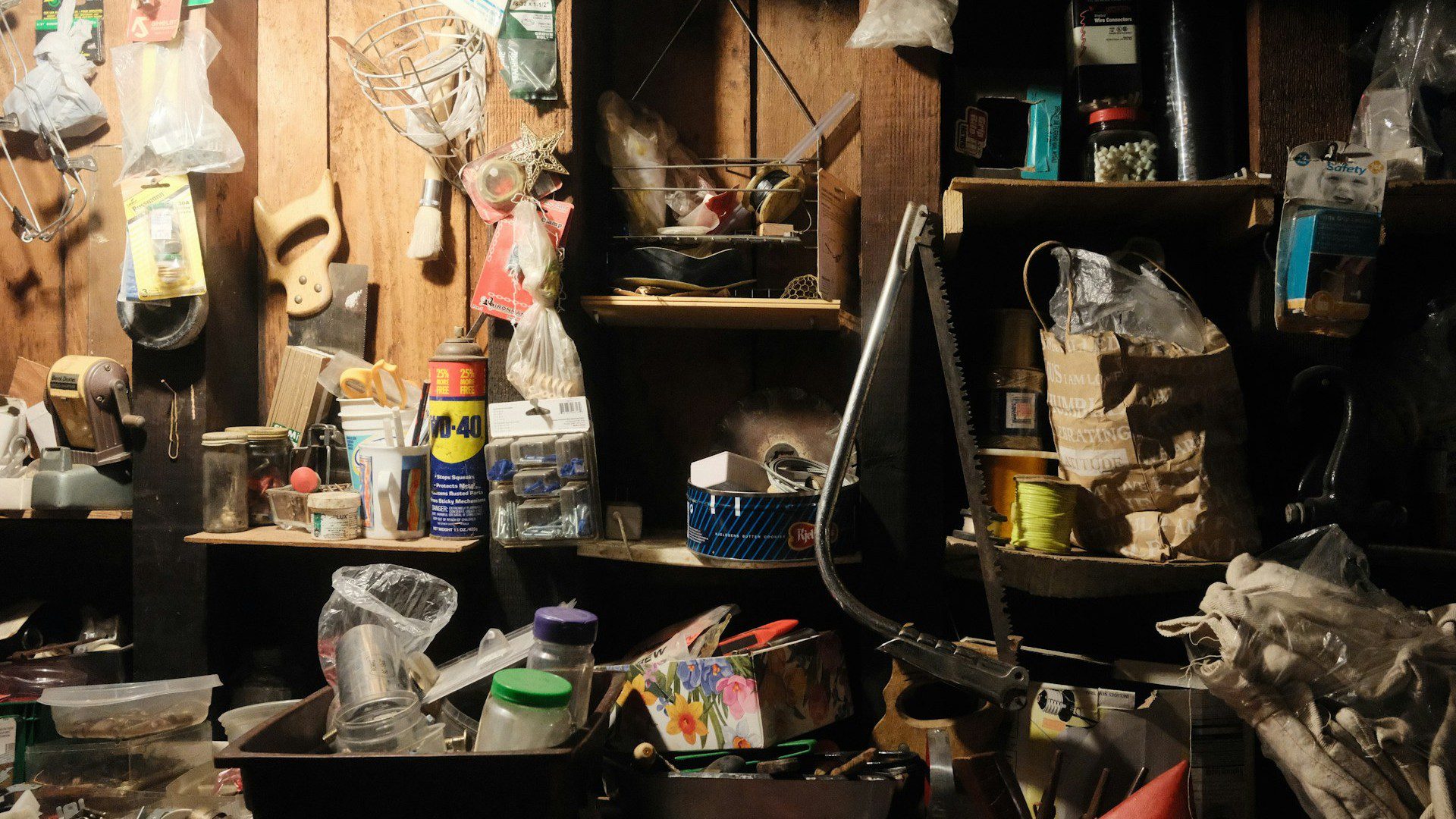
Tools are meant to last, but not every tool deserves a spot on the pegboard. A hammer with a cracked handle, a wrench that no longer grips, pliers rusted shut, a saw with a bent blade and a drill bit set missing half its pieces are more of a hazard than a help. A tool that slips can injure you, so sort through the toolbox and keep only what works. A simple test is to ask whether you reached for it in the last two years. Surface rust on a good tool can often be scrubbed off with steel wool and a little oil, so give sentimental favorites a chance. Anything beyond saving can go to a metal recycler, which often accepts scrap steel. Do check the next section before you decide, though. A few old tools turn out to be valuable.
9. Cracked Plastic Pots and Storage Bins
Plastic does not last forever, especially in a garage that swings from freezing to sweltering. Flower pots that crumble when you touch them, storage bins with split corners, sprinkler parts and watering cans with holes are unlikely to be repaired, and keeping them just creates a stack of broken things. Take a good look at the pile and ask whether you would buy it again today. If the answer is no, it goes. Sort the plastic by recycling number if your local program accepts it, and bring stray pieces to the curb on recycling day. Keep any intact pots that you will actually use next spring, and nest them neatly. If you need more storage, a few sturdy bins with lids will serve you far better than a pile of cracked ones.
10. Broken Lawn Furniture and Worn Out Hoses
Folding chairs missing a leg, webbed seats that sag to the ground and garden hoses that leak at every connection add up to a lot of clutter. If a lawn chair has been waiting for repair for three summers, it is not getting repaired. Be honest about what you actually use. Hoses with cracks, kinks or frayed ends waste water and fail at the worst moment, so replace them and let the old ones go. Check whether your community offers bulk pickup days for larger items, and consider donating furniture that is still serviceable. A thrift shop or a neighbor may be glad to take a sturdy set with a tired cushion. Once the pile is gone, you will have room for a clean, orderly spot for outdoor gear.
Three Things That May Be Worth Money Instead
Before you haul everything out, take a close look at these three categories. Auction results and appraisals show that some old household items can bring surprising money, though condition and rarity make all the difference and nothing is guaranteed.
Vintage Lionel Train Sets
If a dusty box of toy trains is hiding in your basement, do not throw it away. On PBS Antiques Roadshow in 2014, appraiser Noel Barrett valued a 1955 Lionel New Jersey Central set at $4,000 to $6,000 at auction, and valued its original set box separately at $1,000. He called the set super and said such sets rarely turn up in that condition, with boxes that were crisp. In another Antiques Roadshow appraisal from 2008, a 1935 Lionel freight set with a 385E engine was appraised at $2,500 to $3,000 at auction, though the appraiser noted the freight cars themselves were not rare. Those are the kinds of figures that come from sets in good condition. Played with, rusty or incomplete trains may bring much less. Keep the original boxes, track and paperwork, and ask a reputable train dealer or auction house to take a look.
Vintage Cast Iron Skillets
Cast iron is another basement and garage sleeper. At an August 2024 auction at Dinky’s in Montgomery, Indiana, an antique Griswold skillet with the Erie spider logo sold for $10,000, and a Griswold No. 1 skillet sold for $9,500, according to the results posted by Griswold Cookware. Those were the top prices of a sale with more than 1,000 lots, and they were rare collector pieces, so do not expect that from every pan. As the collectors’ site notes in its pricing guidance, value depends on age, scarcity, markings, demand and condition, and the best place to start is looking up what similar pieces actually sold for. Check the bottom of your skillet for a maker’s name. Hold off on aggressive scrubbing or re-seasoning until you know what you have. See Griswold Cookware for sold price guides.
Antique Stanley Planes and Hand Tools
Old woodworking tools are a quiet corner of the collectibles market. In a 2014 appraisal on PBS Antiques Roadshow, James Supp of Bannerman Auctions valued a group of 19th century Stanley planes at $7,000 to $8,000 at auction. Values depend on condition, market trends and where they are sold, and that was an appraiser’s verbal estimate, so current prices may differ. Still, it is a good reminder to look before you toss. Check your dad’s old toolbox for planes, braces, levels and measuring tools with maker names stamped on them. Resist the urge to sand, repaint or aggressively clean them until an expert has had a look. Take clear photos of the markings, then ask a local auction house or an antique tool dealer for an opinion.