
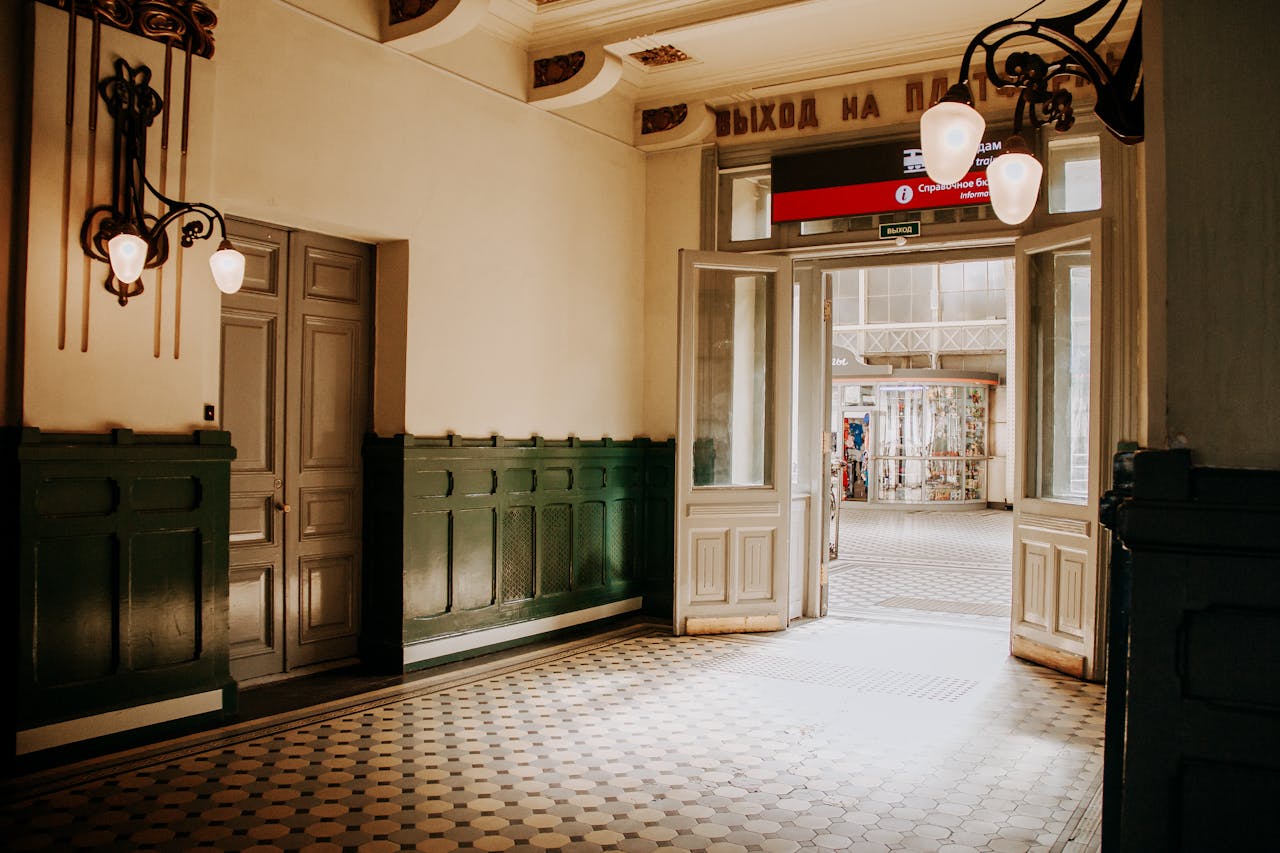
Your entryway sets the tone for your entire home, but it is also the spot where clutter piles up fastest. Clearing out a few common problem items today can instantly make the space feel calmer, safer, and easier to clean. Use this list to decide what should go, what should be replaced, and what deserves a better home elsewhere.
1) Worn-out shoes that never leave the doorway
Worn-out shoes that camp permanently by the door are one of the biggest entryway space hogs. Professional organizers often flag tired footwear as prime clutter, the same way they urge you to remove stretched-out and damaged pieces when you edit your closet. If the soles are cracked, the lining is torn, or you always skip that pair when you head out, it should not live in your entry. Keeping only shoes you actually wear here reduces tripping hazards and makes daily routines smoother.
Once you remove the dead weight, limit the number of pairs each person can park near the door, and rotate seasonal shoes to bedroom closets. A shallow boot tray or low rack is enough for current favorites, while everything else belongs in closed storage. This small boundary keeps the entry from turning into a shoe graveyard and makes sweeping or mopping much faster.
2) Overflowing coat racks and unused outerwear
Overflowing coat racks instantly make an entryway feel cramped, and they often hide the fact that you only wear a few favorites. Organizing experts who recommend purging duplicate and outdated garments in wardrobe clean-outs apply the same logic here, urging you to remove coats that no longer fit, feel comfortable, or suit your climate. If a jacket has not left the hook in the last season, it should be reassigned to a bedroom closet or donated. Keeping only current outerwear by the door frees up hooks and makes it easier to grab what you need.
To keep the space under control, set a clear limit, such as one everyday coat and one specialty piece per person in the entry. Off-season parkas, formal coats, and bulky rain gear can move to a secondary closet with labeled hangers. This approach protects the fabrics from being crushed, reduces visual noise, and helps guests actually find an open hook when they arrive.
3) Random mail piles and expired paperwork
Random mail piles and expired paperwork often land on the first flat surface inside the door, then quietly multiply. Organizing advice that encourages you to toss outdated documents and unused paper in other rooms applies just as strongly here, where clutter is the first thing you see. Junk mail, old flyers, and expired coupons do not need a permanent parking spot in your entryway. Keeping them there increases the risk of losing important letters and makes it harder to keep surfaces clean.
Instead, create a simple sorting rule the moment you walk in: recycle junk immediately, route bills and statements to a dedicated file box, and keep only one small tray for items that require action. A wall-mounted organizer or compact console drawer can hold pens, stamps, and a shredder bin. By removing the paper backlog, you reclaim visual calm and reduce the chance that something important gets buried under a stack of menus and circulars.
4) Old keys, dead batteries, and mystery hardware
Old keys, dead batteries, and mystery hardware tend to collect in entryway bowls and drawers, turning useful catchalls into junk zones. When organizers talk about clearing out broken accessories and obsolete items from storage, this category is exactly what they mean. If you cannot identify what a key opens, or you know a battery is drained, it should not stay in the most visible part of your home. Keeping these items by the door also increases the chance that children or pets will get into them.
Start by dumping every small item from your entry catchall onto a tray and sorting it. Label any essential spare keys and move them to a secure, consistent location, such as a locked box or a specific hook inside a cabinet. Recycle batteries through a local collection program and discard unidentifiable screws or brackets. Once you pare down to only what you truly need, your entry bowl can hold purposeful items like a single house key set, transit cards, or a compact flashlight.
5) Bulky bags and backpacks you rarely carry
Bulky bags and backpacks that live on entry hooks but rarely leave the house quickly overwhelm a small space. The same way closet experts urge you to part with unused handbags and totes, you should question every bag parked by the door. If a backpack has not been used since the last school year, or a tote is only there because you have not decided where it belongs, it is clutter, not convenience. Extra weight on wall hooks can also strain hardware and damage drywall over time.
Limit the entryway to one everyday bag per person, such as a work tote or current backpack, and relocate the rest to bedroom hooks or under-bed bins. Seasonal items like beach bags or ski gear can be stored with their related equipment instead of in the main hallway. This shift keeps the entry visually lighter and makes it easier to clean floors and baseboards without dodging dangling straps.
6) Outgrown kids’ gear and forgotten sports equipment
Outgrown kids’ gear and forgotten sports equipment often camp in the entry long after anyone uses them. The same logic that leads organizers to recommend removing ill-fitting clothes from a wardrobe applies to helmets, cleats, and scooters that no longer match your child’s size. If a soccer ball has not been kicked in months or a helmet strap will not buckle, it should not occupy prime real estate near the front door. Keeping these items there also increases the chance of tripping accidents.
Do a quick audit with your children, asking which items they still use regularly and which can be donated or stored elsewhere. Active gear can live in a labeled bin or low basket near the door, while off-season or outgrown pieces move to the garage or a donation box. Clearing this category opens up floor space, makes school mornings less chaotic, and helps you see at a glance what equipment actually needs replacing.
7) Excess entryway organizers that do not work
Excess entryway organizers that do not actually solve your clutter problem can be as disruptive as the mess itself. Storage products that looked promising online may not fit your space or habits, and keeping them in place only adds obstacles. When experts highlight smart entryway organizers, the emphasis is on pieces that match real traffic patterns, not just aesthetics. If a bench is always buried, or a shelf is too high for kids to reach, it is time to reassess.
Remove any organizer that blocks the door swing, narrows the walkway, or encourages you to pile items instead of putting them away. Then, measure your space and list what truly needs a home, such as keys, mail, or dog leashes. A single well-placed hook rail or slim cabinet often works better than multiple mismatched pieces. Editing down to functional storage makes the entry feel larger and encourages everyone to use the systems you keep.
8) Decorative clutter that crowds surfaces
Decorative clutter that crowds entryway surfaces can quietly undermine both style and function. While a few meaningful pieces can make the space welcoming, too many vases, candles, and small frames turn a console into a dust-collecting obstacle course. Organizing guidance that urges you to remove excess accessories from shelves and dressers applies here as well, where every inch of surface area is valuable. If you have to move decor out of the way to set down your keys or mail, there is simply too much.
Choose one or two substantial items, such as a single lamp and a favorite framed photo, and let them breathe. Store seasonal decor in labeled bins elsewhere and rotate it occasionally instead of layering everything at once. This approach keeps the entry visually calm and makes it easier to wipe down surfaces quickly. A cleaner, simpler vignette also highlights architectural details like trim and mirrors that might otherwise be lost in the visual noise.
9) Duplicate umbrellas, hats, and cold-weather accessories
Duplicate umbrellas, hats, and cold-weather accessories often pile up near the door, even though you reach for the same few pieces every time. Closet clean-out advice that targets repeated or redundant items, such as multiple similar scarves or gloves, translates directly to the entry. If you own several nearly identical black umbrellas or a tangle of knit hats no one wears, they are taking up space that could be used more intentionally. Wet items left in crowded baskets also dry poorly and can develop odors.
Sort these accessories by type and condition, keeping only one or two favorites per person in the entry. A narrow basket or divided tray can hold gloves and hats, while a single stand or wall hook can manage umbrellas. Extras can live in a bedroom drawer or be donated to local shelters. Streamlining this category reduces morning decision fatigue and keeps the floor from becoming a soggy mess on rainy or snowy days.
10) Broken or unsafe entryway furniture
Broken or unsafe entryway furniture, such as wobbly benches or leaning bookcases, should be cleared out immediately. Safety-focused organizing advice often highlights the risk of unstable pieces, especially in high-traffic zones where children and guests pass through. A bench with a cracked leg or a coat tree that tips easily is not just clutter, it is a hazard. Keeping damaged furniture by the door also makes it harder to navigate with groceries, strollers, or mobility aids.
Inspect every major piece in your entry, testing for stability and sharp edges. If something cannot be repaired quickly and securely, remove it rather than pushing it back against the wall. Consider replacing bulky, unstable items with low-profile, wall-anchored solutions like floating shelves or a slim shoe cabinet. This change improves both safety and flow, making the space more welcoming for everyone who walks through your door.
11) Closet castoffs that migrated to the entry
Closet castoffs that migrated to the entry, such as rarely worn jackets or forgotten accessories, often signal that your storage systems elsewhere need attention. When experts advise you to remove outdated or ill-fitting pieces during a wardrobe purge, they also warn against simply shifting those items to another area. If a coat or bag has already been flagged as something you should let go, it does not deserve a second life on an entry hook. Letting these castoffs linger only delays the decision and clutters your first impression.
Use the same criteria recommended for clearing out unwanted closet items to evaluate anything that has drifted into the hallway. Ask whether you love it, use it, and would buy it again today. If the answer is no, move it directly to a donation bag or textile recycling bin instead of back into circulation. This habit keeps the entry from becoming a dumping ground and reinforces better editing choices throughout your home.
12) Mental clutter triggers at the front door
Mental clutter triggers at the front door, such as chaotic bulletin boards or overloaded reminder walls, can be just as draining as physical mess. Discussions of how the brain handles information overload, including reflections in neuroscience writing, highlight that constant visual noise makes it harder to focus and relax. When your entry is plastered with notes, schedules, and random lists, your stress level can spike every time you come home. That undermines the sense of refuge most people want their space to provide.
Instead of treating the entry as a catchall command center, streamline what is visible. Limit the wall to a single calendar or a small whiteboard for truly time-sensitive reminders, and move long-term planning to a digital app like Google Calendar or Todoist. File school papers and forms in a nearby drawer rather than taping them everywhere. By reducing the cognitive load at the threshold, you create a calmer transition between the outside world and the rest of your home.
More from Decluttering Mom:

