Your kitchen should work hard for you, not the other way around. Yet cabinets and drawers quietly fill with tools you rarely touch, making everyday cooking slower and more frustrating. Clearing out a handful of space-wasting items can instantly make room for the gear you actually rely on and help you see what food you have before it expires.
1) Single‑use avocado slicer

The single-use avocado slicer is a classic example of a gadget that looks clever but quickly becomes clutter. Reports on overrated gadgets point out that tools designed for one very specific task rarely earn their footprint in a crowded drawer. A sharp chef’s knife can halve, pit, and slice an avocado in seconds, and it works just as well on mangoes, peaches, and citrus. When you keep a slicer only for avocados, you are storing plastic and metal that duplicates a job your existing knives already do.
Beyond wasted space, single-purpose tools can slow you down because you must dig for them and then wash extra parts. If you are trying to streamline meal prep, relying on a good knife and cutting board builds skills instead of dependence on novelty tools. Over time, that shift saves money, reduces clutter, and makes your kitchen easier to clean and organize.
2) Bulky knife block set
A bulky knife block set often dominates counter space while most of the blades sit untouched. Organizing guides that list kitchen items you do not need repeatedly flag oversized knife collections as prime decluttering targets. You typically reach for the same three knives, such as an 8‑inch chef’s knife, a serrated bread knife, and a small paring knife. The rest, from oddly shaped slicers to rarely used boning knives, gather dust and make cleaning around the block harder.
Storing fewer, higher quality knives on a magnetic strip or in a slim in-drawer organizer frees up valuable counter real estate. That extra space can hold a cutting board, coffee gear, or simply give you more room to prep. It also makes sharpening and maintaining your core knives easier, which improves safety and performance every time you cook.
3) Duplicate wooden spoons and spatulas
Duplicate wooden spoons and spatulas quietly multiply until you have a crowded utensil crock and a jammed drawer. Lists of things taking up space highlight how multiples of the same basic tool rarely add value. You might own six or seven nearly identical spoons when you truly rotate only two or three. The extras make it harder to grab what you need quickly and can hide the tools you actually like using.
Keeping a small, intentional set of heat-safe spatulas and sturdy spoons is usually enough for everyday cooking. When you pare down, you can store utensils in a single drawer or a compact crock instead of scattering them across the kitchen. That simplicity reduces visual clutter, speeds up cleanup, and makes it easier to see when a favorite tool is worn out and ready to replace.
4) Oversized plastic food storage tubs
Oversized plastic food storage tubs often hog entire shelves while rarely being filled to capacity. Guidance on what to throw away now notes that stained, warped, or lidless containers are especially problematic. Large tubs invite you to stash leftovers you forget about, which can lead to food waste and unpleasant fridge cleanouts. They also tend to nest poorly, so one or two pieces can sprawl across a cabinet that could otherwise hold pantry staples.
Switching to a smaller, stackable set of containers with matching lids makes your fridge and cabinets far easier to navigate. Glass or BPA‑free options that stack neatly help you see what you have at a glance, so you are more likely to eat leftovers before they spoil. That change not only frees space but also supports better food safety and more intentional grocery spending.
5) Novelty popcorn maker
A novelty popcorn maker, whether shaped like a movie theater cart or a countertop dome, usually earns its place on impulse rather than practicality. Decluttering checklists that target kitchen clutter often single out large appliances used for just one snack. A heavy popcorn machine takes up cabinet or pantry space year-round, yet you can achieve the same result with a lidded pot or a simple silicone microwave popper. The machine’s extra parts, from scoops to measuring cups, add to the storage burden.
When you rely on basic cookware instead, you avoid dedicating a whole shelf to something you might use only on occasional movie nights. You also cut down on cleaning time, since a pot or microwave bowl washes faster than a multi-piece gadget. For small kitchens in particular, reclaiming that space can make room for essentials like a Dutch oven or a sheet pan that you use several times a week.
6) Electric quesadilla maker
An electric quesadilla maker promises quick snacks but often ends up buried behind more versatile appliances. Reviews of space-wasting gadgets point out that this type of tool duplicates what a standard skillet already does. A nonstick pan can toast tortillas, melt cheese, and crisp fillings just as effectively, while also handling eggs, pancakes, grilled sandwiches, and sautéed vegetables. The dedicated machine, by contrast, occupies a large footprint for a single, easily replicated task.
Keeping it means storing another corded appliance, finding room for its awkward shape, and cleaning specialized plates that do not fit well in the sink. If you are trying to simplify, letting go of the quesadilla maker and mastering a skillet technique gives you more flexibility. It also encourages you to invest in cookware that supports multiple recipes instead of one narrowly defined snack.
7) Mismatched, chipped mugs
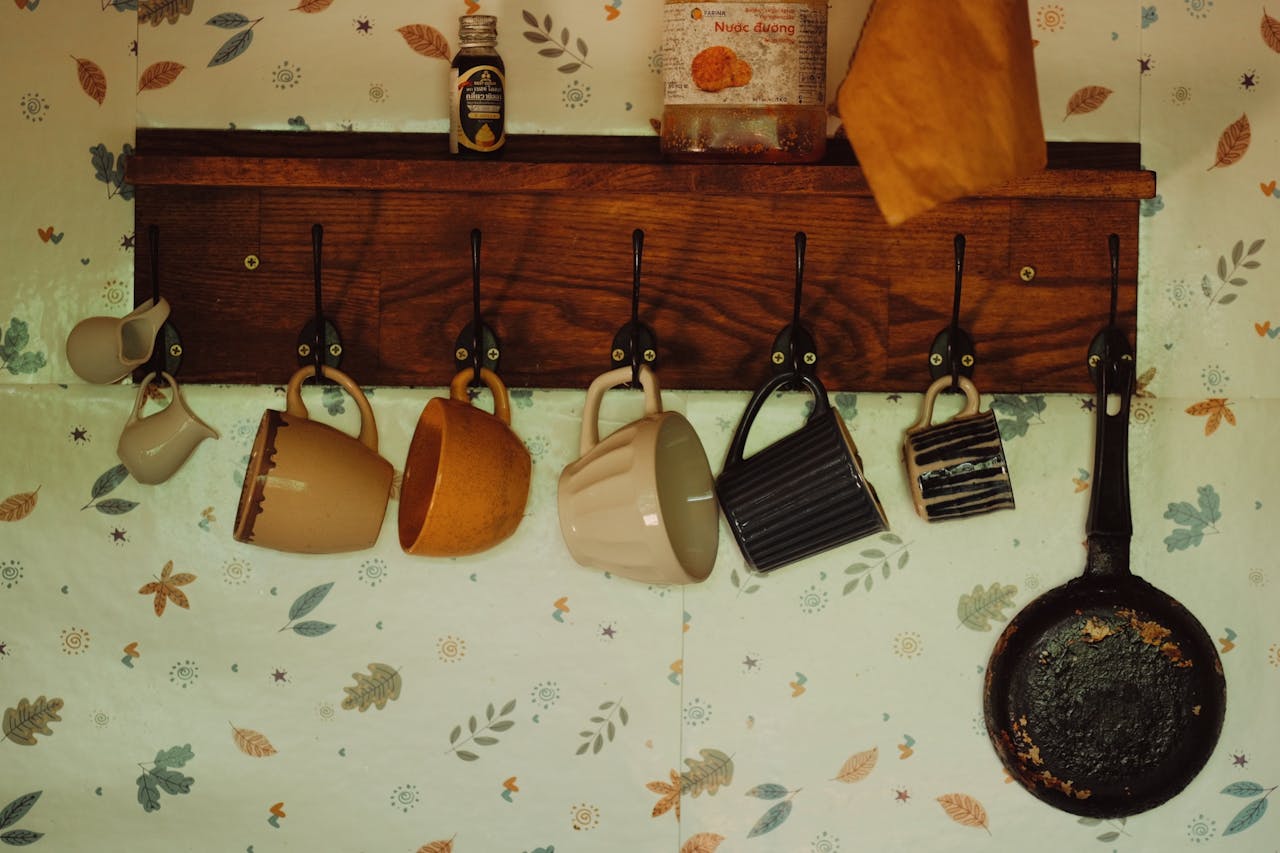
Mismatched, chipped mugs tend to multiply until they crowd out more useful items. Organizing experts who catalog unnecessary kitchen items often recommend editing mug collections aggressively. Chips and cracks are not just cosmetic; they can harbor bacteria and make hot drinks less safe to handle. When every shelf is lined with souvenir mugs and freebies, you may struggle to store glassware or bowls where you can reach them easily.
Choosing a small set of sturdy, stackable mugs and donating or recycling the rest instantly opens cabinet space. That breathing room lets you group everyday dishes together, so you spend less time hunting for a clean cup. It also makes your kitchen feel calmer and more intentional, which can subtly influence how often you cook at home instead of defaulting to takeout.
8) Old plastic cutting boards
Old plastic cutting boards that are deeply scarred or discolored take up space while posing potential hygiene issues. Food safety guidance in lists of items to discard stresses that deep grooves can trap raw meat juices and bacteria. Once a board is heavily scratched, it becomes harder to sanitize properly, even in a dishwasher. Keeping several worn boards stacked together not only clutters cabinets but also increases the risk that you will grab an unsafe surface when prepping food.
Replacing a pile of old boards with one or two high-quality options, such as a thick plastic board for meat and a wood or composite board for produce, simplifies storage. You can slide them vertically beside baking sheets or stand them in a narrow rack. That small change improves both cleanliness and workflow, giving you a reliable, stable surface every time you cook.
9) Extra water bottles and travel cups
Extra water bottles and travel cups often spill out of cabinets, yet you probably reach for the same few favorites. Decluttering lists that cover space-hogging items frequently call out overflowing drinkware collections. Promotional bottles, outdated sports jugs, and leaky tumblers can pile up behind the ones you actually use. Their odd shapes and fixed handles make them hard to stack, so they quickly consume entire shelves or drawers.
Keeping only a small rotation of reliable, easy-to-clean bottles and mugs makes storage far more manageable. You can organize them upright in a bin or on a narrow shelf, with lids nested separately in a shallow drawer. That setup reduces the daily frustration of falling bottles and missing tops, and it encourages you to maintain and wash the pieces you truly rely on.
10) Specialty baking pans
Specialty baking pans, such as novelty cake molds or single-purpose brownie trays, often sit unused for years between themed parties. Organizing advice that lists items professionals would toss notes that these pans are bulky and hard to store. A pan shaped like a cartoon character or a giant cupcake rarely nests with standard round or rectangular pans, so it steals space that could hold versatile sheets or roasting pans. You may keep it for sentimental reasons, even if you have not baked that specific cake in a long time.
Relying on basic 8‑inch or 9‑inch rounds, a 9‑by‑13‑inch pan, and a sturdy half sheet gives you flexibility for most recipes. When you need a novelty shape, you can often improvise with parchment and carving or borrow a pan for a one-off event. That approach keeps your cabinets focused on tools that support regular cooking instead of occasional themed projects.
11) Old spices and seasoning blends
Old spices and seasoning blends quietly crowd pantry shelves long after they have lost their flavor. Food experts who compile throw-away lists emphasize that ground spices typically fade after about one to three years, depending on storage. When jars are pushed to the back, you may buy duplicates of cumin, paprika, or chili powder, wasting both money and space. Stale seasonings also undermine your cooking, since you can follow a recipe exactly and still end up with flat-tasting food.
Sorting through your spice rack, checking dates, and discarding blends that smell weak or dusty can dramatically streamline your pantry. Consolidating what remains into a single drawer or tiered rack makes it easier to see what you have before shopping. That clarity supports more confident, flavorful cooking and reduces the temptation to rely on takeout when meals taste underwhelming.
12) Freebie plastic cups and containers
Freebie plastic cups and containers, from takeout sauce tubs to stadium cups, often sneak into your kitchen and never leave. Lists of clutter culprits repeatedly mention these freebies as low-value space hogs. Many are not designed for long-term use, may warp in the dishwasher, and often lack tight-fitting lids. Yet they accumulate in drawers and on top shelves, making it harder to store durable glassware or quality food containers where you can reach them.
Keeping just a handful of sturdy, well-fitting takeout containers for occasional leftovers and recycling the rest instantly lightens your storage load. You gain room for stackable bowls, measuring cups, or pantry staples that support everyday cooking. That small purge also reduces the visual noise in your cabinets, making your kitchen feel more organized and easier to maintain.
More from Decluttering Mom: