Storage bins are supposed to simplify your life, but they often become clutter magnets that hide what you actually need. When you understand exactly which habits and items clog up those containers, you can reclaim space and make every bin work harder. Use this list to spot the sneaky culprits that fill your storage before you realize it and to reset how you pack, label, and rotate what you keep.
1) Old bills and paper statements that never get sorted
Old bills and paper statements are classic bin cloggers because they feel important, yet you rarely need most of them. Utility bills, bank statements, and printed confirmations tend to get tossed into a “for later” bin that quietly fills up. In many cities, billing systems already spell out key details, such as how each monthly bill notes the exact draft date, so you do not need to keep every envelope forever. When you stash months of paperwork in a bin, you bury the few documents that actually matter, like tax records or legal notices.
Letting paper pile up also has real stakes for your household. If you cannot quickly find the one statement that shows a disputed charge or a service change, you lose leverage in any follow up. Overflowing paper bins also make it harder to spot identity theft risks, because sensitive information is scattered instead of securely filed or shredded. By limiting what you keep to clearly defined categories and scanning what you only need occasionally, you prevent one of the most common and preventable sources of storage-bin congestion.
2) Expired warranties and appliance manuals
Expired warranties and outdated appliance manuals quietly clog storage bins because they masquerade as essential paperwork. You might toss every booklet from a new refrigerator, vacuum, or television into a bin “just in case,” then never revisit the pile. Over time, that bin fills with manuals for devices you no longer own and warranty cards that expired years ago. The result is a dense stack of paper that makes it harder to find the one current manual you actually need when something breaks.
The stakes go beyond wasted space. When you cannot quickly locate a valid warranty or up to date instructions, you may pay for repairs that should have been covered or misuse a product because you are guessing at the settings. A better approach is to keep only active warranties and manuals for items still in your home, ideally in a clearly labeled folder or digital archive. Regularly purging the rest keeps your storage bins from becoming a graveyard of obsolete paperwork that slows you down at the worst possible moment.
3) Single-purpose kitchen gadgets you rarely use
Single-purpose kitchen gadgets are notorious for clogging storage bins, especially in small homes. Items like avocado slicers, novelty waffle makers, or specialized peelers often seem useful when you buy them, but many end up used once and then tucked into a bin. Because they are oddly shaped and bulky, they waste more space than a simple knife or pan that can handle multiple tasks. When a bin fills with these gadgets, it becomes harder to see and reach the cookware you rely on every day.
This clutter has practical consequences. Overstuffed kitchen bins can discourage you from cooking at home because pulling out what you need feels like a chore. That, in turn, can push you toward more takeout and higher food costs. By honestly assessing which gadgets earn their footprint and donating or selling the rest, you free up room for versatile tools and pantry staples. The more intentional you are about what goes into those kitchen bins, the easier it becomes to cook efficiently and keep your counters clear.
4) Outgrown kids’ clothes and shoes
Outgrown kids’ clothes and shoes often start as a sentimental stash that quietly takes over entire bins. Parents save tiny onesies, preschool T-shirts, and worn sneakers “for the next child” or as keepsakes, but rarely set limits on how much to keep. As children grow quickly, every season adds another layer of garments that no longer fit. Those bins become dense, heavy, and hard to sort, which makes it unlikely you will actually reuse what is inside when a younger sibling needs clothes.
The stakes are both emotional and practical. When bins are jammed with unsorted sizes, you may end up buying new clothes because it is faster than digging for hand-me-downs, which wastes money and space. At the same time, truly meaningful items get lost in the crowd of everyday T-shirts and socks. Setting a clear rule, such as keeping only a small curated selection of favorites and a limited number of neutral basics, helps you preserve memories without sacrificing storage. Regularly donating the rest keeps bins functional instead of overwhelming.
5) Seasonal décor you never rotate
Seasonal décor is a classic storage-bin filler, especially when you keep adding new pieces without retiring older ones. Holiday lights, themed tableware, and decorative figurines often get packed into bins at the end of each season with little editing. Over the years, those bins multiply and become heavier, making it a chore to pull them out again. When opening a décor bin feels exhausting, you are less likely to rotate what you own, so the same few items stay in circulation while the rest just occupy space.
This pattern has ripple effects on your home and budget. If you cannot easily see what you already have, you may buy duplicate decorations or new themes every year, further swelling the bin count. Meanwhile, crowded bins increase the risk of breakage, especially for fragile ornaments or ceramics. A more deliberate approach, such as reviewing each item before it goes back into storage and setting a fixed number of bins per holiday, keeps your décor collection intentional. That way, your seasonal items enhance your space instead of overwhelming your closets.
6) “Just in case” electronics and cables
Old electronics and tangled cables are some of the most stubborn bin cloggers. Retired smartphones, obsolete routers, and mystery chargers often get tossed into a catchall tech bin because you might “need them someday.” Over time, that bin becomes a dense knot of cords and devices that are incompatible with your current setup. When you actually need a specific cable, you end up digging through a frustrating tangle, and the odds of finding the right connector quickly are low.
There are real stakes in letting that pile grow unchecked. Storing outdated electronics instead of recycling them keeps hazardous materials in your home and delays responsible disposal. It also makes it harder to track the few items that still hold data, such as old phones or hard drives that should be wiped before you let them go. By labeling cables, keeping only those that match devices you actively use, and promptly recycling obsolete gear through certified programs, you turn that chaotic bin into a manageable toolkit instead of a clutter trap.
7) Bulk toiletries and cleaning supplies
Bulk toiletries and cleaning supplies often start as a smart cost-saving move but quickly clog storage bins when they are not tracked. Extra shampoo bottles, multi-packs of paper towels, and large containers of detergent tend to get stacked in bins or totes wherever there is space. Without a clear inventory, you may forget what you already have and buy more during sales, which leads to bins overflowing with duplicates. That crowding makes it harder to reach the items at the bottom, so some products expire or leak unnoticed.
The implications go beyond a messy closet. Excess chemical cleaners and pressurized cans stored in cramped, poorly ventilated bins can pose safety risks if containers crack or rust. Meanwhile, money tied up in overstocked supplies could have been used elsewhere in your budget. A simple system, such as limiting bulk purchases to what fits on a single shelf or in one clearly labeled bin, keeps your stockpile visible and manageable. Rotating items so the oldest products are used first also prevents waste and keeps your storage working efficiently.
8) Hobby supplies from abandoned projects
Hobby supplies from abandoned projects are a subtle but powerful source of bin clutter. Yarn from a half-finished blanket, scrapbooking paper, model kits, or painting tools often get packed away when enthusiasm fades. Because hobbies are tied to identity and aspirations, it can feel hard to let those materials go, so they linger in bins for years. As you pick up new interests, you add more supplies without clearing out the old, and storage containers become layered archives of projects that never quite happened.
This buildup has emotional and practical costs. Every time you open a hobby bin and see unfinished work, you may feel guilt or pressure, which can sap motivation to start something new. At the same time, the clutter makes it harder to find the tools and materials you actually want to use now. By honestly assessing which hobbies still matter to you and donating or selling supplies for the rest, you free up both physical and mental space. Curating a smaller, active set of materials keeps your bins aligned with how you actually spend your time.
9) Sentimental gifts you do not like or use
Sentimental gifts that you do not truly like or use often migrate into storage bins because you feel obligated to keep them. Items such as decorative knickknacks, clothing in the wrong size, or framed art that does not fit your style can be hard to display, yet equally hard to discard. As more birthdays, holidays, and special occasions pass, those rarely used gifts accumulate. Bins labeled “keepsakes” or “special items” gradually fill with objects that carry guilt more than genuine meaning.
The stakes are significant for both your space and your relationships. When bins are packed with unwanted gifts, there is less room for items that genuinely matter to you, such as family photos or heirlooms. You may also avoid opening those containers because they trigger mixed feelings, which means even the truly meaningful pieces stay buried. Setting personal guidelines, like keeping only items tied to specific memories or people, helps you honor relationships without sacrificing your home’s functionality. Thoughtful donations or re-gifting, when appropriate, can give those objects a life beyond your storage bins.
10) Duplicate tools and hardware
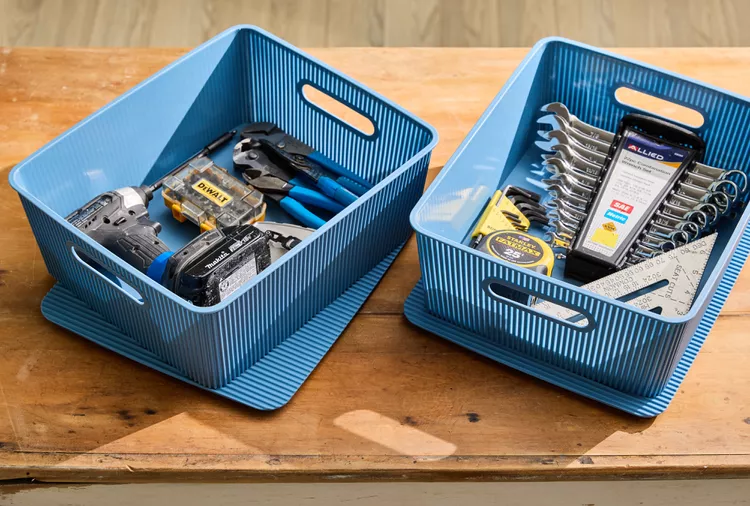
Duplicate tools and hardware quietly clog storage bins in garages, sheds, and closets. It is easy to misplace a screwdriver or tape measure, buy a replacement, then later find the original buried in a bin. Over time, you accumulate multiple hammers, pliers, and boxes of nails or screws, many of which you rarely touch. When these duplicates are scattered across several containers, you waste time hunting for the right tool and may still end up buying another because you cannot see what you already own.
This redundancy has clear consequences. Extra tools and hardware take up valuable space that could be used for seasonal gear or emergency supplies, and the cost of repeated small purchases adds up. A more efficient approach is to centralize your core toolkit in one accessible bin or toolbox and reserve separate, clearly labeled containers for specialty items. Periodically sorting and consolidating hardware into divided organizers also prevents bins from becoming heavy, unsorted catchalls that slow down every home repair.
11) Party supplies and disposable tableware
Party supplies and disposable tableware often linger in storage bins long after the guests have gone home. Leftover paper plates, themed napkins, plastic cutlery, and half-used decorations get tossed into a bin with the idea that they will be handy for the next event. In reality, each gathering tends to have a different theme or color scheme, so you buy new supplies anyway. The bin gradually fills with mismatched items that are rarely used together, making it harder to gauge what you actually have on hand.
The clutter has both environmental and financial implications. When you cannot easily see or access existing supplies, you are more likely to purchase fresh packs of disposable items, which increases waste and costs. Overstuffed bins can also crush or warp decorations, so they look worn when you finally pull them out. A better strategy is to keep a small, neutral set of reusable serving pieces and limit disposable items to what you can realistically use within a year. Regularly combining partial packs and donating excess stock prevents party bins from becoming long term clutter zones.
12) Random “junk drawer” items swept into bins
Random “junk drawer” items swept into bins are often the final layer of clutter that makes storage feel unmanageable. When you declutter in a hurry, it is tempting to scoop loose batteries, keychains, pens, takeout menus, and small toys into a bin just to clear surfaces. Without sorting, those containers become opaque catchalls where nothing has a defined place. Over time, you forget what is inside, so you buy replacements for items you already own, and the bin turns into a black hole of miscellaneous stuff.
This habit undermines every other organizing effort. When bins are filled with unsorted odds and ends, it becomes nearly impossible to maintain systems for tools, office supplies, or household essentials. You also lose track of small but important items, such as spare keys or warranty cards, which can create stress when you need them urgently. Establishing clear categories, using smaller dividers inside bins, and resisting the urge to “just toss it in” keeps these containers purposeful. The more intentional you are about what earns a spot in a bin, the less likely it is to become a hidden junk drawer.
More from Decluttering Mom: