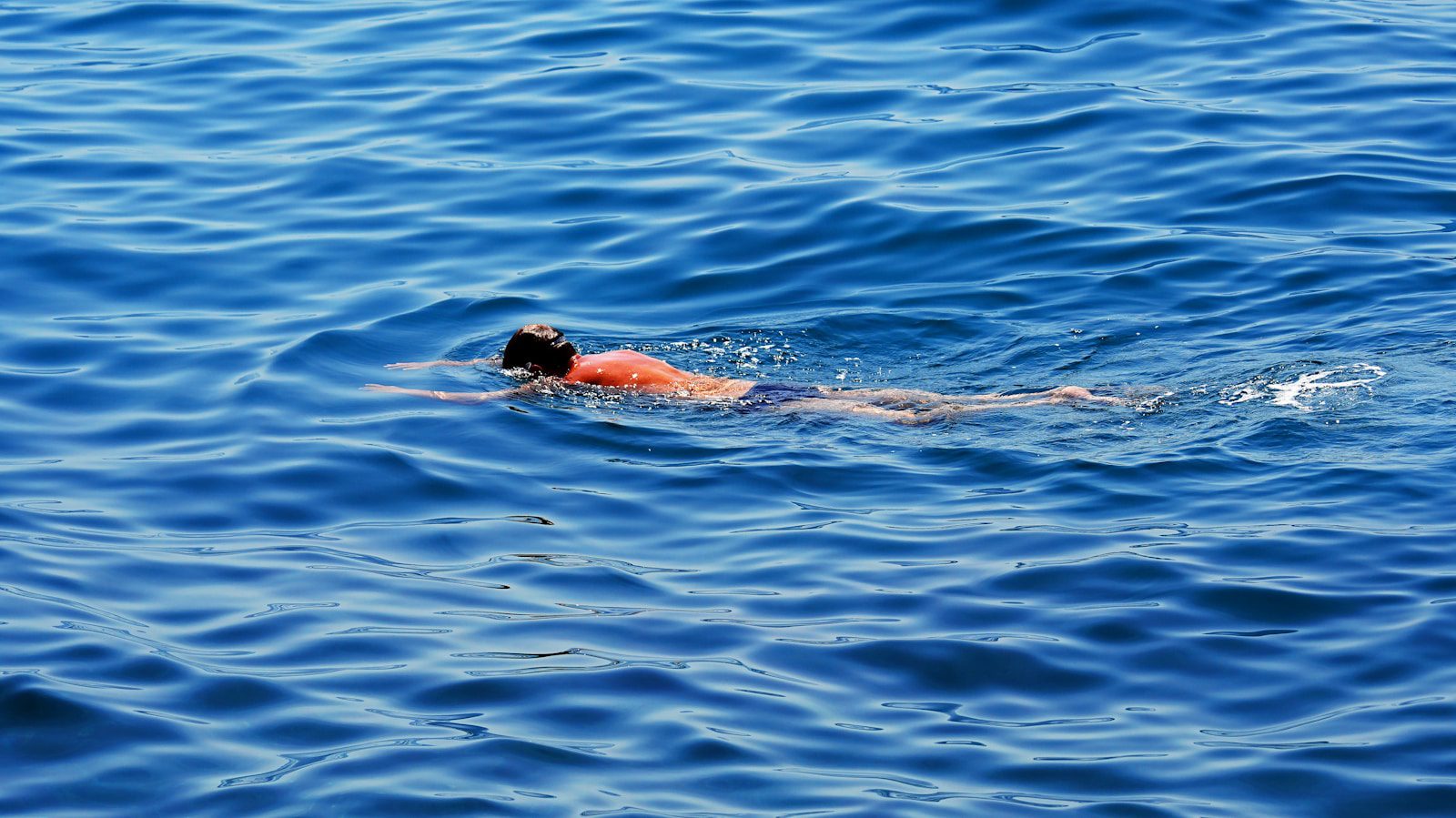
A family day on the water off Western Australia turned into a survival story that sounds almost impossible. A 13-year-old boy, swept out to sea with his mother and younger siblings in Geographe Bay, swam for roughly four hours to reach shore and raise the alarm, giving rescuers the chance to find his stranded family alive. The distance was estimated at about 4 km through choppy, shark-frequented water, a feat seasoned officers later described as “superhuman” and the reason his mom and siblings are still here.
The teenager’s effort did more than just get him to land. By pushing through fatigue and fear, he set off a large-scale search operation that pulled in boats, a rescue helicopter and marine authorities across Western Australia. That chain of events, from the moment the paddleboard drifted away to the final rescue, shows how a single decision by a child can tilt the odds in a life-or-death situation.
From calm bay to nightmare drift
The family had headed out into Geographe Bay expecting a relaxed afternoon, the kind of outing locals in South West WA know well. At some point, the children were on a paddleboard while their mother stayed nearby in the water, and conditions that looked manageable from shore turned treacherous once wind and swell picked up. The board and swimmers began to drift, pulled steadily farther from the beach until the coastline was no longer an easy swim away.
As the current carried them out, the boy’s mother reportedly tried to keep the younger children calm while they clung to the paddleboard. The teenager, seeing the gap to shore widening, made a call that no 13-year-old should have to make: stay with the group and risk all of them being dragged even farther, or strike out alone for land to get help. According to police accounts, he chose to swim, leaving his mother with the other children and the board as a makeshift liferaft while he turned toward a shoreline that was already slipping out of sight.
The four-hour “superhuman” swim
Once he committed, the boy settled into a rhythm that rescuers later struggled to explain. He swam for around four hours, covering roughly 4 km through water known for sharks and unpredictable swells, a distance that would test fit adults, let alone a teenager. Marine authorities in Western Australia described his effort as a harrowing swim through shark-frequented waters, the kind of thing that usually appears in worst-case training scenarios rather than real life.
By the time he finally staggered onto land, daylight was fading and his body was close to spent. Officers later said they were stunned that a child had managed to keep going for that long without a flotation device, especially in choppy conditions. One senior figure in the Western Australia Police Force told reporters he initially thought the reported 4 km distance had to be wrong until it was confirmed by marine tracking. Rescuers later used the word “superhuman” to describe both his survival instincts and the sheer physical grind he endured.
Raising the alarm and the race to find his family
Reaching shore was only half the job. Once on land, the teenager still had to get someone to listen, fast. He managed to alert locals, who then contacted emergency services, triggering a full-scale response from South West WA police and marine units. Authorities say the boy was able to raise the alarm by around 18:00 local time, which lined up with 10:00 GMT on Friday, giving them a crucial window before darkness fully set in.
From there, the operation scaled up quickly. Search boats, including assets linked to Naturaliste Marine, swept the bay while Western Australia’s rescue helicopter joined the search overhead. A detailed account of the search effort notes that crews used the boy’s description of currents and drift to narrow down where his mother and siblings were likely to be. Every minute counted, and the fact that he had reached shore by early evening rather than after dark gave rescuers a fighting chance.
Finding a family still afloat
When crews finally spotted the paddleboard, the scene was as fragile as it gets. The mother and children were still clinging to the board, exhausted and cold after hours in open water, but alive. Reports from search teams describe rough seas and fading light as they pulled the family aboard, conditions that could easily have turned fatal if the operation had been delayed. The mother later told officers she had focused on keeping the younger kids on the board and trusted her eldest to make it to shore.
Officers said the woman was physically drained, with one account noting she “just said thank you” to rescuers from the Western Australia Police as they brought her aboard. The children were checked for hypothermia and dehydration but were reported to be in relatively stable condition considering how long they had been adrift. For the officers on scene, the link between the boy’s swim and the family’s survival was blunt: without his decision to leave the board and push for land, they likely would have been searching a much larger, darker patch of ocean.
Why experts keep using the word “superhuman”
Seasoned rescuers do not throw around praise lightly, which is why their language about this case stands out. One senior figure described the teenager’s survival instincts as “superhuman”, pointing to the combination of distance, conditions and the boy’s age. Another account from Western Australia framed it as a “beach miracle,” the kind of outcome that usually ends in tragedy rather than a family reunion.
Experts in marine safety have also highlighted how rare it is for a 13-year-old to maintain a steady stroke for four hours in open water, especially in an area described as shark-frequented. Reports from search crews and international coverage have all zeroed in on the same point: this was not just a strong swimmer, it was a teenager who kept his head, read the conditions and made a brutally hard choice under pressure.
More from Decluttering Mom: