If you crave a simpler home, the fastest path is letting go of what quietly drains your space, time, and attention. Research on clutter, decision fatigue, and stress shows that editing your belongings can change how your rooms feel and how your days run. Use these 14 evidence-backed categories to focus your energy where it will make the biggest difference.
1) Excess Overall Possessions

Excess overall possessions are the backdrop of cluttered living, and the scale is staggering. According to a 2019 study by UCLA’s Center on Everyday Lives of Families, American households average 300,000 items, and that accumulation contributes to 10% of household fires from clutter buildup, as reported in research on home clutter. When every surface and storage area is packed, you are not just dealing with visual noise, you are also increasing real safety risks.
Letting go of sheer volume is the foundation of a simpler home, because it reduces what you have to clean, maintain, and mentally track. Start by scanning for obvious excess, like stacks of unused linens or boxes you have not opened in years. Each bag that leaves your home lowers the baseline of stuff you must manage, which in turn lowers stress and makes every later organizing project easier.
2) Clothes That Don’t Spark Joy
Clothes that do not spark joy are prime candidates for release if you want calmer closets. In The Life-Changing Magic of Tidying Up, Marie Kondo advises discarding items that do not “spark joy,” and a Good Housekeeping survey cited readers reporting a 40% reduction in possessions after applying that standard. Her method encourages you to handle each garment and notice your emotional response, a process echoed in the Start In the Spark Joy challenge that begins with discarding before organizing.
When you remove clothes that feel heavy, itchy, or tied to an old version of yourself, you free space for a wardrobe that actually supports your life. Fewer, better-loved pieces mean faster mornings and less laundry overwhelm. The ripple effect is practical as well as emotional, because a closet filled only with favorites is easier to maintain and less likely to slide back into chaos.
3) Unused Wardrobe Items
Unused wardrobe items quietly clog your storage even if they technically still fit. The National Association of Productivity & Organizing Professionals reported in its 2022 survey that clothing you do not wear takes up 30% of closet space on average, and that dead space fuels decision fatigue. When every hanger is crammed, simply choosing a shirt becomes a draining task, especially on busy mornings.
To simplify, separate what you actually wear from what you only intend to wear. Turn all hangers backward at the start of a season and flip them only after you use an item, then review anything still backward after a few months. Those unworn pieces are strong candidates to donate or sell, and reclaiming that 30% gives you breathing room, clearer visibility, and a more streamlined daily routine.
4) Expired Pantry Staples
Expired pantry staples are clutter that literally costs you money. A 2021 analysis from Consumer Reports found that 25% of pantry items in U.S. homes are expired, wasting $1,500 annually per household, a pattern highlighted in guidance on reducing food waste. When shelves are packed with outdated cans, stale grains, and forgotten condiments, you are more likely to rebuy what you already own and less likely to cook what you planned.
To reverse that trend, pull everything out and check dates, grouping items by category and age. A strategy echoed in the Move and Use Soon approach is to move older items to the front and create a clearly labeled “Use Soon” bin. Regularly clearing expired food not only protects your budget, it also makes meal planning simpler because you can actually see what is available.
5) Duplicate Kitchen Tools
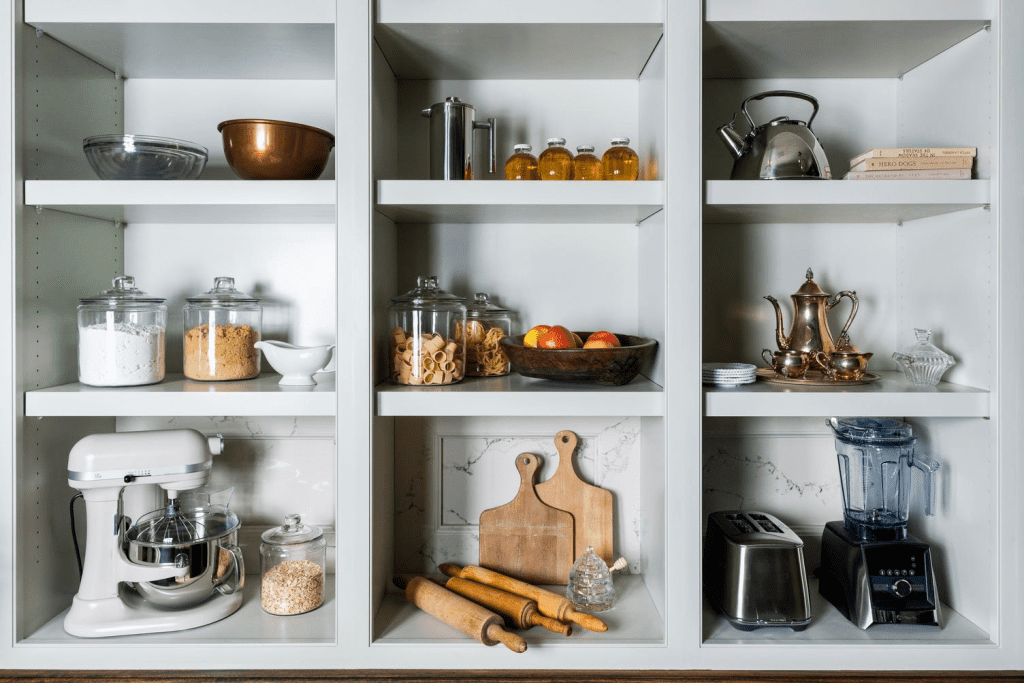
Duplicate kitchen tools are a classic example of clutter that hides in plain sight. IKEA’s 2018 Life at Home report revealed that 55% of people keep duplicate kitchen gadgets they rarely use, which complicates daily routines by crowding drawers and countertops. When you have three peelers, four spatulas, and multiple nearly identical baking pans, you spend extra time digging for the one you actually prefer.
Editing duplicates is a fast win for a simpler home. Pull out all similar tools, choose the best-quality or most comfortable version, and let the rest go. Social media advice on Decluttering that says goodbye to Digit Kitchen Tools and gadgets that Cost you space reinforces the idea that extras are not harmless, they are friction. A streamlined kitchen makes cooking feel lighter and reduces the temptation to keep buying more gadgets.
6) Old Print Media
Old print media, especially magazines and newspapers, tends to linger long after its usefulness. A 2023 Apartment Therapy survey of 1,000 readers found that these stacks occupy 15% of surface space and foster dust and visual chaos. Coffee tables, nightstands, and sideboards become landing zones for reading material you meant to enjoy but never quite reached, making rooms feel busier than they are.
To simplify, decide on a clear limit, such as one magazine file or a single small basket, and recycle anything that does not fit. If there are articles you truly want to keep, tear out only those pages and store them in a slim folder. By shrinking your paper footprint, you reclaim surfaces for functional or meaningful items and reduce the dusting and straightening that constant piles require.
7) Outdated Beauty Products
Outdated beauty products are another hidden source of clutter and potential irritation. The American Cleaning Institute reported in 2020 that unused personal care items past their 12 to 24 month shelf life account for 20% of bathroom clutter. Old mascara, expired sunscreen, and half-used serums crowd medicine cabinets and drawers, making it harder to find the products you actually rely on each day.
Check labels for open-jar symbols and expiration dates, then group items into “use now,” “test soon,” and “discard.” Toss anything that smells off, has separated, or is clearly beyond its recommended window. Clearing that 20% not only simplifies your morning and evening routines, it also reduces the risk of skin reactions from degraded formulas and encourages you to finish what you own before buying more.
8) Sentimental Keepsakes
Sentimental keepsakes, especially childhood items, can quietly dominate your storage. In The More of Less, Joshua Becker notes that reader testimonials described sentimental belongings like old trophies, stuffed animals, and school projects filling 25% of storage space without daily use, a pattern highlighted in a review of his approach. When a quarter of your closets and bins are devoted to the past, it becomes harder to store what you need for the present.
Rather than keeping everything, choose representative pieces. Create a small memory box for each person, photograph bulky items, and consider passing heirlooms to relatives who will actively enjoy them. Letting go of excess sentiment does not erase your history, it makes room for new experiences and reduces the emotional weight that overstuffed storage can carry.
9) Surplus Electronics Cables
Surplus electronics cables are a modern clutter category that quickly spirals. A 2022 Wirecutter guide reported that excess cables and cords create 40% of desk clutter, with only 10% actively used at any given time. That tangle of USB cords, HDMI cables, and old phone chargers not only looks messy, it also makes it harder to troubleshoot when something actually needs to be plugged in.
To simplify, gather every cord in one place and match them to current devices, labeling the keepers with masking tape. Store a small, clearly marked backup set and recycle the rest through electronics programs. When your desk is free of cable nests, you gain visual calm and a more efficient workspace, which supports focus whether you are working from home or managing household tasks.
10) Impulse Decor Purchases
Impulse decor purchases often crowd shelves without adding real joy. The Container Store’s 2021 organizing trends report found that decor items bought on impulse account for 35% of unused home accents, leading to overcrowded surfaces and bookcases. Vases you never fill, trendy figurines, and extra picture frames can quickly turn display areas into clutter zones instead of curated focal points.
Editing these pieces starts with asking whether you would buy each item again today. If the answer is no, consider donating or selling it so someone else can enjoy it. Advice from Declutter sessions that promise Quick wins when you are Ready to let go of 20 common items underscores how releasing decor you do not love can instantly refresh a room. Empty space on a shelf is not a failure, it is breathing room.
11) Broken Household Appliances
Broken household appliances, from old toasters to nonworking blenders, often linger out of guilt or repair optimism. A 2019 study in the Journal of Environmental Psychology reported that letting go of broken appliances reduces home stress by 28%, because unused items accumulate as constant visual reminders of unfinished tasks. Every time you see that broken vacuum, you are reminded of something you have not fixed.
To simplify, set a firm deadline for repairs, such as 30 days, and schedule service immediately if the item truly matters. If it is still sitting untouched after that window, recycle or dispose of it responsibly. Clearing these stalled projects lightens your mental load and frees storage for tools and appliances that actually support your daily routines.
12) Accumulated Mail and Papers
Accumulated mail and papers are one of the most common sources of household overwhelm. In Outer Order, Inner Calm, Gretchen Rubin cites a survey where participants who discarded old mail and papers gained 2 hours weekly in free time, a finding highlighted in an overview of her organizing strategies. When bills, flyers, and printouts pile up, you spend extra time shuffling stacks and searching for what matters.
To change that pattern, create a simple system: one inbox tray, a shred bin, and a small file for active documents. Sort incoming mail immediately, recycling most of it on the spot. Regularly purging outdated paperwork not only protects your schedule, it also reduces the risk of missed deadlines and lost forms, which can have financial and logistical consequences.
13) Unused Hobby Supplies
Unused hobby supplies often migrate to garages, basements, and spare rooms, where they quietly take over. In a 2020 podcast episode, The Minimalists and Joshua Fields Millburn noted that hobby materials unused for over a year comprise 20% of garage clutter, as detailed in the episode transcript. Paints, scrapbooking tools, camping gear, and sports equipment can all fall into this category once your interests shift.
To simplify, be honest about which hobbies still fit your current life. If you have not touched the supplies in twelve months, consider selling them or donating to schools, community centers, or local clubs. Clearing that 20% of dormant gear opens up storage for activities you truly enjoy now and makes it easier to access everyday items like tools, seasonal decorations, or strollers.
14) Unwanted Gifted Items
Unwanted gifted items can be surprisingly hard to release, even when they do not suit your taste. A 2023 Real Simple article based on professional organizer Regina Lark’s research reported that letting go of gifts you do not love frees up 15% of shelf space without guilt. Her work emphasizes that the purpose of a gift is to convey care at the moment it is given, not to obligate you to store it forever.
To simplify, separate the sentiment from the object. Keep a mental or written note of who gave it to you and the occasion, then donate or rehome the item itself. Guidance from Designers who suggest editing decor after 50 reinforces that your home should reflect your current style and needs. Releasing those pieces creates space for belongings that genuinely support and delight you.
More from Decluttering Mom: