


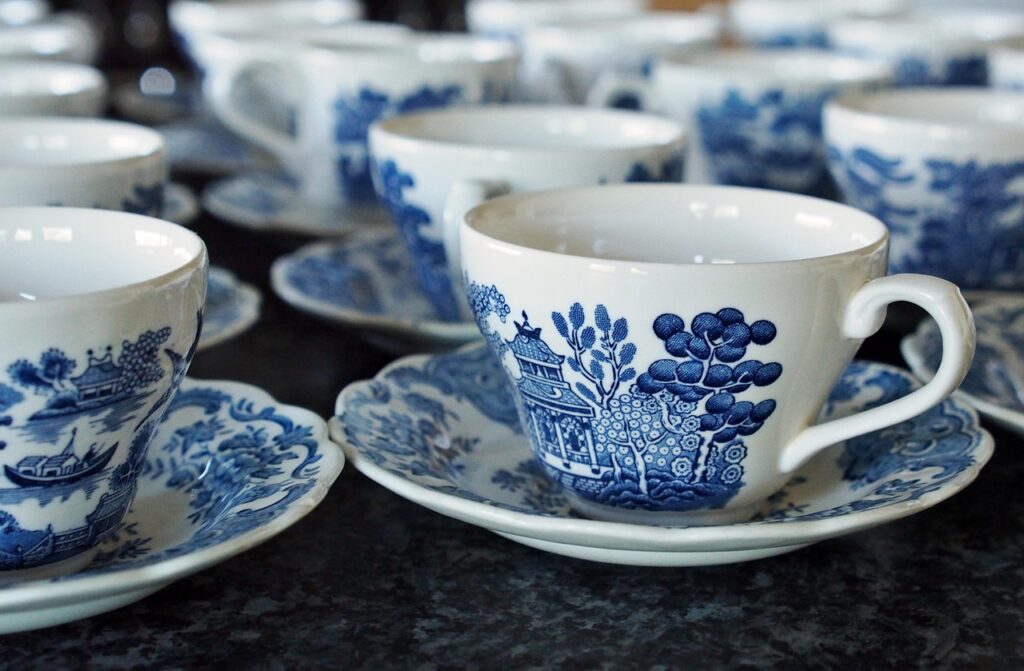
You likely have pieces tucked away or glimpsed at vintage shops that catch your eye more than others. This article shows five Noritake patterns that consistently command strong prices so you can spot pieces worth holding onto or hunting for.
You’ll get a clear sense of why certain designs—from bold Art Deco birds to classic blue chevrons and gilt-trimmed florals—still attract collectors and high bids. Expect practical ID tips and what makes each pattern desirable without overwhelming detail.
Noritake Art Deco Tropical Bird
You’ll spot bold, stylized birds and geometric motifs that scream Art Deco flair. Pieces from this pattern—especially early hand-painted sets—draw collector interest for the design and condition.
Look for tight gilding, vibrant enamels, and intact edges; chips and heavy wear drop value fast. If you want examples and recent sales, check a dedicated pattern guide for actual sold prices.
Noritake Sterling Cove
You’ll recognize Sterling Cove by its clean white body and subtle platinum trim, a look that suits both formal dinners and everyday use.
Produced from 1986 to 1999, this pattern is discontinued, which drives interest among collectors and people replacing pieces.
If you need extras, check specialist dealers and marketplaces for listings of the Sterling Cove pattern.
Noritake Blue Chevron

You’ll spot Blue Chevron by its bold zigzag banding and crisp cobalt tones, often paired with simple gold or platinum trim.
Collectors like it because the design reads modern yet still carries vintage charm, and matching sets—especially soup bowls and serving pieces—bring higher prices.
Look for a clear Noritake backstamp and good glaze condition; crazing or rim chips lower value quickly.
For more on identifying valuable Noritake patterns and market trends, see this guide to collectible Noritake china patterns.
Noritake Morimura 5155
You’ll spot Morimura 5155 by its delicate floral sprays and the subtly scalloped rim that feels classic without being fussy. Collectors prize earlier hand-painted examples, especially plates and teacups in excellent condition.
Expect moderate market interest; rarity and condition drive prices more than the pattern name alone. Learn to read the backstamp to confirm era and authenticity before you buy.
For identification help, check pattern guides like the Noritake marks overview at Antique-Marks.
Noritake Azalea
You’ll spot Noritake Azalea by its pink hand-painted azaleas on a white ground with gold trim.
Pieces made between 1918 and 1941, especially hand-painted ones, attract collectors and higher prices.
Look for subtle variations—each piece can differ because artists painted them by hand.
Check the backstamp and condition; chips or worn gold trim lower value quickly.
See a pattern guide and history for identification details at WorthPoint.
More from Decluttering Mom: