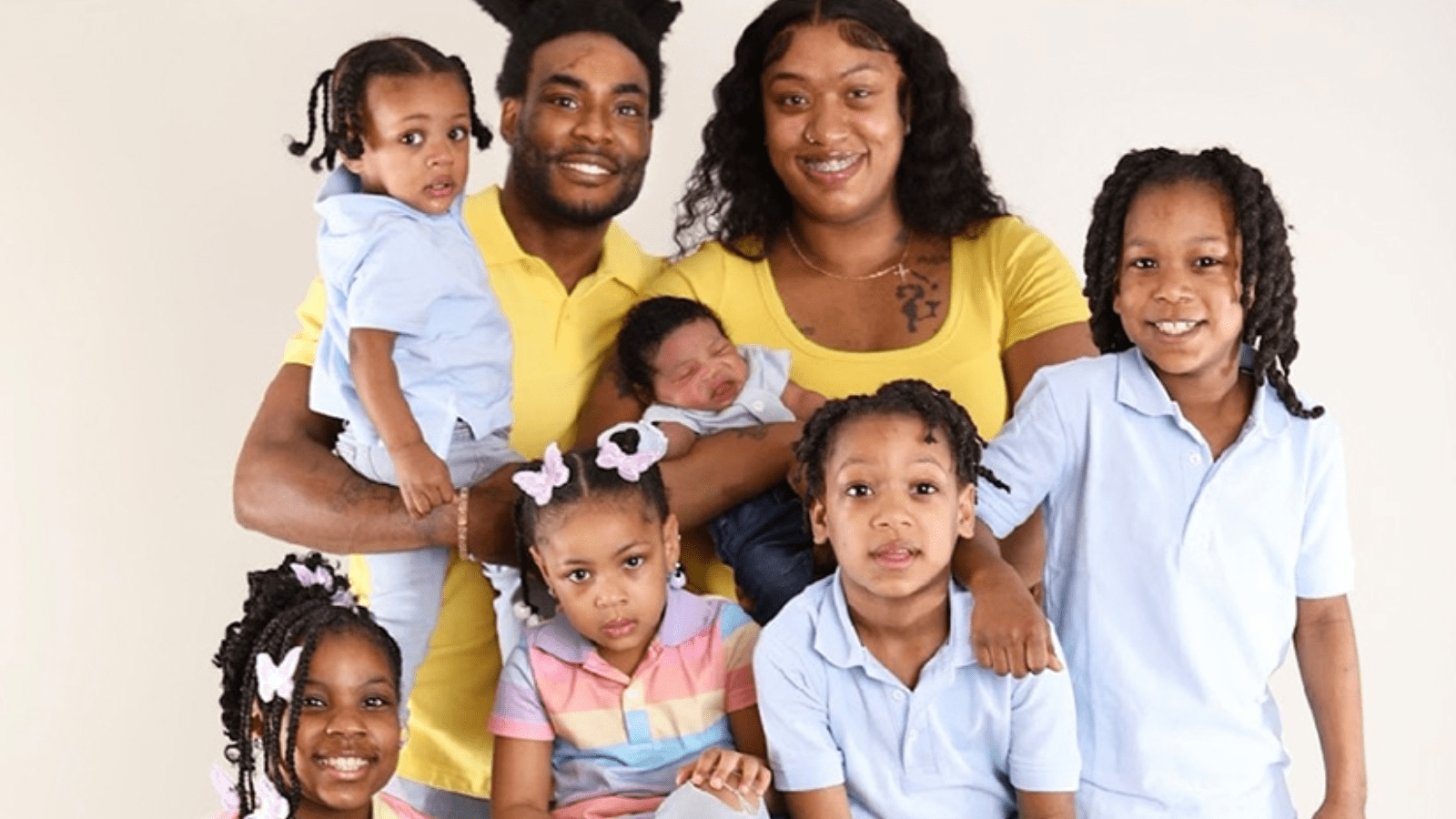
When a Virginia couple introduced the internet to their six children, all sharing nearly the same name, the reaction was instant and loud. Some people were charmed, others were confused, and plenty were convinced it had to be a prank. Instead, the parents say it is a carefully thought out family tradition that ties their kids together in a way that feels both playful and deeply serious.
Behind the viral clips and comment-section debates is a story about legacy, creativity and what it means to raise kids in a world where every choice can be screenshotted. The parents insist that giving all six children variations of one name is less about shock value and more about building a shared identity that starts the moment each baby is born.
The Virginia couple behind the viral names
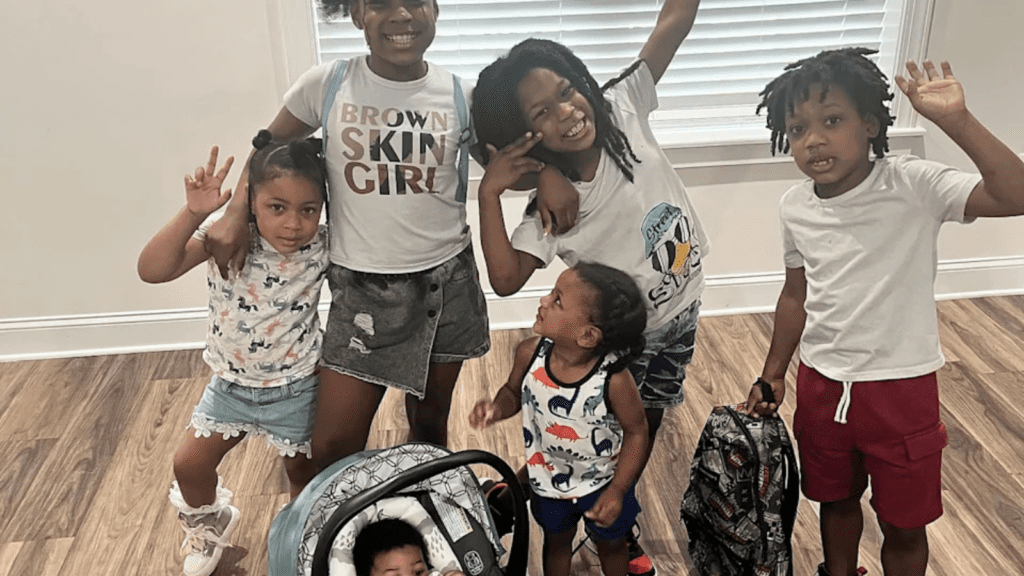
The parents at the center of this naming experiment are Carolyn Cousin and her fiancé, Cameron Butts, a young couple from Virginia who are already used to living part of their lives online. Both are TikTok influencers, and they have turned their household into a kind of running series where followers watch the kids grow up, crack jokes and pile onto the couch for family videos. As their audience grew, so did curiosity about how they were raising a big family, and the names quickly became one of the most talked about details.
Carolyn Cousin and Cameron Butts have leaned into that attention, explaining that they see their children as a tight unit and wanted their names to reflect that from day one. In interviews, they have described themselves as intentional about building a legacy, one child at a time, and they frame the matching names as part of that long game. The couple’s social media presence, which highlights their life in Virginia, has turned their naming choice into a national talking point.
Six kids, one shared sound
At the heart of the story is the fact that all six children have names built around the same core sound, “Cam.” Each child has a slightly different twist on that base, with changes in spelling or added syllables that make the names technically distinct while still clearly related. The parents have described it as a way to give each child their own identity without losing the sense that they are part of a matched set, almost like siblings in a series of novels who all share a recognizable family trait.
On social media, a widely shared clip described how each child has a unique twist on Cam, which helped viewers understand that the names are not literally identical, even if they sound almost the same out loud. Coverage of the family has also pointed out that the youngest, Camarion, was only 7 months old when the story took off, underscoring how committed the parents are to keeping the pattern going as their family grows.
How the tradition started
According to the couple, the naming pattern did not begin as a viral stunt but as a personal decision that stuck. Before Cameron Butts even became a father, he had a clear idea of the kind of legacy he wanted to build, and the name “Cam” sat at the center of it. Once the first baby arrived, the shared sound felt right, and by the time they were expecting again, the idea of breaking the pattern felt stranger than continuing it.
They have said that the choice started as something that simply made them smile, then evolved into a tradition they wanted to protect. In one account, Cameron is described as having the plan in mind long before the couple’s TikTok following grew, which undercuts the assumption that the names were chosen for clicks. A detailed look at their story notes that, as he put it, “it just works out,” a sentiment echoed in reporting that traces the pattern back to his early vision for fatherhood and links it to the way the names all align with each other through small spelling changes in each spelling.
What daily life with six “Cams” actually looks like
From the outside, it is easy to imagine total chaos every time someone yells “Cam” across the house. The parents say the reality is more organized than that, mostly because nicknames and context do a lot of heavy lifting. In the kitchen, one child might be “Cammy,” another “Rion,” and another “Cam Jr.,” and by now the kids instinctively know who is being called based on tone, location and routine. It is the same way siblings in any big family learn that “Mom, come here” might mean them or might not, depending on who is closest to the laundry basket.
In one widely shared anecdote, a relative joked about the confusion when a girl named Camryn heard about the family and reacted with disbelief, captured in the line “Girl please say ur kidding,” which was later referenced in coverage of the Girl Camryn moment. The parents, for their part, have said that in their own home the system feels natural, and that the kids respond quickly when needed, which suggests that the confusion outsiders imagine is more of an online joke than a daily crisis.
Why the parents say it matters
For Cousin and Butts, the naming pattern is not just a bit. They talk about it as a way to signal that their children are part of something bigger than themselves, a family story that started before they were born and will continue after they are grown. The shared “Cam” sound is meant to be a verbal thread that runs through every introduction, school form and sports roster, quietly reminding the kids that they are connected.
They have also framed the decision as a way to honor Cameron’s role in the family, since the base of each name comes from his own. In one profile, the couple is described as “building their legacy, one” child at a time, with the names listed in order from the oldest to the youngest, including Camarion at 7 months, which underscores how seriously they take the pattern. That same reporting notes that Carolyn Cousin and see the names as part of a broader tradition they hope their children will be proud of, not embarrassed by.
How the internet reacted
Once the story of the six nearly identical names hit TikTok and Instagram, the internet did what it always does: split into camps. Some commenters loved the idea, calling it cute and clever, and praising the parents for committing fully instead of stopping at two or three matching names. Others worried about practical headaches, from medical records to school roll calls, and a few accused the couple of using their kids as content. The debate was loud, but it also showed how personal baby names feel to people who have never met the family.
Clips of the children lined up in age order, each saying their version of “Cam,” spread quickly across platforms, including a post highlighting how Each child shares the same base while still sounding distinct. Coverage of the reaction noted that the parents went viral for their “unique tradition,” with one summary describing them as “One Virginia based family” whose naming pattern sparked a wave of duets and stitches from other parents. A deeper dive into the trend pointed out that One Virginia family’s decision had turned into a global conversation about how much creativity is too much when it comes to naming kids.
They are not the first to repeat a name
While six variations on “Cam” feels extreme to some, the idea of repeating a name across siblings is not new. The most famous example is George Foreman, who named all five of his sons George, a choice he has said was about keeping them connected and making sure they always had something in common. In that context, the Cousin–Butts approach looks less like an outlier and more like a modern remix, swapping exact repetition for a series of near matches.
Reporting on the Virginia family has explicitly drawn that comparison, noting that George Foreman famously named all five of his sons George, while Carolyn and Cameron opted for a cluster of similar names that still give each child a slightly different label. Another account of the family’s story repeats that comparison and again lists Camarion as 7 months old, reinforcing how the pattern has been applied consistently from the oldest to the youngest and tying the modern TikTok family back to a long running tradition of parents using names to make a statement.
What experts and observers worry about
Alongside the praise, there are real questions about how the kids’ matching names will play out in the less forgiving parts of life, like paperwork and institutions. Teachers, doctors and administrators rely heavily on names to keep records straight, and critics worry that six similar ones could lead to mix ups in everything from immunization charts to standardized test scores. Even fans of the family have admitted that they would not want to be the school secretary trying to sort out which “Cam” is in which homeroom.
Coverage of the trend has also flagged the potential for social friction, especially as the children get older and carve out their own identities. Some observers wonder whether they will eventually resent being part of a matched set, or whether the novelty will wear off once they are teenagers filling out job applications. One report notes that Cousin’s kids do not seem bothered by the setup so far, but it also acknowledges that only time will tell how they feel about it as adults navigating a world that is not always charmed by viral trends.
How the parents respond to the backlash
Faced with a mix of fascination and criticism, Cousin and Butts have stayed remarkably relaxed in public. They tend to respond to skeptical comments with humor, sometimes joking about the chaos of calling for one child and getting three, and other times calmly explaining the logic behind the tradition. Their stance is that every family has quirks, and this one just happens to be visible to millions of people instead of a handful of neighbors.
In longer interviews, they have emphasized that the kids are happy, healthy and very aware of which name belongs to whom, which they say matters more than what strangers think. One profile describes how Carolyn Cousin in particular has become the unofficial spokesperson for the tradition, explaining that the names are part of a broader family culture built on closeness and shared experiences. Another account notes that Carolyn Cousin and see the online debate as background noise compared with the day to day work of raising six children who share a name, a home and, if their parents have their way, a strong sense of who they are together.
More from Decluttering Mom: