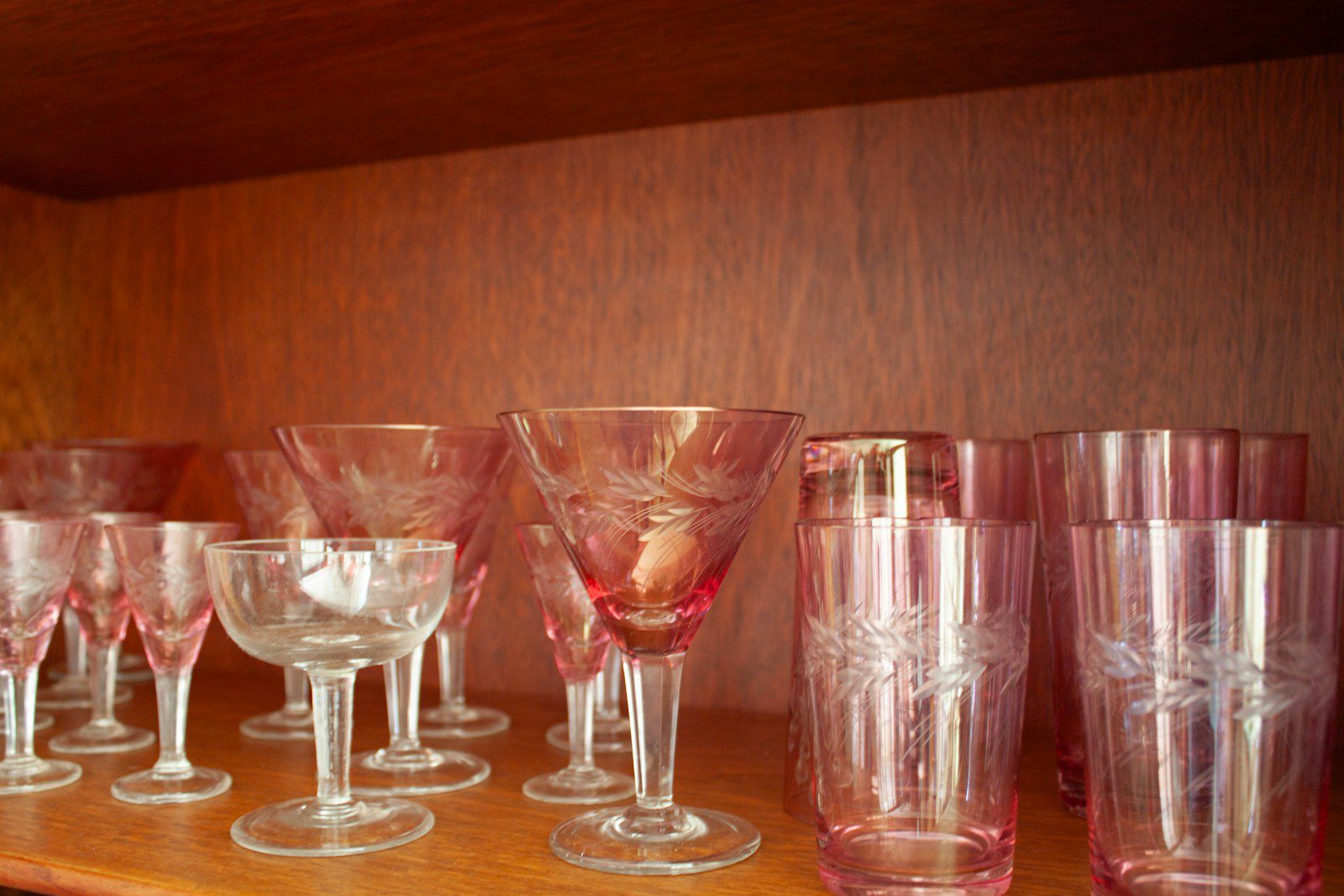
Vintage glassware is one of the least forgiving categories of collectibles to get wrong. A single careless habit, formed with the best intentions, can quietly turn a potentially valuable piece into something worth little more than its shelf space.
If you’ve inherited or collected vintage glass, these six common mistakes are worth avoiding before you clean out a cabinet or box things up for donation.
Running Everything Through the Dishwasher
Vintage glass, especially pressed and Depression-era glass, was made using different manufacturing techniques than modern tempered glassware, and it doesn’t always tolerate the heat, pressure, and harsh detergents of a dishwasher cycle. Repeated dishwasher use can dull the glass’s surface, causing a cloudy film that’s often permanent and immediately recognizable to buyers and appraisers. Collectors call the result sick glass, and it does not wash off or polish out. Painted decoration, metallic trim, and decals are even more exposed, since hot water and detergent can wear them away.
Hand-washing with mild soap and lukewarm water preserves both the shine and the structural integrity of older glass. The Canadian Conservation Institute’s notes on caring for glass likewise call for lukewarm water and slow air-drying with no heat. Wash one piece at a time in a plastic basin or a towel-lined sink, so a slip doesn’t mean a chip, and never move a cold piece straight into hot water.
Assuming Color Alone Signals Value
It’s a common shortcut to assume that pink or green glass automatically means valuable Depression glass, but color is only one identifying factor among many, including pattern, maker, and specific piece shape. Colored glass also kept being made long after the Depression years, meaning a pink dish could be a common recent piece rather than an original from the 1930s.
What moves value is the combination. A plentiful color in a heavily produced pattern is easy to find and priced accordingly, while the same pattern in a short-lived color, or in a harder-to-find shape, can be much tougher to locate. Start with the pattern: look at the molded design, the rim, the handles, and the foot, then match them against a pattern reference book. The National Depression Glass Association, a nonprofit that runs a museum and collector conventions, is a good place to begin. Learning to identify specific patterns by their molded design, rather than relying on color alone, prevents both overvaluing common pieces and underestimating genuinely rare ones.
Not Checking for Reproductions
Depression glass has been widely reproduced, and newer pieces have been sold as antiques, which makes distinguishing an authentic vintage piece from a later reproduction genuinely tricky without doing some homework, according to glass collecting guides. The original glass was mass-produced quickly, so the same guide notes that genuine pieces tend to look imperfect. Visible mold seams, small bubbles, molding flaws, and uneven coloring are common and rarely hurt value. Decades at the table usually leave fine scratches from flatware as well.
A piece that looks flawless and unused deserves a second look, not a premium price. Check the design element by element against verified reference photos, ask the seller where the piece came from, and be cautious with a whole table of identical, spotless items in a popular pattern. Doing this before assuming a piece is an original vintage find, or before pricing it as one, prevents an embarrassing and costly mistake either way.
Breaking Up Matched Sets
When sorting through a large collection, it’s tempting to keep a few favorite pieces and donate or sell off the rest individually. But a complete, matched set of glassware, particularly one that includes serving pieces alongside place settings, is often more appealing to a buyer than the same pieces scattered across separate listings. Someone setting a table wants eight matching plates, not three.
Before separating anything, lay the whole set out and take inventory. Count each shape: dinner plates, salad plates, cups, saucers, tumblers, bowls. Note the serving pieces separately, such as a pitcher, platter, covered butter dish, or sugar and creamer, because those are the items a collector filling out a set tends to go looking for. Identify the pattern, photograph everything together, and write down any chips. If you do decide to split a set, keep together the pieces that belong together, such as cups with their saucers and lids with their bases, since a lid or saucer on its own is hard to place.
Storing Glass Without Padding
Chips and scratches happen easily when glass pieces are stacked directly on top of each other or tossed loosely into a moving box. Even small, nearly invisible chips along a rim or base can meaningfully reduce a piece’s value to a serious collector, who often inspects edges closely under good light before buying. Run a fingertip gently around each rim and foot before you pack, because you will often feel a nick before you see it.
Wrap each piece individually in soft, plain paper or cloth. If plates or bowls have to be stacked, put padding between each one and keep the stacks short, so less weight rests on the bottom piece. For cabinet storage, the Canadian Conservation Institute recommends lining shelves with soft padding such as polyethylene foam sheeting and choosing a spot that isn’t subject to vibration or jarring. Lift each piece with two clean, dry hands, and pack boxes tightly enough that nothing can shift in transit.
Cleaning With Harsh Abrasives
Reaching for a scouring pad or abrasive cleaner on stubborn residue can permanently scratch a glass surface, and those scratches are far more visible and value-reducing than the original stain or cloudiness ever was. Vintage glass, particularly pieces with etched or pressed patterns, is especially vulnerable to this kind of damage since abrasives can wear down fine pattern details over time. Steel wool, scouring powder, and the rough side of a kitchen sponge all count.
Scrubbing also won’t fix the problem people most often try it on. The haze left by years of dishwasher cycles is damage to the glass itself, not a coating, so there is nothing to scrub away. A soft cloth, warm water, and patience — sometimes with a gentle soak — handle most residue without risking permanent damage to a piece’s surface or pattern. For grime dried into a pressed pattern, soak first, then work the crevices with a soft toothbrush or a cotton swab. Soak old price stickers off instead of scraping them.