Estate cleanouts move fast, usually under emotional and time pressure that doesn’t leave much room for careful sorting. Dumpsters fill up quickly with things that simply look old rather than valuable.
Buyers and collectors, however, actively hunt for specific categories that families routinely toss without a second thought. Here are seven worth pulling aside before the dumpster arrives.
Vintage Hand Tools
Rusty hand planes, chisels, and wrenches found in a garage or basement workshop are easy to lump in with generic junk. Certain vintage tool brands and models, particularly well-known hand plane manufacturers, are genuinely collectible and often restorable to full working condition, according to tool collecting resources. That guide treats Stanley planes from roughly the 1900s through the 1930s as the company’s best work. It lists ordinary bench planes at $25 to $120, the No. 45 at $150 to $350, and the No. 55 at $350 to $900, with the finest examples passing $2,000 at auction.
Check the tool’s casting for a stamped or cast-in manufacturer name, and don’t let surface rust discourage you, since most of it can be removed without damaging the underlying metal. The guide’s supply list for that job includes Evapo-Rust, citric acid, and paste wax. Before cleaning anything, gather the loose parts. A complete set of cutters is one of the things the guide says raises value, while cracked wooden handles lower it.
Old Magazines and Pulp Paperbacks
Stacks of yellowed magazines and paperback novels are among the most commonly discarded estate items, yet certain issues, particularly early issues of long-running titles or pulp fiction with striking cover art, hold real value to collectors focused on print ephemera. Pulps were all-fiction magazines printed on cheap wood-pulp paper, and the Pulp Magazines Project, an open-access archive, documents covers from 1896 to 1946. Its galleries are a quick way to see what the real thing looks like.
Condition matters enormously here, since paper degrades quickly, so issues stored flat and away from moisture tend to be worth considerably more than water-damaged or yellowed stacks left in a damp basement. Check that the cover is attached, the spine is intact, and nothing has been clipped out. A musty smell or rippled pages point to moisture damage. Sort by title and date instead of selling a mixed box, and pull out first issues and anything with a famous name on the cover. Do not tape tears or press brittle pages flat.
Vintage Typewriters
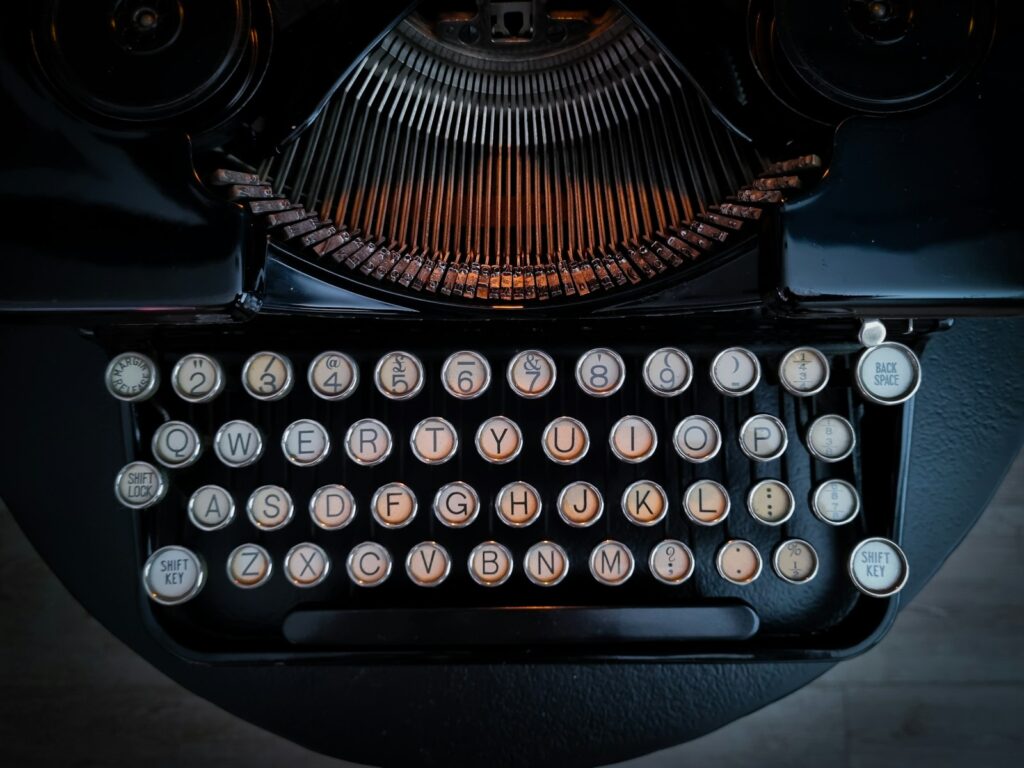
A heavy manual typewriter is frequently seen as a relic too impractical to keep, but certain vintage models from well-known manufacturers are actively collected, both for display and for continued use by enthusiasts who prefer manual typing, according to typewriter collecting guides. Unusual colors, portable case models, and machines that still type cleanly tend to command the most interest. That guide says value comes down to physical and mechanical condition plus rarity, and its numbers are sobering: later Underwoods at $50 to $75, 1930s models at $300 to $400, and the earliest examples above $1,000.
Check the manufacturer’s badge and serial number plate before assuming an old typewriter belongs in a landfill. The Typewriter Database lets you choose the brand and enter the serial number to find when a machine was made. Then test it. Press every key, see whether the carriage moves and returns, and look for readable decals and how far rust has spread. Keep the case and any manual with the machine.
Advertising Tins and Signs
Old tins, tin advertising signs, and painted metal signage for defunct local businesses or classic national brands are frequently discarded as junk during a cleanout. Collectors of advertising memorabilia, however, specifically seek out these pieces for their graphic design and nostalgic branding, according to advertising collectibles resources. Tin signs appeared in the United States around the start of the 19th century and were hand-painted at first, which made them costly. Once lithography became commonplace, printed tin competed with paper posters as a way to sell products.
Rust and fading do reduce value, but even well-worn signs with legible branding and interesting graphics can attract serious collector interest. Look at where the wear sits. Honest age shows up unevenly, at corners, edges, and nail holes, and on the back as well as the front. With tins, check that the lid is present, the hinge works, and any paper label is intact. Dust with a dry cloth only, because water lifts paper labels and scrubbing dulls printed color.
Vintage Board Games and Puzzles
Old board games and jigsaw puzzles found in closets are typically assumed to be missing pieces and therefore worthless, but complete, well-preserved examples, especially those with striking vintage box art, remain popular with collectors who display rather than play them. Check the box contents against the included rules or piece count, since completeness significantly affects resale value for this specific category of collectible.
Lay out the board, tokens, cards, dice, play money, and spinner, and compare them with the parts list, which is often printed in the rules or inside the lid. Look for a maker’s name and copyright date on the box, board, or instructions. Then judge the box itself: split corners, old tape, water stains, and writing all count against it. A puzzle can only be confirmed complete by assembling it, so do that before listing it and bag the pieces afterward. If you find two incomplete copies of the same game, keep both, since together they may make one whole set.
Loose Change and Old Currency
Jars and drawers of old coins are frequently sorted for spare change and spent at face value without a second look, but every U.S. dime, quarter, and half dollar struck before 1965 is 90% silver, meaning it’s worth considerably more than its face value based on metal content alone, according to coin collecting resources. The rule does not cover everything. Pennies were never silver, and nickels are not either, except the 1942 to 1945 war nickels, which are 35% silver and carry a large mintmark above Monticello on the back. Kennedy half dollars dated 1965 through 1970 are 40% silver.
Sort coins by mint date before spending or donating a jar of loose change, and set aside anything unusually old or foreign-looking for further research. The quick test is the edge. A silver coin has a uniform silver-gray edge, while later coins show a reddish-brown copper stripe. Do not clean or polish old coins. Keep old paper money flat in an envelope instead of folding it.
Fountain Pens and Desk Sets
Old fountain pens tucked in a desk drawer are easy to write off as broken or obsolete, but many vintage pens can be restored to full working condition, and certain brands and materials remain genuinely collectible regardless of whether they currently write. Collectors Weekly describes vintage fountain pens as highly collectible and lists Parker, Waterman, Sheaffer, and Wahl Eversharp among the makers, with styles running from jewel-encrusted casings to plain cigar-shaped designs.
Check the pen’s clip and barrel for a brand name, and keep any matching desk sets or original boxes together, since a complete, well-preserved set is generally worth more than a single loose pen found separately. Look at the nib under good light for an imprint, which often gives the maker and the metal. Check the cap lip for cracks and make sure the clip and filling lever are present. Do not fill an old pen with ink, force a stuck lever, or soak it to clean it. Dried ink and stiff parts are a restorer’s job.