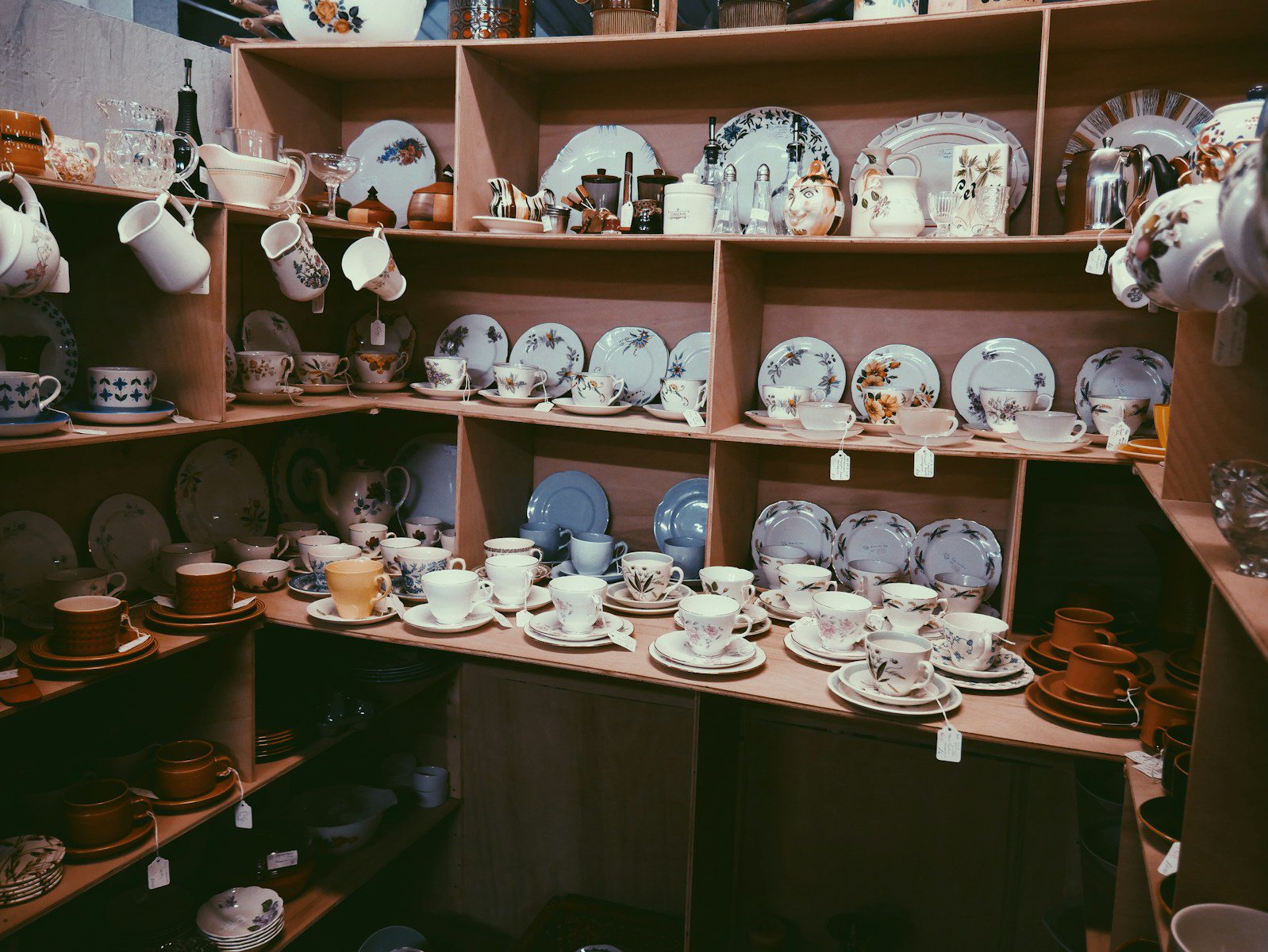
You’ll start spotting glassware that’s worth more than its price tag by tuning your eye to subtle clues and trusting your instincts. You’ll learn simple ways to identify authentic, higher-value pieces—like marks, weight, color, and craftsmanship—so you can walk away with true finds instead of clutter.
This article guides you through practical checks that fit right into a quick thrift-store browse, from maker’s marks and hand-blown imperfections to mid-century styles and distinctive colors. Keep your hands ready to feel weight and detailing, and your phone handy to look up brands that disappeared decades ago.
Check for maker’s marks like Fostoria or Murano
Look at the base, heel, and stem for etched, stamped, or painted marks. These tiny identifiers can quickly raise a piece’s value.
Learn common marks and compare with a glass marks guide online, like the Glass Identification: Signatures + Marks page.
Remember some authentic Murano pieces have no mark but show characteristic techniques and weight. When in doubt, photograph the mark and research before buying.
Look for slight imperfections that indicate hand-blown glass
Check for tiny bubbles, ripples, or slight asymmetry—these often mean the piece was shaped by hand. Small flaws don’t ruin value; they can increase it.
Look under the base for a pontil mark or cut where the blowpipe was detached. If you want a quick primer on spotting hand-blown bases, see this guide to identifying hand-blown glass bases (https://glassblowingforbeginners.com/how-to-identify-a-hand-blown-glass-base/).
Inspect for vintage styles popular in the mid-1900s
Look for sleek, geometric shapes and bold colors—hallmarks of mid-century modern glass that often came from studio makers or mass brands.
Patterns like atomic motifs, simple fluting, and molded textures point to 1940s–1960s production and can raise interest among collectors.
Check for labels, applied logos, or distinctive pontil marks; some makers left telltale signs you can match to guides.
If a piece feels heavier or has slight irregularities, it may be hand-finished rather than mass-produced—worth a closer look.
Spot unique colors like cobalt blue or cranberry red
Look for deep, saturated hues that don’t look painted on. Cobalt blue and cranberry red were made by adding metal oxides, so the color runs through the glass instead of sitting on top.
Hold pieces up to light to check consistency and look for slight color variations or bubbles that indicate older methods. You can learn more about identifying depression-era colors and patterns at this guide on Depression glass identification.
Feel the weight—heavier glass often means quality
Pick up the piece and notice how it sits in your hand. Heavier glass, especially older leaded or crystal pieces, often signals thicker walls and better craftsmanship.
Tap gently; a clear, ringing tone can confirm higher-quality crystal, while a dull thud suggests cheap mass-produced glass. Use weight alongside marks and finish when deciding whether to buy.
Look at the detailing, such as etching or dovetailing
Check for crisp etching, hand-cut patterns, or wheel-engraving—those details often mean skilled work and higher value.
Feel the joins and bases; uneven lines or tiny tool marks can signal handcrafting rather than mass production.
Dovetailing shows up mostly in wooden boxes or frames paired with glass pieces; tight, clean dovetails indicate age and quality.
If you spot signed etching or a maker’s monogram, photograph it and look it up later to confirm rarity.
Research brands that went out of business decades ago
Check old maker names on marks and labels; companies that folded years ago often become collectible.
Use online lists of defunct brands to match logos and patterns quickly, like guides to iconic brands that disappeared.
Knowing which firms once made high-quality glass helps you spot undervalued pieces.
A little brand history can turn a dusty bowl into a profitable find.
More from Decluttering Mom: