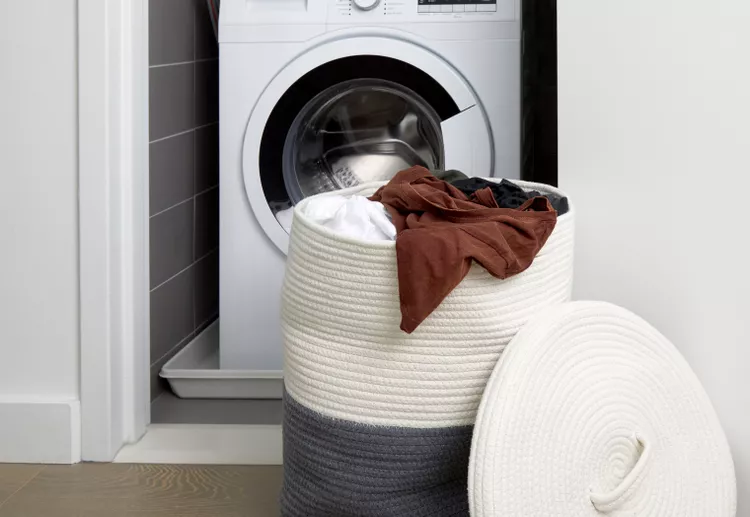
Your laundry room should make daily chores easier, not feel like a storage closet you dread opening. When every surface is crowded and every step is a sidestep, the space quietly drains your time and energy. By pinpointing the specific habits and items that create visual and physical clutter, you can reclaim a room that actually supports your routine instead of working against it.
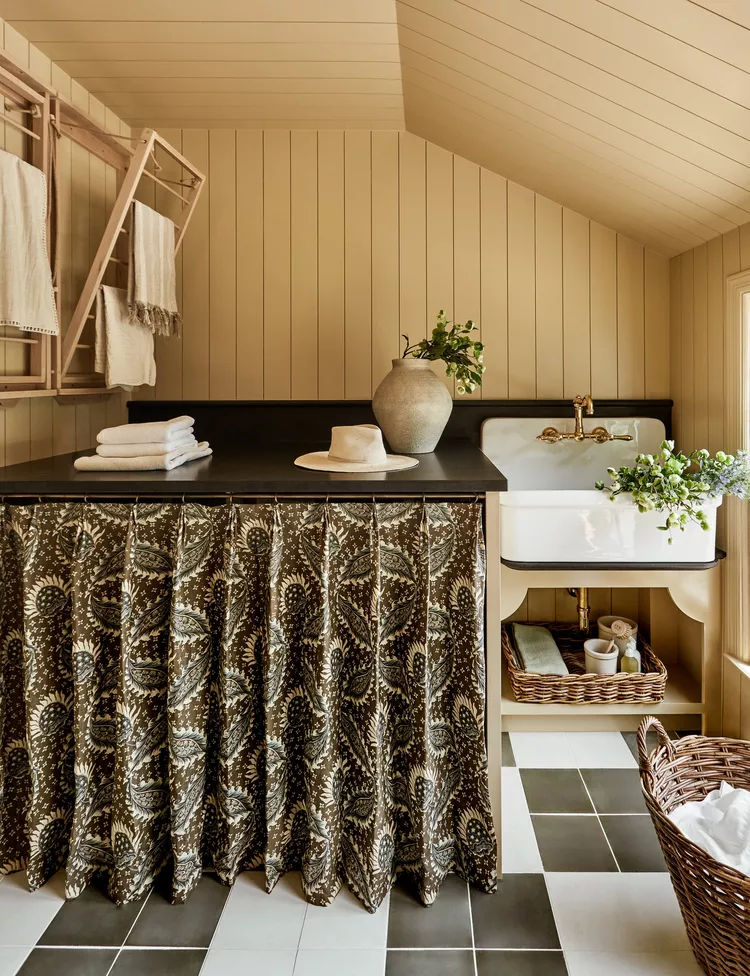
1) Bulky Bottles Eating Up Every Flat Surface
Bulky detergent jugs, fabric softener bottles, and stain removers quickly crowd your washer top and any nearby counter. When every product lives in its original oversized container, you lose valuable folding and sorting space and the room starts to feel like a warehouse aisle. Storage experts recommend corralling these supplies on a narrow shelf or in a shallow cabinet so they are upright, contained, and easy to reach without dominating your work zone.
Wall-mounted shelves or slim cabinets above the appliances keep liquids off key surfaces and free up room for baskets or a folding board. Ideas like compact shelving, labeled bins, and vertical organizers are highlighted in many laundry room storage solutions, which show how even small shifts in where you park bottles can open up the entire space. Once the big jugs are contained, the room immediately feels calmer and more functional.
2) No Dedicated Spot for Hampers and Sorting Baskets
Hampers and baskets that float around the floor make a laundry room feel cramped and chaotic. When there is no built-in spot for sorting whites, darks, and delicates, containers end up blocking the door, the machines, or the path to the sink. That cluttered traffic flow not only makes the room feel smaller, it also slows you down every time you try to move a load from washer to dryer or carry clean clothes out.
Creating a defined home for hampers, such as under-counter cubbies or a rolling cart that tucks beside the machines, keeps the floor visually open. Vertical solutions, like stacking baskets or using a tall sorter with labeled bags, let you separate loads without sacrificing square footage. When hampers slide neatly into a planned zone, the room reads as organized storage instead of a pileup of laundry waiting to trip you.
3) Wasted Wall Space That Could Be Working Harder
Blank walls in a laundry room are missed opportunities that contribute to crowding at ground level. If everything you own sits on the floor or on top of the appliances, the room feels packed even when the walls are completely empty. By contrast, hooks, pegboards, and shallow shelves shift storage upward, clearing the lower half of the room so you can move freely and actually see open surfaces.
Simple upgrades like a rail with hooks for cleaning tools, a pegboard for small supplies, or a row of narrow shelves for jars and clothespins can transform dead space into organized storage. Many compact-room strategies, including those used in kitchen organization tips, show how going vertical relieves pressure on counters and floors. When walls start carrying their share of the load, the room feels taller, lighter, and far less overcrowded.
4) No Folding Zone, So Clean Clothes Pile Up
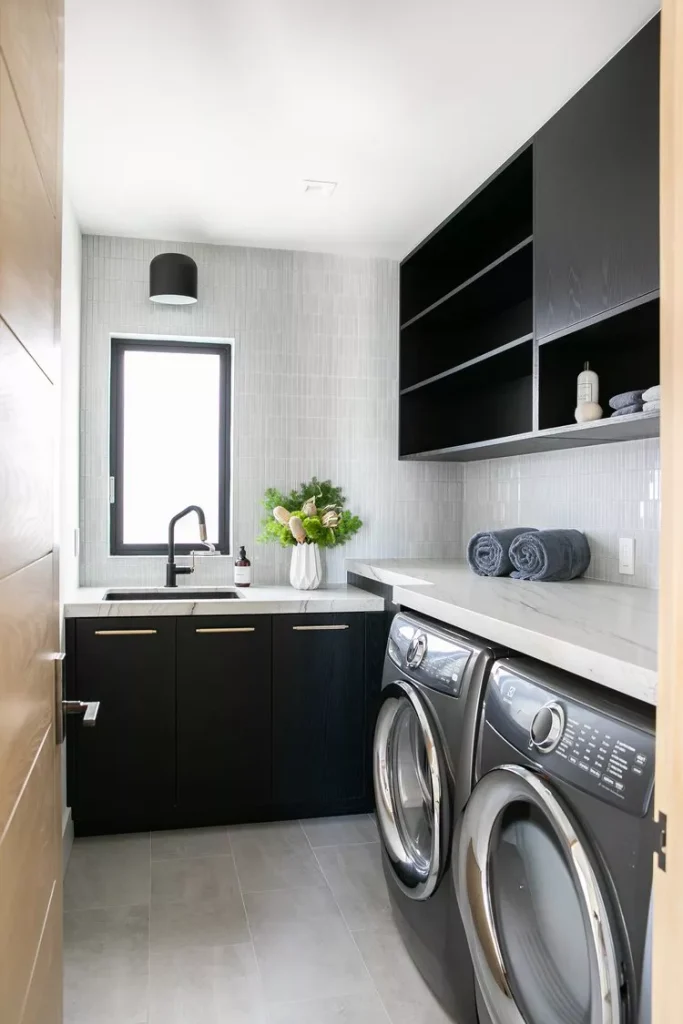
Without a dedicated folding surface, clean laundry tends to land wherever there is a spare inch, from the top of the dryer to the nearest chair. Those unstable stacks quickly topple into mixed piles, making the room look overrun and forcing you to refold items you already handled. The more often you delay folding because there is no clear spot to do it, the more the space feels permanently cluttered.
Even in a small room, a shallow countertop above front-loading machines or a wall-mounted drop-down table can create a reliable folding zone. Once you have a defined surface, you can move clothes directly from dryer to fold, then into baskets or drawers, instead of letting them linger in teetering towers. That simple workflow shift keeps visual clutter in check and turns the room into a place where laundry actually gets finished.
5) Cleaning Tools Leaning in Every Corner
Mops, brooms, vacuums, and dusters often migrate to the laundry room, where they end up leaning in corners or sprawled across the floor. When long-handled tools slide down or tangle together, they block access to cabinets and machines and make the room feel like a supply closet. The visual noise of handles and cords in every corner also adds to the sense that there is no clear order to the space.
Mounting a simple rail with clips or a wall rack for brooms and mops instantly lifts that clutter off the floor. Grouping tools by type and hanging them in a single zone makes it easier to grab what you need and put it back without a pileup. Once those tall items are corralled vertically, corners open up, pathways clear, and the room feels more like a streamlined workspace than a catchall for everything with a handle.
6) Open Shelves Stuffed With Visual Clutter
Open shelving can be useful, but when every shelf is crammed with mismatched bottles, boxes, and random supplies, the room feels busy and overcrowded even if you technically have enough storage. Visual clutter on open shelves draws the eye to every label and color, making the walls feel closer and the room more chaotic. That effect is especially strong in small laundry rooms, where shelves are often at eye level.
Swapping mismatched packaging for uniform bins, baskets, or clear canisters instantly calms the view. Grouping similar items together and labeling containers keeps function high while reducing the sense of overload. If you still need open shelves, reserve them for items you use daily and store extras behind doors when possible. Curating what lives in plain sight helps the room read as intentional and airy instead of jammed with odds and ends.
7)
7) No Place to Hang Clothes Straight From the Dryer
When you lack a spot to hang clothes immediately after drying, garments end up draped over doors, machine tops, and chair backs. That habit quickly fills every edge of the room and makes it hard to move without brushing against clean clothes. It also increases wrinkling, which means more time spent ironing or steaming later. The more surfaces become makeshift drying racks, the more the room feels like a maze of hanging fabric instead of a clear workspace.
Installing a simple hanging rod, retractable clothesline, or fold-down drying rack gives you a defined zone for air-drying and de-wrinkling. Positioning it above a counter or beside the dryer lets you transfer items on hangers in one smooth motion. Concentrating hanging space in one area keeps walkways open and prevents the slow creep of clothes into every corner, so the room feels organized even on heavy laundry days.
8) Treating the Laundry Room as a General Storage Dump
Using the laundry room as overflow storage for everything that lacks a home, from holiday decor to sports gear, is a major reason the space feels overcrowded. When shelves and cabinets are packed with unrelated items, there is little room left for detergents, tools, or linens, so daily essentials spill onto counters and the floor. That mix of long-term storage and everyday supplies makes it harder to find what you need and easier to ignore growing clutter.
Reframing the laundry room as a task-focused zone helps you edit what actually belongs there. Prioritize laundry products, cleaning tools, and a small stash of household basics, and relocate rarely used items to closets, the garage, or labeled bins elsewhere. Once you reserve cabinets and shelves for the work you do in this room, you reclaim space for efficient routines and reduce the constant sense of being surrounded by stuff that does not really fit.
More from Decluttering Mom: