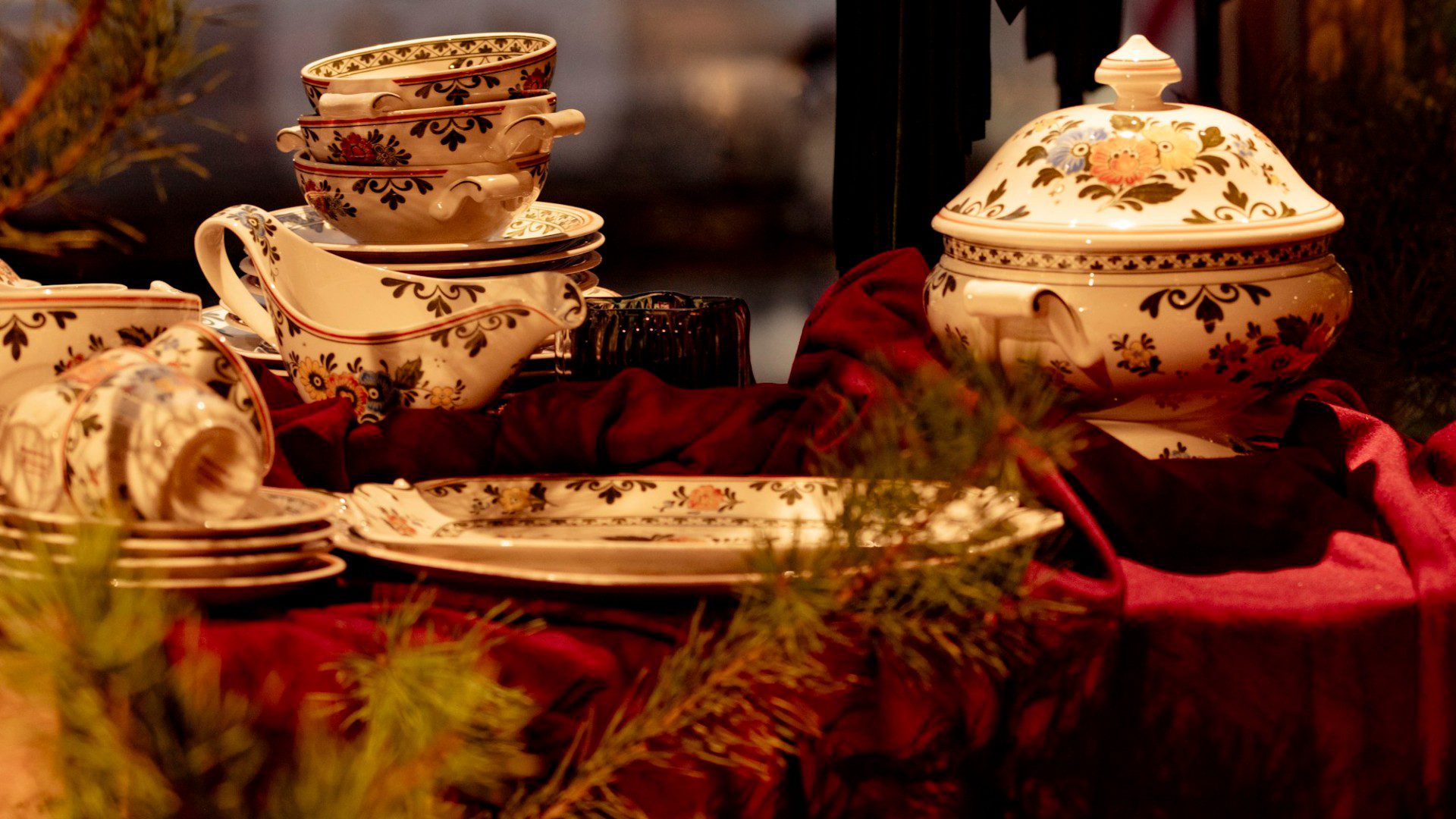
Holiday dishes spend most of the year packed away, which means when it’s finally time to declutter, they’re often forgotten entirely or donated in bulk without much thought. Seasonal patterns that feel outdated the other eleven months of the year don’t seem worth the storage space.
But holiday-specific tableware has a surprisingly devoted collector base. Here are nine pieces worth a second look before they leave the house.
Spode Christmas Tree China
This pattern, with its decorated tree, wrapped presents underneath and Santa topper, has been produced for decades and has a loyal following among collectors who track down individual serving pieces. It is still made today, and Spode adds dated annual pieces every year; the 2026 annual 10-inch plate lists at $78 on the company’s site. That affects value in two ways. Ordinary dinner plates and mugs are easy to buy new, so secondhand ones sell on condition, not rarity. Older pieces, discontinued shapes and large serving items such as tureens, covered dishes and platters are harder to find and draw more interest. Turn each piece over and read the backstamp, which helps date it and shows where it was made. Check the green rim band for wear, and look across the surface for knife marks, crazing and dishwasher fade. Sort the set by piece type before you price or donate anything, because one unusual serving dish can deserve more attention than a stack of plates.
Vintage Halloween Dishes
Halloween-specific tableware, especially older examples featuring die-cut cardboard figures, embossed glass, or hand-painted ceramic designs, is an active and growing collecting category, according to antiques market coverage. Earlier, more detailed designs tend to be considerably more valuable than later, simpler mass-produced versions, so check age and craftsmanship before assuming seasonal dishware has only modest worth. Signs of age include a maker’s mark or country of origin on the base, paint applied by hand with small differences from piece to piece, and wear on the foot rim where the dish sat on a shelf. Newer pieces usually carry a crisp printed decal, a barcode sticker or dishwasher-safe wording underneath. Paper goods count too. Unused party plates, cups and napkins still in the original package appeal to buyers because so few made it through the party. Flaking paint, chips and stains pull the price down, and so does a missing lid on a candy dish. Keep sets and packaging together.
Turkey-Shaped Serving Platters
Large ceramic platters shaped like or decorated with elaborate turkey designs were a staple of formal Thanksgiving dinners for decades, and well-preserved examples from recognized pottery makers remain popular with collectors and with hosts who like a dedicated holiday serving piece. Check the underside for a maker’s mark, and inspect for hairline cracks, since these platters saw heavy seasonal use and damage is common. One quick test is to tap the rim gently with a fingernail. A clear ring suggests sound pottery, while a dull thud can point to a crack you cannot see. Hold the platter under bright light and look for crazing in the glaze, brown staining from gravy and grease, and knife marks across the center. Size counts as well. A platter big enough for a whole bird is harder to find undamaged than a small one, and matching dinner plates in the same pattern add appeal. If you sell, include clear photos of the mark and of every flaw.
Holiday-Themed Punch Bowls
Large glass or ceramic punch bowl sets with matching cups, often decorated with holly, poinsettias, or other seasonal motifs, usually end up at the back of a cabinet because they only come out for big gatherings. Complete sets with all the original cups and a matching ladle are considerably more desirable than a bowl alone, so keep the pieces together and research the full set before parting with any single component. Count the cups first, since an odd number usually means some have broken along the way. Check whether the bowl sits on a separate base or stand, since that part is often lost. Run a fingertip around every rim to find small chips, and look for cloudy film inside the bowl that will not wash off. Painted or gold decoration should be bright and even on every cup. If the cups hang from the rim on hooks, make sure every hook is there.
Deviled Egg Plates
Specialty plates with shallow indentations designed to hold deviled eggs, often produced in seasonal colors or holiday-specific patterns, have built a dedicated following among collectors, according to lifestyle coverage of the trend. That Garden & Gun roundup, published in 2018, showed how wide the range is. It included plates in pewter, blue glass, Frankoma pottery, milk glass and French majolica, with asking prices from $18 for a glass plate to $295 for the majolica platter. Material and maker explain most of that gap, so check the underside for a stamp before writing a plate off as an outdated novelty. Unusual shapes and colors also help. Count the wells and check each one for chips, since the raised edges between them take the knocks. On glass, look for scratches in the center where a dip bowl sat. On pottery, look for crazing and stains in the glaze. A plate that matches a dinnerware pattern you already own is worth keeping with that set.
Snack Sets With Cup Indents
Small plates with a built-in indentation for a matching teacup, often produced in seasonal or holiday patterns, were popular for casual entertaining and card parties for decades. Complete sets with the matching cups are worth considerably more than individual mismatched plates, and holiday-specific patterns in this category are harder to find than everyday floral designs. Count plates and cups. Equal numbers of each, ideally in the original carton, is what buyers want. Test each cup in its ring. It should sit flat and snug, and a cup that rocks or slides probably came from another set. Compare the color and pattern of cup and plate side by side, because clear glass from different makers can look alike until you put the pieces together. Check plate corners and cup handles for chips, and hold the glass to the light to spot scratches from stacking. A worn box is still worth keeping, since it names the pattern.
Holiday Glassware Sets
Eggnog cups, holiday cocktail glasses, and seasonal juice glasses decorated with festive designs are often separated and lost over the years, which makes complete matching sets considerably more valuable than the single glasses that turn up more often. Check for consistent pattern, color, and glass weight across a set before assuming mismatched holiday glassware belongs together. Line the glasses up on a table and compare height, rim thickness and the placement of the design. Printed decoration is the weak point. Dishwashers dull the colors and wear away gold trim, so glasses with bright, complete printing stand out from faded ones. Look at the base for a maker’s mark, which makes the pattern far easier to look up. Sets with a matching pitcher, tray or carrier rack are more complete still. Wash by hand, dry right away and store upright with paper between glasses, never stacked inside each other.
Cookie Exchange and Serving Plates
Decorative plates designed for holiday cookie displays, often with embossed holly, poinsettia, or winter scene designs, were a common hostess gift for decades. Certain manufacturers and discontinued patterns in this category are more sought after than generic modern equivalents, so check the back for a maker’s mark before assuming a cookie plate is ordinary seasonal decor. A pattern name printed on the back is even better, because you can search it directly and see what other pieces exist. Plates that belong to a full dinnerware pattern are the easiest to place, since people who own the dishes want the matching serving pieces. Look closely at condition. Gold or platinum trim wears off with washing, raised designs chip at the high points, and stacked plates scratch each other across the center. A plate with a handle or a pedestal foot should be checked where the parts join. If the plate came in a gift box, keep the box, which often shows the maker and pattern.
Holiday Salt and Pepper Shaker Sets
Figural salt and pepper shakers shaped like snowmen, Santas, turkeys, or pumpkins are a specific niche within holiday collectibles, and complete, unchipped pairs from certain manufacturers are considerably more valuable than sets missing one shaker or showing heavy paint loss. Check the bottom of each shaker for a matching maker’s mark, since pairs assembled from different sets over the years are worth less than an original matched pair. The Novelty Salt & Pepper Shakers Club, a collectors’ group with members around the world, defines a pair as a set in its original combination. The club keeps a photo database of more than 64,000 shaker sets, which is a practical way to confirm that two shakers started out together. Look for the original stoppers, because replacements are obvious and missing ones are common. Compare the paint color and glaze finish on both pieces, and check noses, hat tips and other points that stick out for chips.