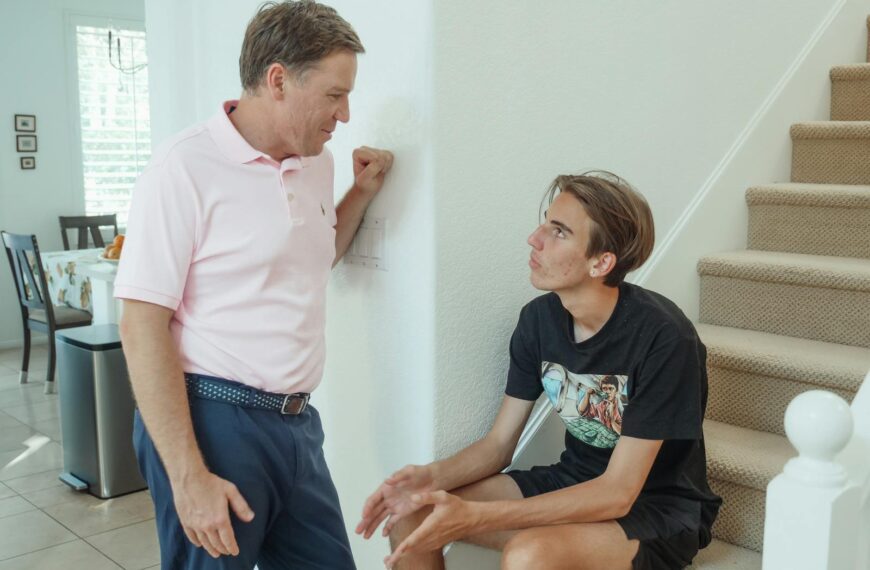
A father looking at both sides of his family tree sees a pattern he desperately wants to avoid for his sons: adults drifting from gig to gig, never quite holding steady work, always one missed payment away from crisis. His fear is not abstract, it is biographical, and it sits in the same room as his love for his boys. He is trying to figure out whether a history of unstable employment is destiny or just a loud warning siren he can still act on.
That tension, between wanting to protect children from repeating old mistakes and knowing they have to build their own lives, is becoming a quiet theme in modern parenting. Parents like him are not just chasing better jobs or higher grades for their kids; they are trying to rewrite what adulthood looks like in their families.

When family history shadows a child’s future
Patterns of work and nonwork do not appear out of nowhere; they are taught in small, daily ways. Research on Family History Influence points to how children absorb Inherited Values and Work Ethic long before they ever fill out a job application. If a boy grows up surrounded by unsteady jobs, late rent and side hustles that never quite land, he learns something about what to expect from the world of work, even if nobody says it out loud. Theories that look at work values argue that socialization before a person ever enters the labor market can shape how seriously they take career commitments and how possible stability feels.
That does not mean his sons are locked into the same script. One analysis of Theories on work values stresses that experiences outside formal jobs, including family routines and expectations, are powerful but not all powerful. Another review of Understanding family history notes that Although genetics and environment contribute considerably to risk in areas like mental health and addiction, early intervention and resilience building can change the odds. The same logic applies to work: knowing that unemployment and chaos run in the family is not a prophecy, it is a prompt to do parenting more intentionally.
The urge to break the cycle, and the pressure that comes with it
For parents who grew up watching adults struggle, the drive to do things differently can be fierce. One reflection on broken homes notes that There is an inherent desire to give children what their parents never had, and to create a new,. That is exactly where this father sits, caught between fear that his sons will repeat the family script and determination that they will not. Parenting experts who look at trauma informed approaches argue that recognizing generational patterns is the first and most powerful step, and that change is possible when adults respond differently to stress than their own parents did.
That determination can come with a heavy emotional load. Some parents even consider creating distance from relatives whose habits feel like a threat to their children’s future. Commentary on estrangement points out that, contrary to stereotype, many who step back from relatives do it not because they hate family, but because they value family so much they refuse to repeat harmful patterns and want to break the cycle. For a father surrounded by adults who never held steady jobs, that might mean limiting how often his sons hear defeatist talk about work or being choosy about which relatives they see most. It is not about pretending those people do not exist; it is about curating the examples his boys see up close.
What determined fathers are doing differently
Across different communities, a quiet shift is already underway in how fathers respond to this kind of worry. Profiles of modern dads describe The Fatherhood group of men who share a strong desire to provide a safe, stable and nurturing relationship for their children, even when they themselves grew up with fathers who were distant or stuck in older models of masculinity. These The Fatherhood participants talk openly about wanting to be both present caregivers and reliable providers, instead of choosing one role and ignoring the other.
That shift shows up in policy as well as personal life. In California, Not only are a new generation of fathers more likely to embrace paid leave to build early bonds with their children, but more employers have normalized leaves for their male workers, according to reporting on dads driving growth in the state’s program. Studies of work family conflict note that when He ( an employed father ) believes that effort at work will be rewarded, he invests in that role, but when he also believes caregiving matters, he will invest efforts toward too. For a father worried about generational joblessness, modeling both steady employment and hands on parenting can send a powerful double message: work is part of a good life, not a rival to it.
More from Decluttering Mom: