You probably think asking for a $2 bill is a quirky, harmless request, but it often interrupts a normal bank interaction and draws puzzled looks. This article shows why a simple request for $2 bills can create extra work and awkward moments for bank staff and cash handlers.
You’ll get a practical look at how rarity, ordering practices, register compatibility, and people’s habits turn a small curiosity into a surprising hassle. Keep this in mind next time you consider asking for that uncommon bill.
$2 bills are super rare in circulation, so tellers usually don’t have them handy.
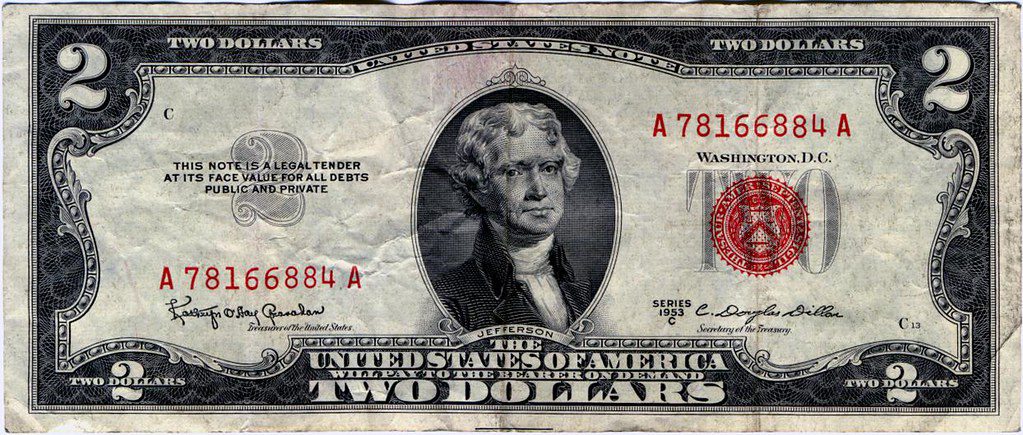
You’ll often find banks don’t keep $2 bills on the counter because they move through circulation much less than other denominations.
That means when you ask, tellers may need to order them or search a vault, which slows service and can be awkward.
If you collect or want one for a gift, call ahead or order from your bank to avoid wasting time.
For context on how uncommon they are in everyday use, see a bank teller’s take on why people skip them (https://www.msn.com/en-us/money/savingandinvesting/i-m-a-bank-teller-and-here-are-9-reasons-to-skip-2-bills/ar-AA1RrlNZ).
Most people don’t even know $2 bills exist, making requests seem odd.
You’ll catch people off guard when you ask for a $2 bill because many genuinely haven’t noticed they exist.
That lack of awareness makes your request feel unusual, even if you think it’s perfectly normal.
Tellers often see confused reactions or blank stares, which can slow the transaction.
If you want one, expect to explain why you asked or to wait while staff check their vaults.
The bill’s rarity in everyday transactions fuels the perception that it’s a novelty rather than regular money.
Banks have to order $2 bills separately, causing extra hassle behind the scenes
When you ask for $2 bills, tellers might need to check inventory and place a special order from their cash supplier. That adds paperwork and time that banks prefer to avoid.
Your request can slow service for other customers when staff stop to locate or count rare denominations. Smaller branches especially keep minimal $2 bill stock to cut handling costs.
Cashiers might give you a weird look because $2 bills aren’t common anymore.
You’ll often catch a cashier pausing when you slide a $2 bill across the counter. Many registers and crews rarely handle them, so they look unfamiliar.
That pause can feel awkward, especially if the cashier asks if it’s real. You’ll usually avoid a longer checkout delay by using more common denominations.
Some folks think $2 bills are collector’s items, so they hold on to them instead of spending.
You might keep $2 bills because people tell you they’re rare or worth more someday.
Most $2 bills are still face value, but certain series, star notes, and errors can have collector interest — check a $2 bill value guide if you want specifics.
Holding them makes transactions awkward; tellers and cashiers sometimes pause when they see one.
If you care about potential value, store them safely and get them appraised before deciding to spend.
$2 bills don’t fit into many cash register systems, slowing down transactions.
When you hand over a $2 bill, the cashier might need to hunt for a handful of mismatched slots or make change manually. That pause can back up the line and add awkwardness to a simple purchase.
Many modern registers and drawers are set up for $1, $5, $10, $20 (and larger). Asking for $2s forces staff to improvise, which you’ll notice during busy times.
Using $2 bills can cause confusion at stores or with automated machines.
You might hand over a $2 bill and watch the cashier pause, unsure if it’s real. New or part-time staff often haven’t seen them, so they may call a manager or scan the bill longer than normal.
Vending and payment machines frequently reject $2 bills because they’re calibrated for $1 and $5 notes. That can leave you stuck fumbling for change or holding up a line while you sort it out.
For more on teller experiences and machine issues, see this bank teller explanation of why $2 bills cause trouble.
More from Decluttering Mom: