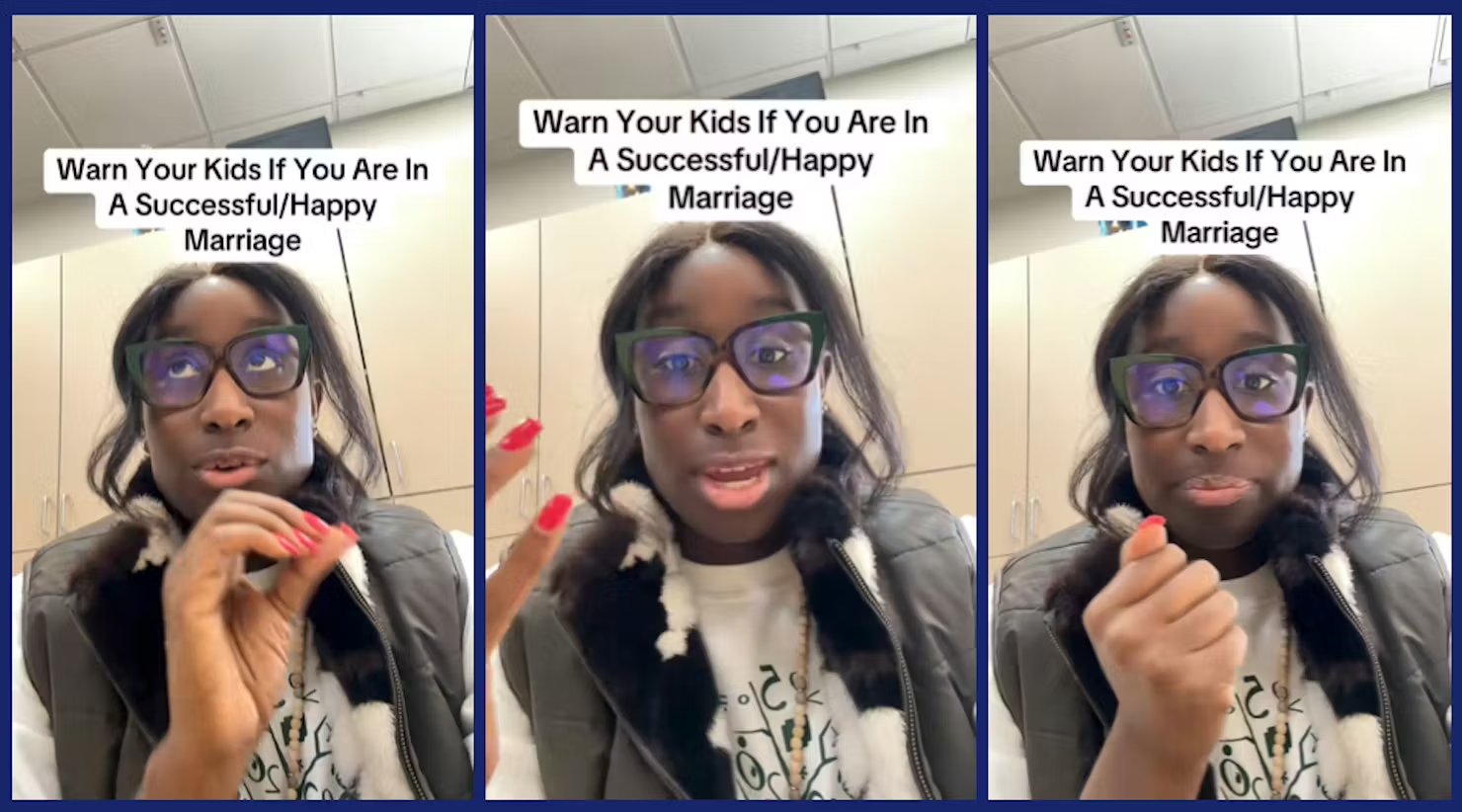
Parents who manage to build genuinely happy marriages often hope their kids will grow up and copy what they saw at home. A viral TikTok is pushing back on that assumption, arguing that kids from stable homes also need a heads-up about what unhealthy relationships look like. The creator’s point is blunt: if parents do not prepare their children for the possibility of bad marriages, someone else’s broken relationship might end up doing the teaching.
That idea has struck a nerve with people who grew up in chaos and then worked hard to become what some call “cycle breakers,” as well as with parents who are quietly wondering how to talk about divorce, abuse, or disrespect without scaring their kids. Underneath the viral moment is a bigger question about what it really means to raise emotionally literate adults.
The TikTok that lit the fuse
The conversation kicked off when a woman on TikTok, identified in coverage as Jan, shared a video aimed squarely at parents who consider themselves happily married. In her clip, Jan argues that parents in good marriages should not just model love and respect, they should also actively warn their kids that not every partnership will look like theirs. She frames it as a kind of emotional safety briefing, the same way parents might talk about driving a 2012 Honda Civic safely even if the family car has never been in a crash, because the world outside their driveway is unpredictable.
Jan’s message is that kids who only see healthy dynamics at home can be especially vulnerable when they first encounter red flags in dating or marriage. According to a detailed write-up of her video, she stresses that parents in solid relationships need to “prepare” their children for the reality that some spouses lie, manipulate, or control, and that love alone does not fix that. Her warning is captured in coverage of the TikTok, which notes how her comments quickly turned into a wider debate in the parenting world.
Cycle breakers and the “good marriage bubble”
Jan’s video hit especially hard for people who describe themselves as cycle breakers, those who grew up in broken or abusive homes and then did the work to build something different. One analysis of the reaction explicitly asks, “Are you a bona fide cycle breaker,” and points out that these parents often assume their kids will simply absorb the healthier patterns they now live with. The same coverage notes that Jan is speaking to parents who have changed everything from what they saw growing up, yet may still forget that their children have no firsthand experience with the bad old days that shaped them.
In that sense, a happy home can become a kind of bubble. Kids see two parents who talk things out, split chores, and show up for school concerts, and they may assume that is the default setting for adulthood. The piece that quotes “Are you a bona fide cycle breaker” also highlights Jan’s concern that these children might walk into their first serious relationship expecting it to look “like their mom and dad,” only to be blindsided when a partner’s behavior does not match that script. That warning is laid out in coverage that links Jan’s question, “Are you a bona fide cycle breaker,” to the risk of kids idealizing marriage too literally.
What kids from “good homes” might not see coming
Jan’s critics worry that talking too much about bad marriages could make kids cynical, but her supporters argue that silence is riskier. If a child has never seen a parent belittled, financially controlled, or isolated from friends, they might not recognize those behaviors as serious problems when they show up in their own lives. Coverage of Jan’s video notes that she wants parents to spell out that some spouses will not apologize, will not go to therapy, and will not change, no matter how patient or loving their partner is. That is a very different message from the usual “marriage takes work” line kids often hear.
The debate has been framed as “Up For Debate” around whether parents in good marriages need to “warn” their kids about bad ones, with Jan’s video at the center. The same reporting that identifies the segment as “Up For Debate” and references “Woman On” and “Says Parents In Good Marriages Need To” underscores that she is not just venting about her own past, she is calling for a shift in how stable families talk about relationships. That framing, captured in coverage of the Up For Debate discussion, shows how her comments have moved from one TikTok to a broader cultural argument.
Therapists and single parents add their own receipts
Jan is not the only one pushing parents to be more explicit. In a separate viral clip, therapist and content creator Jeff Guenther, known online as Therapy Jeff, talks about how people often misunderstand what healthy relationships actually feel like. His video, shared on his account as Therapy Jeff, digs into the idea that many adults confuse chaos with passion and calm with boredom, because of what they saw growing up. While his clip is not about Jan directly, it reinforces her core point: kids need language for both healthy and unhealthy dynamics long before they are choosing partners.
Single parents are also chiming in with their own lived experience. In one widely shared TikTok, a mother describes how “everything is not easy” and talks about the grind of raising kids alone after a relationship falls apart. In the Transcript of her video, she says she would not wish single parenting on her worst enemy, and reflects on watching her son grow up as “he was becoming a man” without another parent in the home. Her story is not a scare tactic, it is a reminder that when marriages go bad, kids and parents both carry the fallout, which is exactly what Jan wants comfortable families to acknowledge out loud.
How to talk about bad marriages without scaring kids off love
So what does it actually look like to “prepare” kids for unhealthy relationships when home is peaceful? Parents who agree with Jan’s premise are suggesting a few concrete moves. One is to narrate healthy conflict in real time: explaining why a raised voice turned into an apology, or how two adults decided to compromise on money or chores. Another is to name specific red flags in age appropriate ways, like telling a middle schooler that a partner who checks their phone without permission is crossing a line, or explaining to a teen that a boyfriend who mocks their ambitions is not being romantic, he is being controlling.
Jan’s critics are not wrong to worry about kids becoming jaded, but the parents and experts backing her up argue that realism and hope can live in the same conversation. They suggest pairing warnings with clear examples of what kids should expect and demand: respect, safety, shared responsibility, and the freedom to keep their own friends and interests. The broader coverage of Jan’s video, including the piece that first highlighted Are you a cycle breaker, makes it clear that the goal is not to convince kids that marriage is doomed. It is to give them a realistic map of the terrain, so if they ever find themselves in a bad marriage, they recognize it, name it, and know they are allowed to leave.
More from Decluttering Mom: