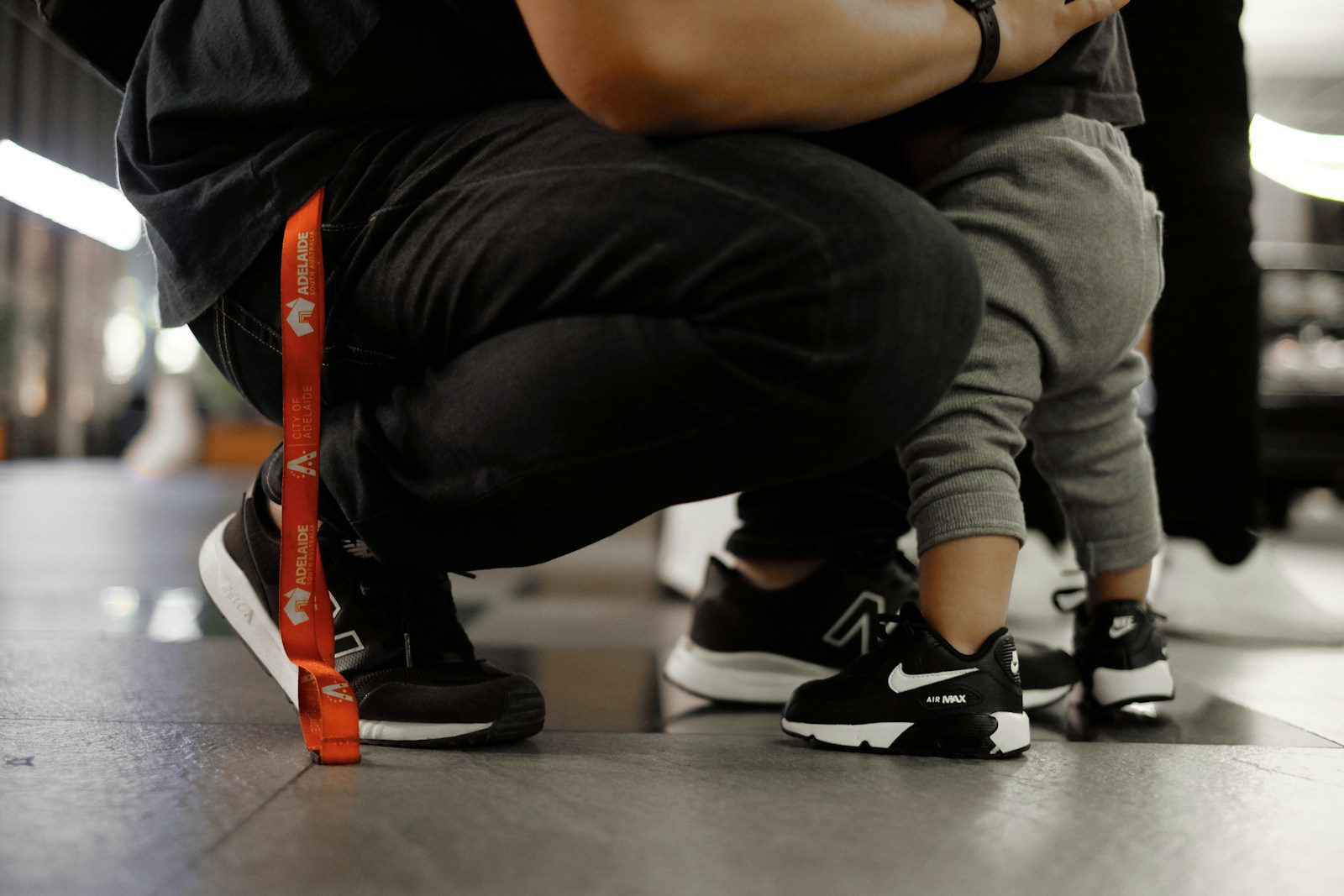
When a mother posted online in early 2025 that she only buys her children one pair of sneakers at a time, the response was swift and polarized. Some parents called it neglect. Others called it common sense. The original post, shared in a Reddit parenting forum, racked up hundreds of comments and resurfaced a question most families quietly wrestle with: how many shoes does a growing child actually need?
The answer depends on who you ask. But pediatric foot specialists, family budgeting data, and the biology of growing feet all point in a similar direction, and it is not as simple as “one pair” or “a closet full.”
What children’s feet actually need
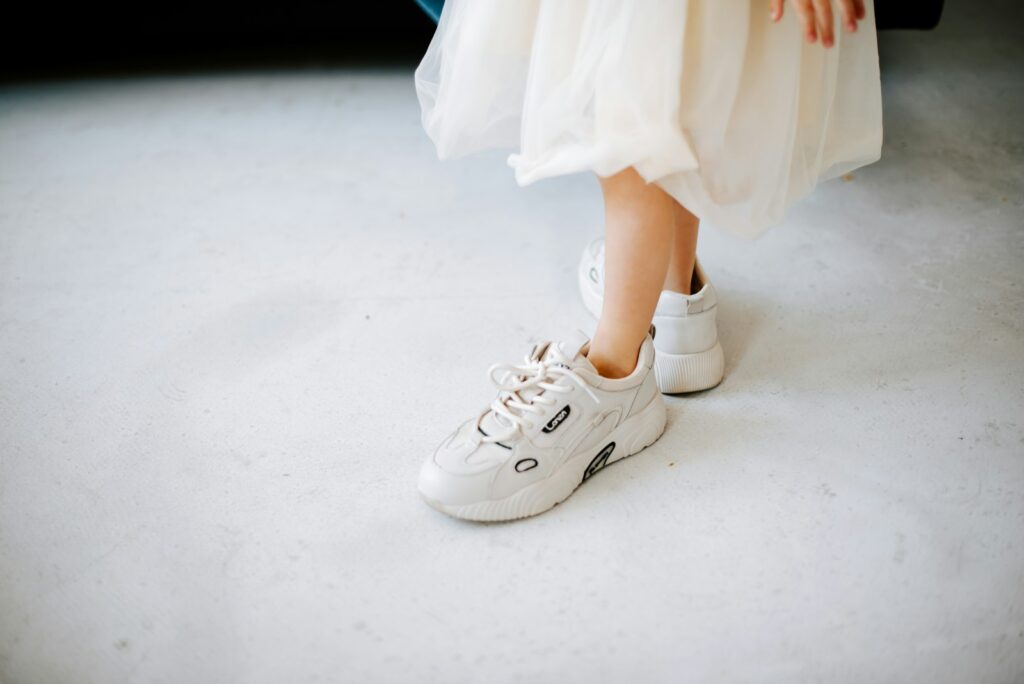
Children’s feet grow fast. According to the American Podiatric Medical Association (APMA), a child’s foot can grow up to half a size every two to three months during the toddler years, and roughly a full size per year through early elementary school. That growth rate means most kids will outgrow shoes well before they wear them out, which is one reason the one-pair approach strikes many parents as perfectly logical.
Fit matters far more than quantity. The APMA advises that poorly fitting shoes can contribute to ingrown toenails, blisters, and gait problems, while the American Academy of Pediatrics (AAP) emphasizes that supportive, properly sized footwear is especially important once children are walking and running regularly. A single well-fitted pair of sneakers will serve a child better than five pairs that pinch, slip, or lack arch support.
That said, there is a practical case for owning more than one pair. Podiatrists and shoe-fit specialists note that rotating between two pairs allows cushioning materials to decompress and moisture to dry out between wears, which extends the life of each shoe and reduces the risk of blisters or fungal issues. A guide from Big Peach Running Co. explains that alternating shoes can also reduce repetitive stress on the same pressure points, a principle that applies to active kids just as it does to adult runners.
The one-pair household vs. the backup-pair household
In the Reddit thread that started the debate, one parent replied that their kids each have two pairs of sneakers so there is always a backup when one pair gets soaked or muddy. They added that they stick to name-brand shoes specifically for durability, not status. That response captures the most common counterargument to the one-pair rule: it is not about excess, it is about logistics.
Anyone who has sent a child to school in damp sneakers on a rainy Monday understands the appeal of a second pair. And for families with children who have hard-to-find sizes or specialized fit needs, a backup is closer to insurance than indulgence. One mother shared in an Instagram video that her son’s shoe size is so difficult to source that the last two pairs that fit him have been discontinued, leaving her scrambling.
On the other side, parents who grew up with strict shoe limits see nothing wrong with the minimalist approach. In a Facebook decluttering group, one commenter described a childhood system of three pairs per child: one exercise sneaker, one dress shoe, and one knockaround pair. “The fewer the shoes, the less clutter,” they wrote. Another commenter in the same thread pointed out that at young ages, the number of shoes is entirely the adult’s decision, and that children often accumulate far more pairs than they can realistically wear before outgrowing them.
Both camps are making reasonable choices. The difference is less about right and wrong and more about household size, budget, climate, and how much laundry-day chaos a family can absorb.
The money question no one wants to answer honestly
Footwear is one of the less-discussed costs of raising children, but it adds up. According to the Bureau of Labor Statistics Consumer Expenditure Survey, the average American household spends roughly $300 to $400 per year on children’s clothing and footwear combined. For families with multiple kids, that figure climbs quickly, especially if parents feel pressure to buy new (rather than secondhand) and to keep up with brand expectations at school.
Hand-me-down shoes are a common cost-cutting strategy, but they come with caveats. In a science-based parenting discussion on Reddit, parents debated whether used shoes are safe. The general consensus among commenters who cited podiatric guidance: if the sole shows no visible wear pattern and the shoe has not molded to another child’s foot, reuse is usually fine. But once a shoe is visibly worn down on one side or the insole has compressed into a specific foot shape, it can affect the next child’s gait and should be replaced.
The one-pair mom is, in many ways, making a financially disciplined choice that previous generations would recognize instantly. The backlash she received says less about her parenting and more about a cultural moment in which consumer choices are treated as moral statements. Buying one pair of good sneakers and replacing them when they wear out or no longer fit is not neglect. It is a budget strategy that works for plenty of families.
Why strangers care how many sneakers a kid owns
The intensity of the online reaction reveals something beyond shoe preferences. Parenting decisions, especially visible ones like what a child wears on their feet, have become proxy battles over class, values, and what “enough” looks like. A parent who buys one pair of shoes is read by some as frugal and by others as depriving their child. A parent who buys six pairs is read as generous by some and wasteful by others. Neither reading tells you much about the actual child’s well-being.
What the research and expert guidance consistently support is straightforward: children need shoes that fit, that provide adequate support for their activity level, and that get replaced when they no longer do either. Whether that means one pair at a time or three depends on the family’s circumstances, not on a stranger’s opinion in a comment section.
For parents trying to cut through the noise, a reasonable starting point as of spring 2026 looks like this:
- One well-fitted pair of everyday sneakers is the baseline. Check fit every two to three months for toddlers, every four to six months for school-age kids.
- A second pair (backup sneakers or a different style for weather or formal occasions) is practical, not excessive.
- Seasonal shoes (rain boots, winter boots, sandals) depend on climate and should be sized for the current season, not bought ahead.
- Hand-me-downs are fine if the soles are not visibly worn unevenly and the shoe has not molded to another foot.
- Replace rather than stockpile. Kids’ feet change too fast for bulk buying to make sense.
The one-pair mom is not wrong. The two-pair parents are not wrong either. The only real mistake is letting someone else’s comment section decide what your kid’s feet need.
More from Decluttering Mom: