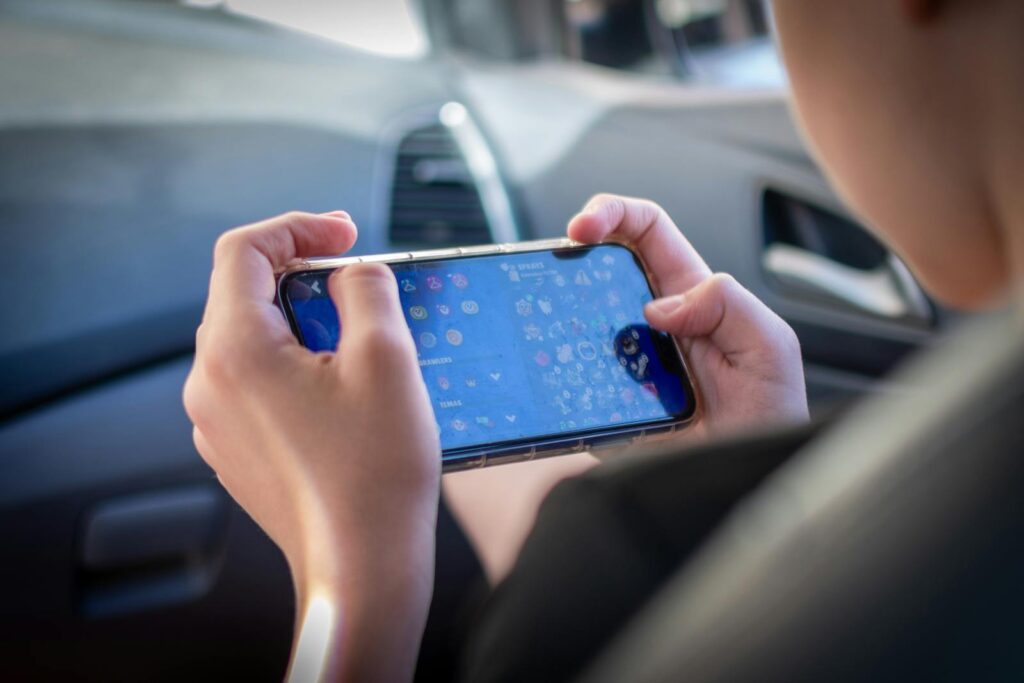
A parent asked others what age kids should get a phone, purposely withholding their son’s age to see if people think they made the right call
March 4, 202698Views
6
Minutes Read
Earlier this year, a parent on Reddit’s r/Parenting forum posted a deceptively simple question: at what age should a kid get a phone? The catch was that they deliberately left out their own child’s age, hoping to collect unbiased opinions before revealing whether they had jumped the gun or held out too long. The thread drew hundreds of replies and zero consensus, which is about right for a question that nags nearly every household with school-age children in 2026.
The debate is not new, but the pressure keeps intensifying. Kids are getting connected earlier, schools increasingly assume students can be reached digitally, and a wave of state and federal legislation is trying to draw lines that families have struggled to draw on their own. Here is what current research, pediatric guidance, and real-world options actually tell parents who are staring down the “phone question” right now.
Photo by www.kaboompics.com on Pexels
What the data says about when kids actually get phones
Middle school remains the most common window for a first device, but the averages can be misleading. A Common Sense Media report found that 42 percent of U.S. children have a phone by age 10, 71 percent by age 12, and 91 percent by age 14. A separate 2024 survey from Pew Research Center confirmed that the median age for a first smartphone falls between 12 and 13, right around the transition to sixth or seventh grade.
That timeline helps explain why the “everyone else already has one” argument hits parents so hard in late elementary school: by fifth grade, close to half of a child’s classmates may genuinely be carrying a device. The parent who posted that Reddit experiment was not imagining the social pressure. The numbers back it up.
Why pediatric experts refuse to name a single “right age”
If parents are hoping a doctor will hand them a clean number, they will be disappointed. The American Academy of Pediatrics has consistently declined to set a universal age threshold, instead urging families to create personalized media plans based on a child’s maturity, household rules, and specific needs.
A widely cited guide from Brown University’s health education program puts it bluntly: one child may be ready at 10, while another may not be ready at 13 or beyond. The variation is not a cop-out. It reflects real differences in impulse control, emotional regulation, and a child’s ability to speak up when something online feels wrong.
That said, several major children’s hospitals have coalesced around a practical floor. Nationwide Children’s Hospital and the Child Mind Institute both suggest that a full-featured smartphone with social media access is best delayed until at least age 13, and that waiting longer is reasonable. Their concern is not the hardware itself but the combination of algorithmically driven social media, unlimited browsing, and developing brains. Research published in JAMA Pediatrics has linked early, heavy smartphone use to disrupted sleep, increased anxiety, and slower social-emotional development, particularly when daily screen time exceeds three to four hours.
The legislative landscape is shifting fast
Parents are no longer making this decision in a policy vacuum. As of early 2026, more than a dozen U.S. states have enacted or are enforcing laws that restrict minors’ access to social media platforms, require age verification, or mandate parental consent for accounts held by children under 16. Florida’s law, signed in 2024, bans social media accounts for children under 14 outright. Utah’s pair of social media bills requires parental consent for minors and imposes curfew-style access limits.
At the federal level, the Kids Online Safety Act (KOSA), which passed the Senate in 2024, continues to move through legislative channels. If enacted in its current form, it would require platforms to enable the strongest privacy and safety settings by default for users under 17. None of these laws tell parents when to buy a phone, but they are reshaping the environment that phone will connect to.
A middle path between “no phone” and “unlimited access”
The Reddit thread, like most phone-age debates, framed the choice as binary: phone or no phone. In practice, families have a growing menu of in-between options that let kids stay reachable without opening the full internet.
Basic and kid-focused phones. Devices from companies like Gabb, Pinwheel, and Bark Phone offer calling and texting with no browser, no social media, and curated app libraries. The Child Mind Institute specifically recommends starting with a limited device like these before graduating to a smartphone.
Smartwatches with cellular. The Apple Watch SE (with Family Setup) and the Gizmo Watch allow calls, texts, and GPS tracking from a parent’s phone without giving a child a screen they can scroll for hours. For younger kids who need a safety tether but not a computer in their pocket, a watch can buy families two or three more years.
Smartphones with heavy parental controls. Both Apple’s Screen Time and Google’s Family Link let parents lock down app installs, set daily time limits, filter web content, and monitor location. These tools are not foolproof, and tech-savvy kids find workarounds, but they allow a phased approach: start restrictive, then loosen controls as a child demonstrates responsibility.
Questions worth asking before you buy
Rather than fixating on age, pediatric experts and family therapists suggest parents run through a short checklist before handing over any device:
Can your child follow household rules consistently without constant reminders? If getting them to finish homework or come to dinner is already a daily battle, adding a phone will not simplify things.
Do they understand the permanence of digital communication? A child who grasps that a text or photo cannot truly be taken back is better equipped than one who does not.
Will they tell you if something online makes them uncomfortable? Open communication matters more than any filter.
What is the actual need? Walking home from school alone is a different case than wanting to watch YouTube at bedtime. Match the device to the need.
The parent on Reddit eventually revealed their child’s age (11) and got the expected split: some said it was perfect timing, others said to wait. The real takeaway was not the crowd’s verdict but the fact that no stranger on the internet knows your kid the way you do. The research sets boundaries, the laws are catching up, and the device options keep multiplying. The decision still lands on the people who watch their child navigate the world every day.
More from Decluttering Mom:
Madison has been writing for as long as she can remember. We're talking high school journals, random blogs, notes she probably shouldn't have passed in class — if there were words to be put together, she was putting them together. But it wasn't until 2020 that she started writing with real purpose, and honestly? Life gave her plenty of material.
She's a mom of three, which means her days are equal parts beautiful and absolutely unhinged. And somewhere in the middle of raising kids, keeping a marriage alive, maintaining friendships, managing family dynamics, and trying to hold it all together without losing herself completely — she realized that relationships are everything. They can be the thing that carries you through hard seasons or the thing that quietly drains you if you're not paying attention.
So that's what she writes about.
Madison covers the full, messy, complicated world of relationships — marriage, friendships, family, the people who fill you up and the ones who absolutely do not. She's not here to sugarcoat it or hand you a list of tips that sound good but don't actually work in real life. She digs into the stuff that's genuinely hard and comes back with real, useful ideas for navigating it without losing your mind or your people.
Her whole thing is this — motherhood is already one of the hardest jobs on the planet. The relationships around you should be making it better, not harder. And if they're not? Let's fix that.
Madison isn't interested in helping you just get through it. She wants you to absolutely nail it — as a mom, as a partner, as a friend, as a person. And she's going to keep writing until she finds every last idea that helps you do exactly that.