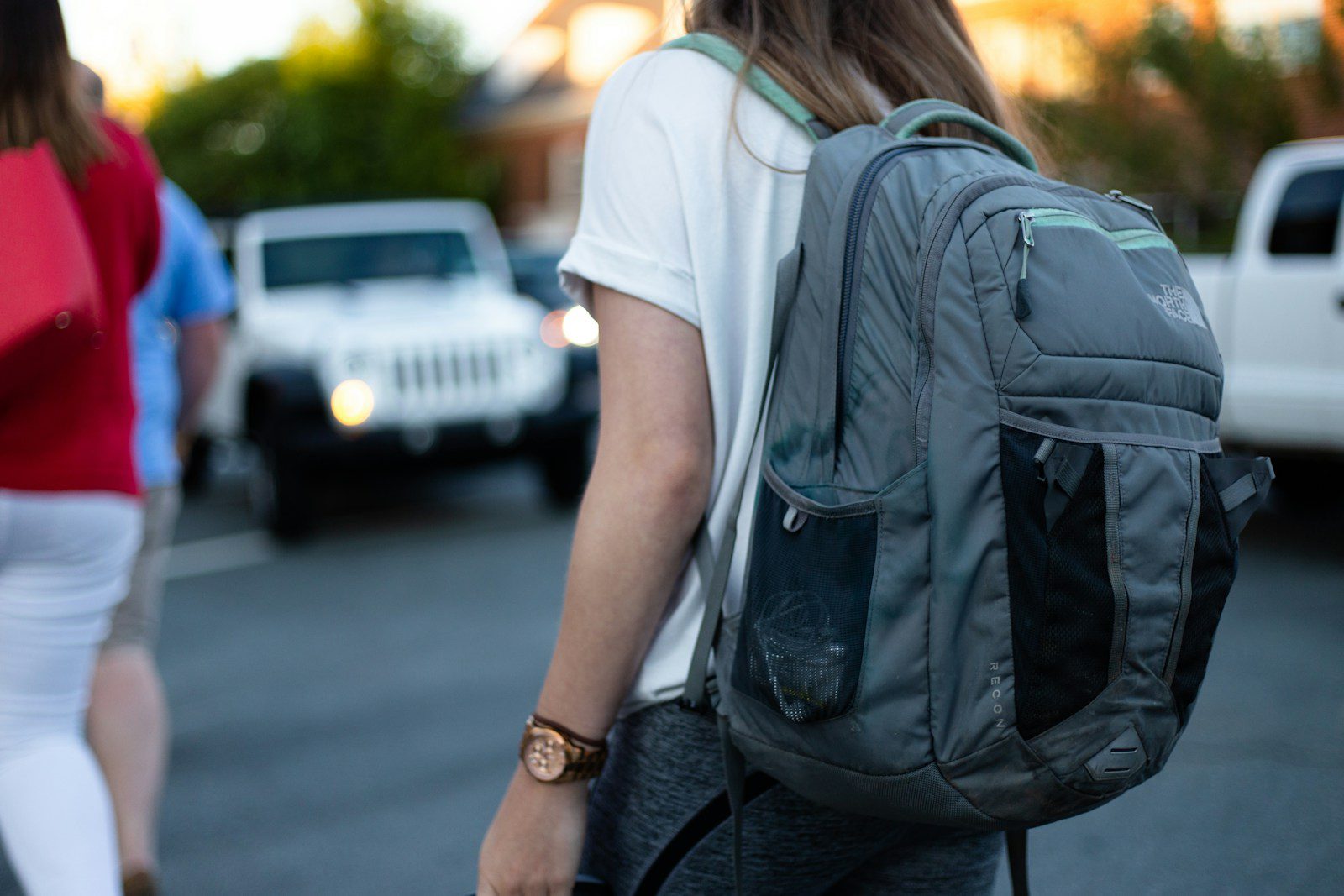
The school is right there — 0.1 miles from the front door, visible from the living room window. For a parent of a six-year-old, that proximity can make a solo walk seem like a non-issue. But distance alone does not settle the question. What matters is whether a first grader has the developmental skills to navigate even a short stretch of sidewalk and street safely, and what the law and pediatric research actually say about it.

There is no single legal answer
Most parents start by looking for a clear rule, and most come up empty. The United States has no federal law setting a minimum age for a child to walk to or from school unaccompanied. State laws vary, but the vast majority do not specify an age either. Illinois is a notable exception: its child supervision statute sets 14 as the age below which leaving a minor unsupervised may draw scrutiny, though enforcement depends on circumstances. In nearly every other state, the decision falls to parental judgment, local norms, and — if something goes wrong — the discretion of child protective services.
Because the legal landscape is so patchwork, families are largely on their own. Parenting resources, including guidance published by Care.com, confirm that the question of when a child can walk home alone is answered more by individual assessment than by statute.
What pediatricians recommend — and why age 10 keeps coming up
The American Academy of Pediatrics has long advised that most children are not developmentally ready to walk to school alone until around age 10, roughly fifth grade. That benchmark is not arbitrary. By 10, most kids can reliably judge the speed and distance of oncoming traffic, follow multi-step safety rules without reminders, and respond to unexpected situations like a detour or an unfamiliar adult. A six-year-old, even a sharp and confident one, is still developing those abilities.
Dr. Sarah Denny, a pediatrician who has contributed to AAP policy on child injury prevention, has noted that younger children often overestimate their own visibility to drivers and underestimate how fast cars are moving. That mismatch is a core reason the AAP draws the line where it does.
Traffic data reinforces the concern. According to the National Highway Traffic Safety Administration, roughly one in five traffic fatalities among children under 15 involves a pedestrian. The risk is highest for kids between ages 5 and 9, the exact age range of a first grader walking to school.
The route matters as much as the child
Even families who accept the age-10 guideline sometimes wonder if a very short, very simple route changes the calculus. It can — but not as much as parents hope. Pediatric safety experts at Arnold Palmer Hospital for Children recommend that parents evaluate the route with a specific checklist: Does the child need to cross any streets, and if so, are there crosswalks and crossing guards? Is the sidewalk continuous, or does it disappear into a shoulder? Are there driveways where cars back out with limited visibility? What about weather, lighting, and foot traffic at drop-off time?
A 0.1-mile walk on a quiet sidewalk with no street crossings is a fundamentally different proposition than the same distance across a busy road with no crosswalk. But even the simplest route involves variables a six-year-old may not manage well alone: a dog that startles them into the street, a parked car that blocks a driver’s sightline, or simply the impulse to chase a friend instead of staying on the sidewalk.
What about walking with a sibling or a buddy?
One question parents in this situation often ask is whether an older sibling or a walking buddy changes things. It can help, but it is not a substitute for adult supervision at this age. The NHTSA’s pedestrian safety guidance specifically recommends that children under 10 not cross streets without an adult, regardless of whether they are in a group. An eight-year-old sibling may be a comfort, but they are not a crossing guard.
Some schools organize walking groups with parent volunteers, sometimes called “walking school buses,” where an adult leads a cluster of kids along a set route. For families close enough to see the school from home, this kind of arrangement can offer a middle ground: the child gets a taste of walking to school without bearing the full responsibility alone.
Building toward independence on that short stretch
The good news for the parent watching from the window is that 0.1 miles is an ideal training ground. Pediatric safety guidance consistently recommends a gradual approach rather than an overnight switch to solo walking. That might look like this:
- Walk together daily and narrate the safety decisions out loud: “I’m looking left, then right, then left again before we step off the curb.”
- Let the child lead while you walk a few steps behind, observing whether they stop at driveways, stay on the sidewalk, and check for cars without prompting.
- Practice what-ifs: What do you do if a stranger talks to you? What if a car is blocking the sidewalk? What if you drop something in the street?
- Shadow from a distance when the child is older — perhaps by age 8 or 9 — and watch from the porch or follow in a car to see how they handle the walk without knowing you are right there.
The NHTSA’s walking safety tips also stress that adults should model good behavior: no jaywalking, no looking at a phone while crossing, no cutting between parked cars. Children absorb habits long before they walk alone.
The bottom line for a six-year-old
A first grader living 0.1 miles from school is in an enviable position for building walking skills, but the pediatric consensus as of early 2026 remains clear: six is too young for a solo walk, even a short one. The AAP’s age-10 guideline, the NHTSA’s recommendation against unsupervised street crossings for children under 10, and the developmental research behind both point in the same direction. The walk is short. The wait does not have to feel long if families use the time to teach, practice, and gradually let go.
More from Decluttering Mom: