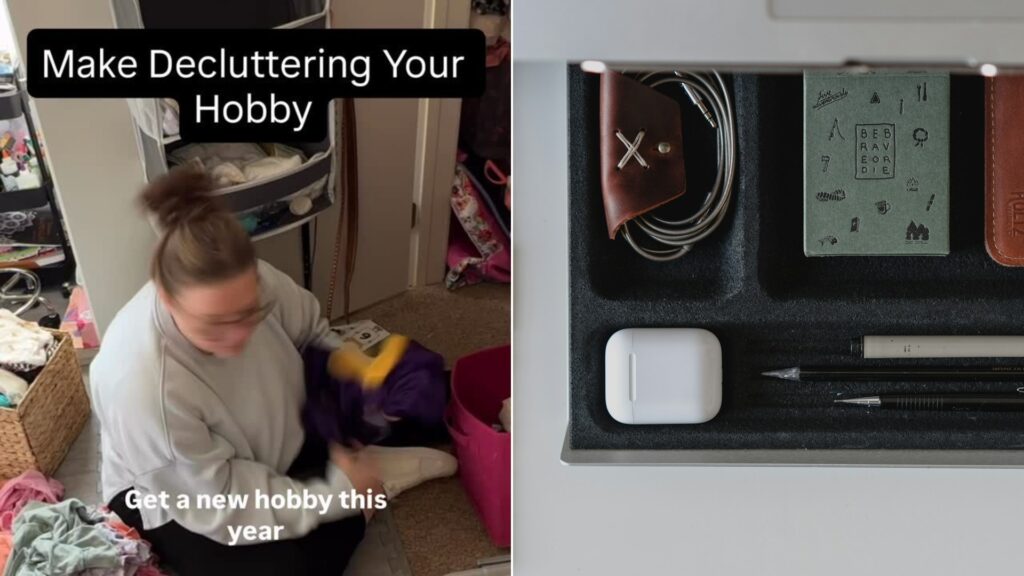
One mom was caught off guard while casually sharing thoughts about a lingering feeling that had followed her throughout life. She described a discomfort when anyone watched her perform even the simplest tasks. Whether it was folding laundry or preparing a meal, the presence of another person made her freeze, unable to carry on with the mundane actions that everyone else seemed to do with ease.
This sensation perplexed her for years. It wasn’t just shyness; it felt deeper. With housemates or a partner in the same room, it was as if an invisible weight bore down, making normal activities feel impossible. She found herself hesitating, wondering why something so simple turned into a challenge simply due to the eyes on her. The realization struck her: it wasn’t just about being looked at but rather about being perceived in a way that felt critical.

People had different reactions to her post. Some pointed out that this feeling likely stemmed from experiences with narcissistic individuals. They noted that such relationships often create an environment where a person feels scrutinized rather than understood, leading to an overwhelming sense of being watched at all times. One user emphasized how narcissistic behavior cultivates a fear of being perceived—of being evaluated rather than accepted.
Others chimed in with their observations. They described similar struggles, revealing that they also felt paralyzed by the thought of others witnessing their everyday tasks. One comment mentioned how even a simple grocery shop became daunting when someone was tagging along. The dread of being judged for every choice, from the brand of cereal to the type of produce picked, overshadowed the experience entirely.
A few commenters offered potential explanations for this feeling. They suggested that when a person grows up in an environment filled with narcissism, it alters their perception of normal interactions. Living under constant observation can skew one’s sense of self, making the act of simply existing feel like a performance. The idea of being “watched, not seen” resonated strongly, suggesting that the watchful eyes of others were not just observing but evaluating, leaving her feeling invisible.
This notion led to further discussion about how social media and the culture of constant connectivity exacerbate these feelings. Many shared how platforms that encourage sharing everything can intensify the fear of judgment, making mundane life decisions seem like a public spectacle. The atmosphere of always being “on” can create a heightened awareness of self, where even the smallest actions feel like they are under scrutiny.
The conversation also ventured into how this experience isn’t exclusive to relationships with narcissistic individuals but can extend to many social situations. Some expressed that they felt similarly when interacting with friends or even strangers, indicating a broader societal issue around perception and judgment.
However, not everyone shared the same sentiment. Some pointed out that not everyone feels this way. They argued that for some, the presence of others can be motivating rather than stifling. A few suggested that perhaps it’s a matter of personal comfort levels, with varying thresholds for how much one can handle being observed. These differences sparked further debate about what influences our comfort in social situations and how experiences shape perceptions.
In the end, this mom’s reflection sparked a broader conversation that left many pondering their own experiences. It raised an uncomfortable question: how much of daily life is influenced by the presence of scrutiny—whether real or imagined? The vibrant exchange highlighted a nuanced understanding of how feelings of visibility impact behavior in ordinary settings, leaving one wondering about the intricate dance between perception and reality.
More from Decluttering Mom: