Six. That’s the average number of grandchildren the typical American grandparent has today, according to a new Pew Research Center analysis published September 9, just days before Grandparents Day. Some have a lot more than six: 14% of grandparents report more than ten grandchildren, while 24% have just one or two. Averages flatten a family reality that, up close, looks wildly uneven from household to household.
Pew’s report pulls together data on who becomes a grandparent, when, and what the role actually looks like day to day, and it’s a useful corrective to how casually the word “grandparent” gets tossed around in conversation. The numbers underneath it are more specific, and in a few cases more demanding, than the greeting-card version of the role suggests.

Grandparenthood arrives later, and unevenly, than you’d guess
Pew found that two-thirds of U.S. adults ages 65 and older were grandparents as of 2024. But the path there is gradual rather than sudden. Fewer than 1% of adults in their 30s are grandparents; that climbs to 27% by the 50s, 51% by the 60s, and 74% among people in their 80s. Grandparenthood, in other words, is less a single life event than a status most people grow into across three or four decades, with plenty of variation in when it starts.
The caregiving load is real, and it’s uneven too
One in five grandparents (21%) told Pew that they, or they and a spouse, had spent at least 100 hours over the previous two years caring for a grandchild or great-grandchild. Averaged out, that’s roughly 50 hours a year for that group, though the real pattern is lumpier than any average captures: some grandparents log a couple of hours a month, while others are pulling regular after-school or summer-long shifts that look a lot more like part-time childcare. For families leaning on grandparents to cover gaps in paid child care, that 21% represents a meaningful, if uneven, safety net.
Most grandchildren don’t live with a grandparent, but a notable share do
Overall, 8% of children lived in a household headed by a grandparent in 2024. That arrangement isn’t uniform either: 48% of those children lived with two married grandparents, while 43% lived with a single grandmother running the household on her own. That second figure is easy to skip past, but it points to a specific and often under-discussed family structure, one where a single grandmother has effectively become a primary parent again, sometimes decades after she expected to be finished with that job.
Contact is frequent, closeness is more mixed
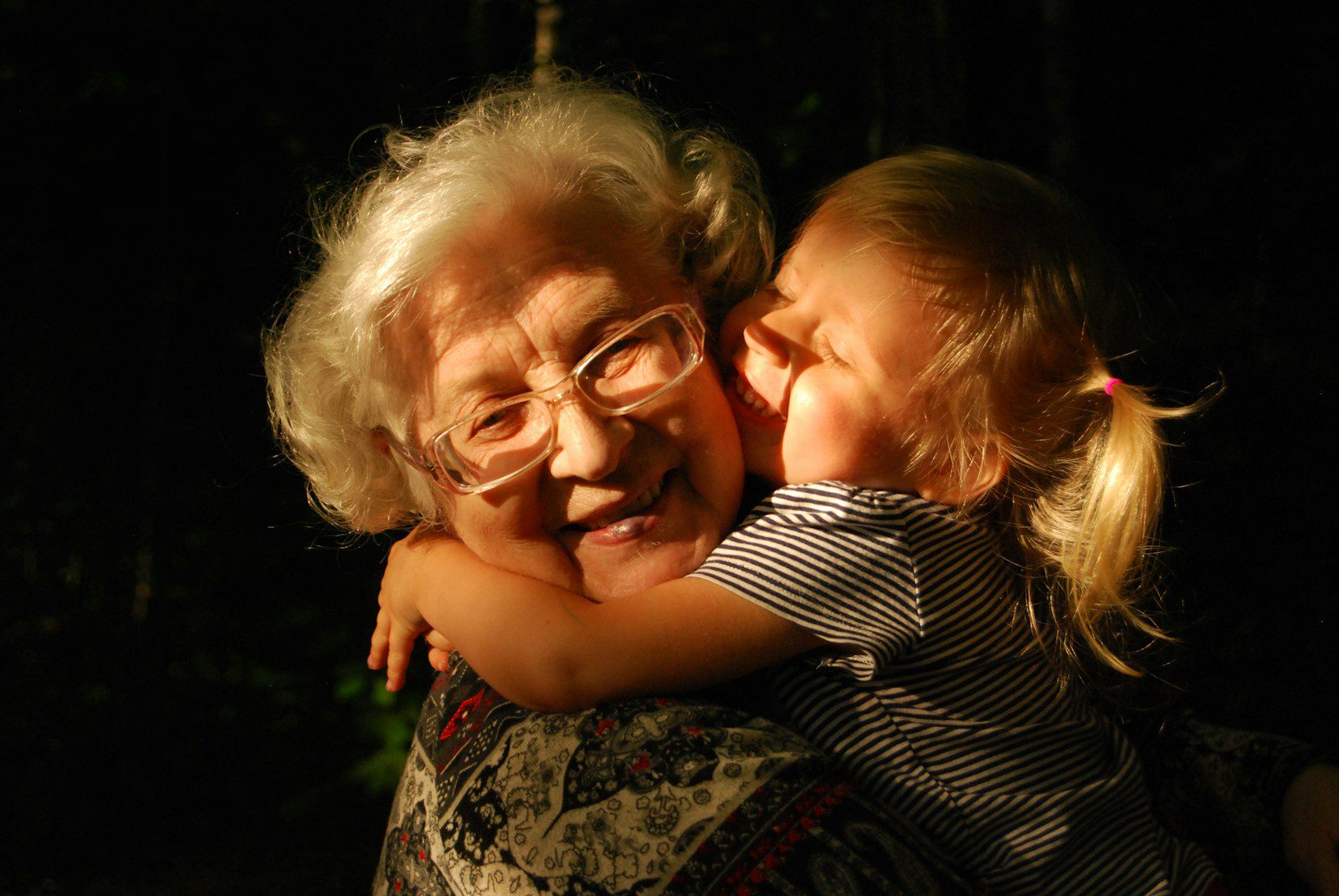
Seven in ten grandparents ages 65 and older say they’re in contact with a grandchild at least monthly, including 15% who connect daily and 27% who connect weekly, whether by phone, video call, text, or in person. That’s a fairly high baseline of ongoing contact. Emotional closeness, though, is more mixed than the contact numbers suggest: only 36% of respondents describe their relationship with a grandparent as extremely or very close, a figure that rises to 49% among Black Americans. Frequent contact and deep closeness clearly aren’t the same thing, and Pew’s data captures the gap between checking in and truly being close.
Why the timing of this report is not a coincidence
Pew released these findings just ahead of National Grandparents Day, observed this year on September 13. The holiday tends to get treated as a minor, card-aisle occasion sandwiched between bigger ones, but the data behind it argues for taking the role more seriously than that. Grandparents aren’t a monolithic, retired-and-doting archetype. They’re a population that includes 30-somethings and 90-somethings, people logging serious weekly childcare hours and people who see their grandkids twice a year, primary household heads and occasional weekend visitors.
Pew has checked in on this population before. A 2015 version of this same short-read series found grandparents already playing a substantial financial and caregiving role in family life a decade ago, which suggests the patterns in this year’s report aren’t a pandemic-era blip or a one-year fluke. They’re a fairly stable feature of how American families actually function, updated with sharper numbers.
What ties the six facts together is less any single statistic and more the range across all of them: in age of onset, hours contributed, living arrangements, and emotional closeness, “grandparent” turns out to be one of the least uniform categories in American family life. The label is doing a lot more work, for a lot more different situations, than most of us give it credit for.