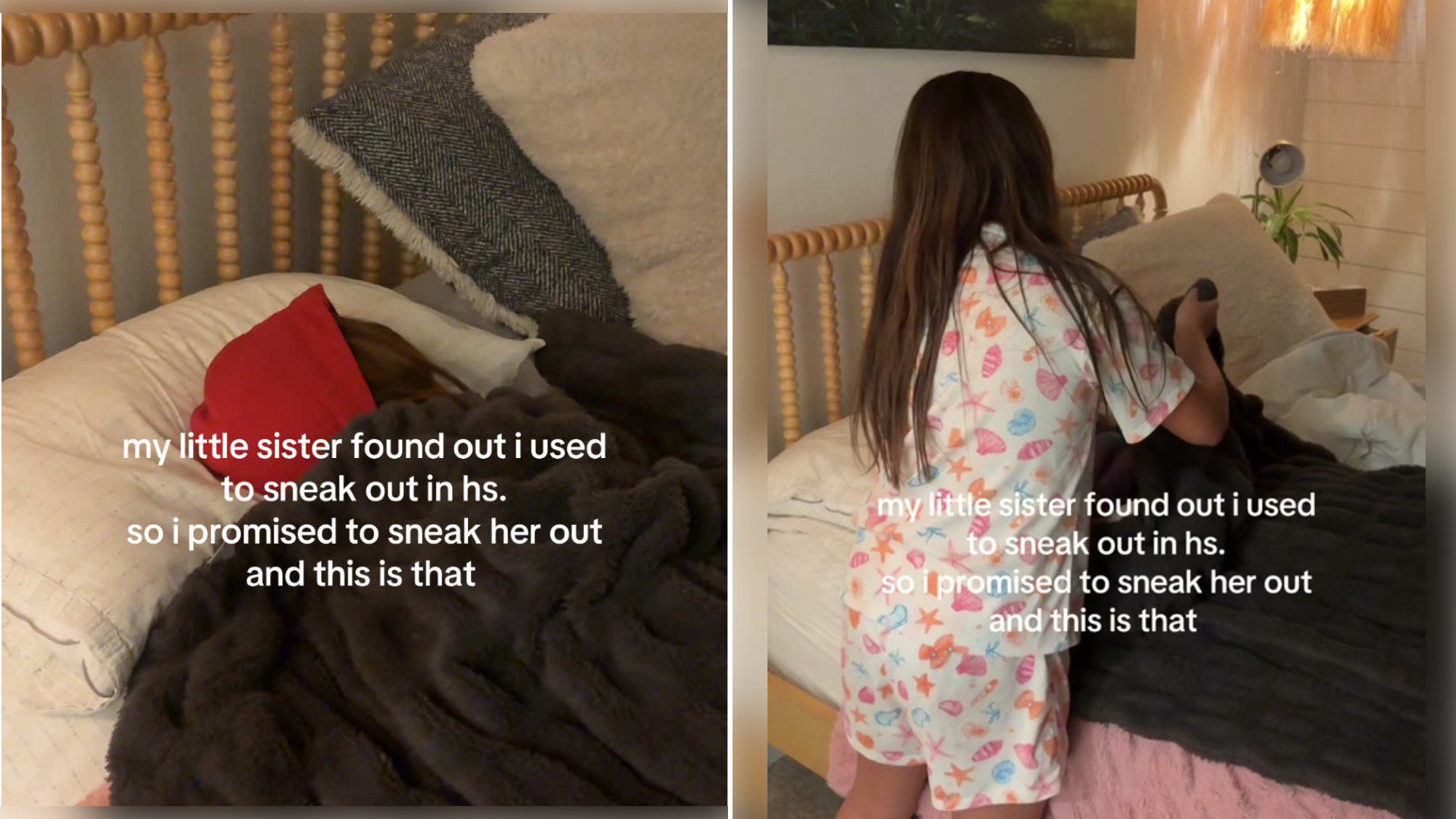
A TikTok from @kennedybiddulph frames itself as a late-night sneak-out, with Kennedy Biddulph appearing to whisk her 11-year-old sister away for an evening of fun, but the video’s twist is that their parents had actually approved the whole plan from the start.
@kennedybiddulph #vlog #sneakout #sisters #daily #vlogs ♬ Cane Canela Cha Cha – Roscoe Hargrove
In the video, Biddulph plays up the classic “sneaking out” trope, tiptoeing, hushed voices, the sense of doing something against the rules, before revealing that their parents were in on it the entire time. The staged secrecy is part of the fun rather than a real act of defiance, and the video is structured specifically so viewers experience the same mock-suspense the younger sister does before the reveal.
According to the family’s account, the outing itself involved a night of low-key sibling fun, though the specifics of what the two sisters actually did once they were “out” are secondary to the setup-and-reveal structure of the video. The heart of the clip is less about the destination and more about the playful dynamic between an older and younger sibling.
It’s worth being clear about what this video is not: despite the sneaking-out premise, this was a planned bit orchestrated with full parental knowledge and consent, not a real unsupervised outing or a depiction of an actual runaway situation. The family appears to have designed the video specifically to play with that tension for entertainment, fully aware of how it might read out of context.
Prank-and-reveal formats built around a child, especially one involving anything resembling a sneak-out, always carry some risk of being misread by viewers scrolling quickly and catching only the setup before the twist. Creators who use this structure typically make the reveal unambiguous specifically to avoid that confusion, and Biddulph’s video appears to follow that same pattern: the sneaking is clearly staged for the camera, and the parents’ full awareness is the entire point of the video rather than a footnote to it.
That framing is likely part of why the clip has traveled well: it lets viewers enjoy the nostalgic thrill of a sneak-out story without any of the real risk or concern that would come with an actual unsupervised late-night outing involving a child. The humor depends entirely on the audience eventually learning that the adults were never out of the loop.
Videos built around a staged sneak-out carry an inherent tension: the format only works if it looks convincing enough, at least briefly, to create real suspense for the viewer, even though the entire premise is fictional from the family’s own perspective. Creators who use this structure typically make sure the resolution is unmistakable, precisely so no one walks away thinking they watched an actual unsupervised outing involving a child. Biddulph’s video appears to follow that same convention, with the parental reveal serving as the clear, deliberate punchline rather than an afterthought. That structure lets the video have it both ways: the playful thrill of a classic sneak-out story, paired with the reassurance that nothing about the outing was ever actually unsupervised or risky.
Videos featuring staged scenarios involving children, even lighthearted ones fully sanctioned by parents, sometimes draw a handful of viewers who take the premise literally before watching to the end. Creators are generally aware of that risk and structure their videos accordingly, front-loading the reveal early enough, or making it unmistakable enough, that any momentary concern resolves quickly. Biddulph’s clip appears to follow that same pattern, prioritizing clarity about the parents’ involvement over prolonging the suspense for its own sake.
It’s also worth noting that videos like this one tend to hold up better over repeated viewings once the twist is known, since viewers watching a second time can appreciate the deliberate misdirection rather than being caught off guard by it. That rewatchability, built into the format itself, is part of why staged reveal videos involving families tend to have a longer shelf life online than a single-viewing news clip might, continuing to circulate well after the initial reaction has settled.
Ultimately, the video works because it invites viewers to briefly believe the premise before rewarding them with the reassurance that nothing about the outing was ever truly unsupervised, a structure that has become something of a signature for family content built around playful misdirection.
The Takeaway
Sibling relationships often thrive on exactly this kind of shared secret-keeping and playful mischief, especially when there’s a noticeable age gap. An older sibling looping a younger one into a fun, harmless bit can build a sense of closeness and trust that lasts well beyond the moment itself.
For parents, this kind of story is also a nice example of how supervised “pretend” adventures, a fake sneak-out, a staged surprise, a harmless prank, can give kids a taste of excitement and independence in a completely safe, controlled setting. The key ingredient, as this family’s story emphasizes, is that the adults always know exactly what’s happening.
Playful, fully supervised scenarios like this one can be a fun way for families to create shared memories and inside jokes, as long as the framing stays clear enough that no one, including the kids involved, walks away confused about what was real. Kennedy and her family appear to have struck that balance here.