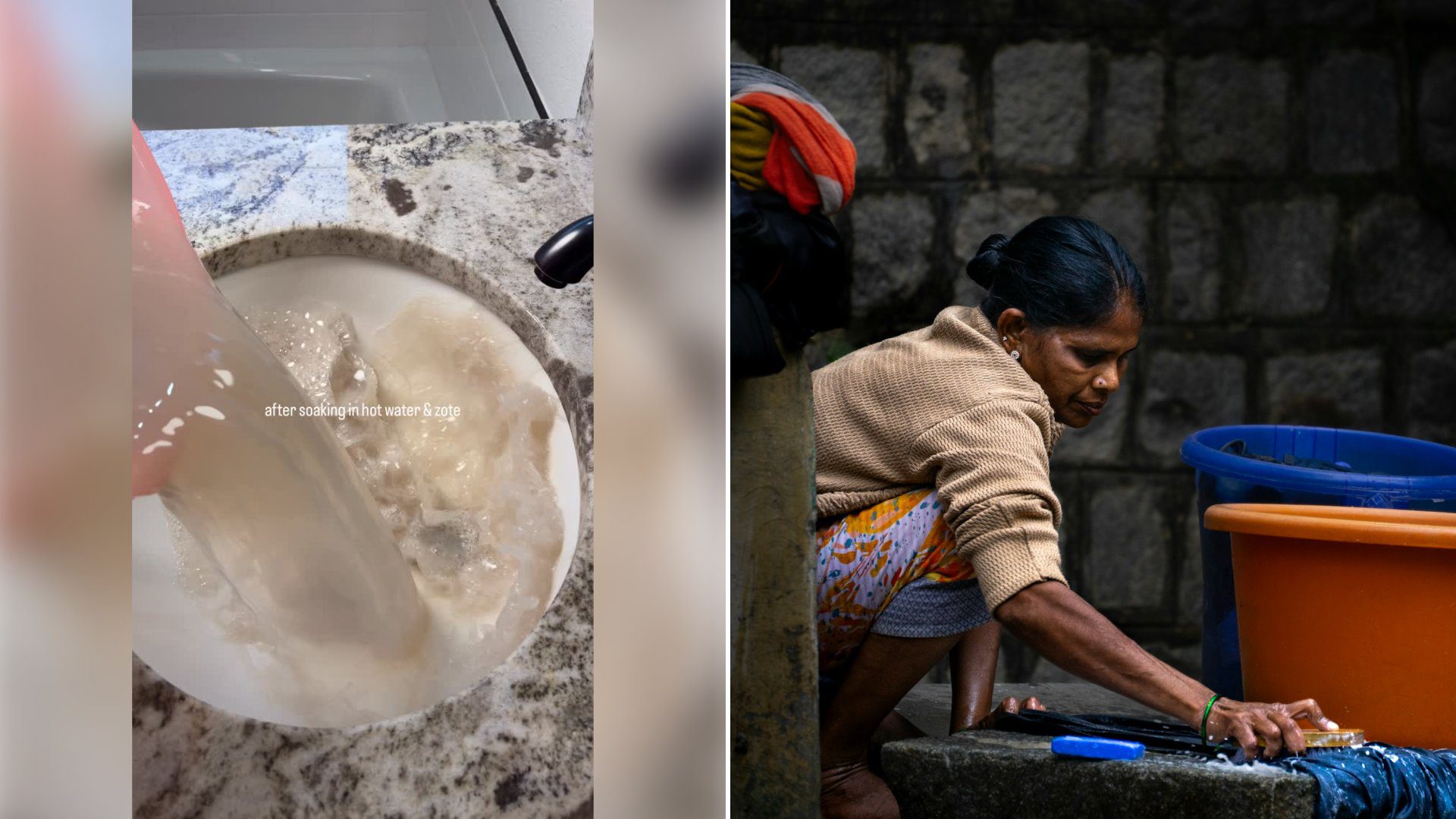
A video from the account cleanwithella opens with a problem familiar to anyone raising kids who refuse to wear shoes outside: “My kids are constantly walking around outside in their socks & they’re always stained.” Her fix, demonstrated by hand: “Decided to soak them in hot water & Zote soap to get the stains out. They aren’t perfect, but so much better.” Tagged #stainremover and #laundrytips, the clip pulled in 70,400 likes, 122 comments, and more than 2,400 shares from parents facing the exact same sock graveyard.
Zote, the pink (or occasionally white) bar soap the creator reaches for, has built a loyal following among serious stain-fighters for reasons that hold up under scrutiny. It’s a Mexican-made laundry bar soap formulated with a higher concentration of cleaning agents than a typical bath bar, originally designed for hand-washing heavily soiled work clothes before most households had washing machines at all. Its selling point has always been the same: it’s tough enough to be rubbed directly onto a stain as a pretreatment, worked into the fibers by hand, before the garment ever goes anywhere near a machine.
The mechanism behind why this works on something like grass- and dirt-stained socks comes down to direct contact time. A washing machine cycle gives a stain a few minutes of agitation with heavily diluted detergent; hand-rubbing a concentrated bar soap directly onto the stain, then letting the garment sit submerged in hot water, gives the cleaning agents far longer, and far more concentrated, contact with the exact fibers holding the stain. Hot water itself does real work here too: it helps dissolve certain binding agents in dirt and plant-based stains that cold water often just pushes around rather than lifting, which is why pretreating in hot water is standard advice across most stain-removal guidance, including guidance published by major detergent makers for grass, dirt, and ground-in outdoor stains specifically.
That said, hot water isn’t universally safe for every fabric or stain. Garment care labels exist precisely because some fibers shrink or weaken under hot water, and protein-based stains like blood actually set permanently when treated with heat rather than cold water. For something as sturdy as cotton athletic socks, hot water is generally fine and often more effective, but the same approach applied to a delicate fabric or the wrong stain type can make the problem worse rather than better, which is why checking a care label before reaching for the hottest setting is worth the extra ten seconds.
The honest “they aren’t perfect, but so much better” framing in the caption is itself useful information: heavily ground-in, repeatedly-worn-outside stains on socks are genuinely one of the harder categories to fully erase, and setting the expectation at meaningfully improved rather than pristine is realistic rather than disappointing. For parents facing the same drawer full of grey-bottomed white socks, a bar of Zote, hot water, and a willingness to actually scrub by hand before the wash cycle starts is a cheap, low-effort step that outperforms tossing them straight into the machine and hoping.
More from Decluttering Mom
- Cleaning Creator Sprays Cinnamon Water Inside Her Outdoor Bin to Keep Ants and Flies Away Then Buffs Shaving Cream Onto Her Oven in Five Home Hacks She Says No One Teaches You
- Cleaning Creator Squeezes Brown Grime Out of Her Oven Sponge, Washes Her Vacuum Canister in the Bathtub and Scrubs Green Garden Stone to Show Cleaning Things That Aren’t Already Clean
- Homeowner Sums Up Her Third Month in the House in 23 Seconds of Cleans, Scrubbing Grime Off the Garden Gate, Rust Off a Radiator and Cloudy Residue Off the Fireplace Glass