You follow the twists as a decades-old silence finally breaks: a woman has confessed to the 1993 death of a newborn found along Route 25 in Calverton, and that admission forces you to reframe everything you thought you knew about the case. The confession gives investigators a clear suspect and injects new momentum into a case that had gone cold for more than 30 years.
She left a trail of unanswered questions for decades, and this post will trace how the case moved from a roadside tragedy to renewed prosecutorial action and a recorded admission. Expect a look at the crime, the arrest of Denise Merker, and how modern techniques like DNA helped push a stalled investigation forward.

The 1993 Cold Case and Denise Merker’s Confession
The infant was found along Route 25 near Calverton in 1993, and decades later a Riverhead woman told detectives she caused the death. Court records and a recorded interview form the nucleus of the recent case developments.
Discovery of Baby Jane Doe in Calverton
Highway workers discovered the newborn in 1993 inside a garbage bag discarded in a field off Route 25 in Calverton. The child entered the record as Baby Jane Doe because investigators could not identify her or her mother at the time. Initial inquiries produced limited leads, and forensic options of the early 1990s failed to produce a match or a suspect.
Over the years the case remained open in Suffolk County, classified as a cold case. Advances in evidence analysis and renewed investigative attention eventually brought the file back to detectives in Riverhead, who reexamined physical evidence and case notes to seek new avenues for identification.
Details of Denise Merker’s Admission
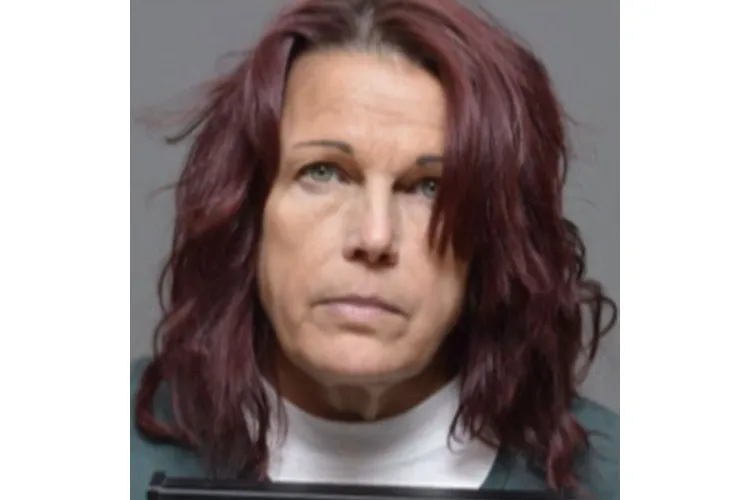
Denise Reischman Merker, a Riverhead resident, was arrested on Feb. 2, 2026, and charged with second-degree murder in connection with the 1993 death. According to the criminal complaint and a recorded interview referenced in court filings, Merker told Suffolk County detectives, “I did it. I did everything.”
Her statements to investigators reportedly included admitting she placed a paper towel in the infant’s mouth after the baby began crying. Merker has pleaded not guilty in initial court proceedings, and the recorded interview is cited in public reporting as central to prosecutors’ account of events.
Role of Suffolk County Detectives and Court Proceedings
Suffolk County detectives led the renewed investigation and executed the February 2026 arrest after reviewing the cold case file. Detectives conducted a recorded interview with Merker; the criminal complaint filed in Suffolk County Court in Riverhead quotes her admissions and summarizes investigators’ account of the interrogation.
Merker was arraigned in Riverhead Town Justice Court and ordered held without bail, according to court records. Prosecutors have not publicly detailed every piece of forensic evidence that connected Merker to the 1993 case, but the criminal complaint and detectives’ interview statements figure prominently in the charges lodged in Suffolk County Court.
Unraveling Decades-Old Mysteries with DNA Technology
DNA advances let investigators extract usable profiles from degraded evidence and link those profiles to relatives through public and commercial databases. Genetic genealogy narrows suspects quickly, while targeted laboratory techniques recover trace DNA from fabrics, bones, and old swabs.
Breakthroughs in Genetic Genealogy Investigation
Genetic genealogy combines traditional family-tree research with DNA matches from consumer databases. Investigators create a SNP profile from crime-scene DNA, upload a compatible file to genealogy platforms that permit law-enforcement use, then build family trees from distant matches to identify likely relatives. This method often yields a small pool of potential suspects within weeks.
Privacy rules and database policies shape what investigators can access. Labs now use improved SNP sequencing and microarray methods to generate high-quality profiles from degraded samples, increasing success in cases once thought unsolvable. Trained genealogists translate genetic connections into actionable leads for prosecutors and detectives.
The Impact of DNA Technology on Cold Cases
Modern lab techniques like mitochondrial sequencing, Y-STR analysis, and improved PCR kits recover profiles from samples decades old. Forensic teams extract DNA from hair shafts, bones, and preserved clothing, then compare profiles to national CODIS and genealogical matches. That combination has produced identifications even when physical evidence is limited.
The practical effects include reopening files, securing confessions, and identifying unidentified remains. Agencies balance investigative value against privacy concerns and legal constraints; courts and legislatures continue to refine admissibility standards. Families receive answers after long waits, and some cases close without criminal trials when suspects are deceased.
Similar Cases: Melissa Jean Allen Avila and Others
Cases like Melissa Jean Allen Avila’s show how genetic genealogy intersects with traditional detective work. In situations involving newborn deaths or decades-old disappearances, a DNA match to distant relatives can reveal maternal lines or link a suspect to the scene. Genealogical leads often prompt interviews, subpoenas for reference samples, and targeted forensic testing.
Other high-profile cold-case resolutions used at-home kit matches or volunteer-led genealogy projects to identify victims or suspects. Investigators still rely on corroborating evidence—timelines, witness statements, physical links—before filing charges. In many solved cases, DNA technology provided the critical lead that transformed a cold file into a prosecutable investigation.
More from Decluttering Mom: