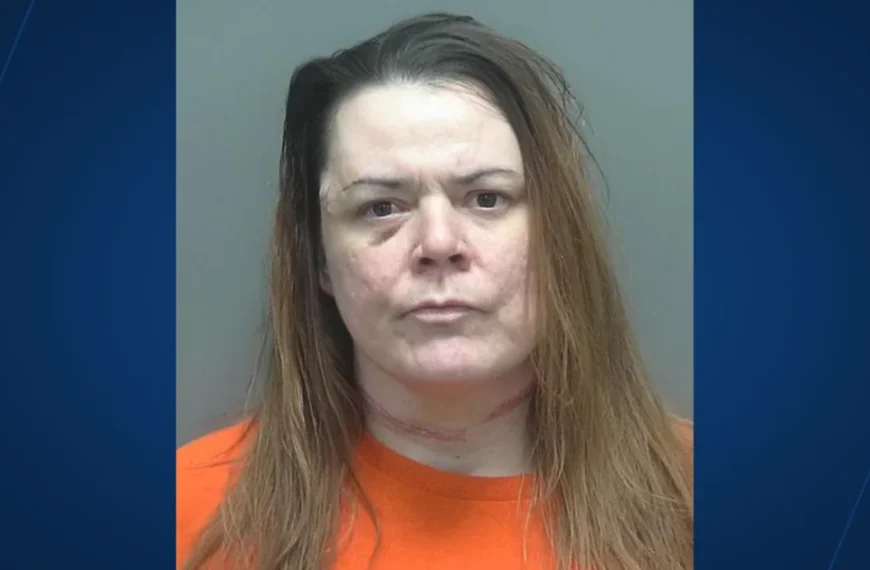
In Syracuse, grief did not just knock Rhea Holmes off her feet, it took away her home, her income, and eventually her bed. The 55-year-old widow ended up sleeping beside her husband’s grave, night after night, until a campus housing director and a patrol officer quietly rewrote the ending. Their decision to open a college residence hall to one woman in deep mourning turned a story of loss into a blueprint for what community care can look like when people refuse to look away.
Her journey from a cemetery bench to a dorm room is not neat or simple, and it is certainly not a feel-good fairy tale. It is a chain of very human choices, some made in desperation, others in compassion, that show how thin the line can be between stability and homelessness, and how powerful it is when institutions decide to lean in instead of step back.
The life Rhea and Eddie were building, then suddenly lost
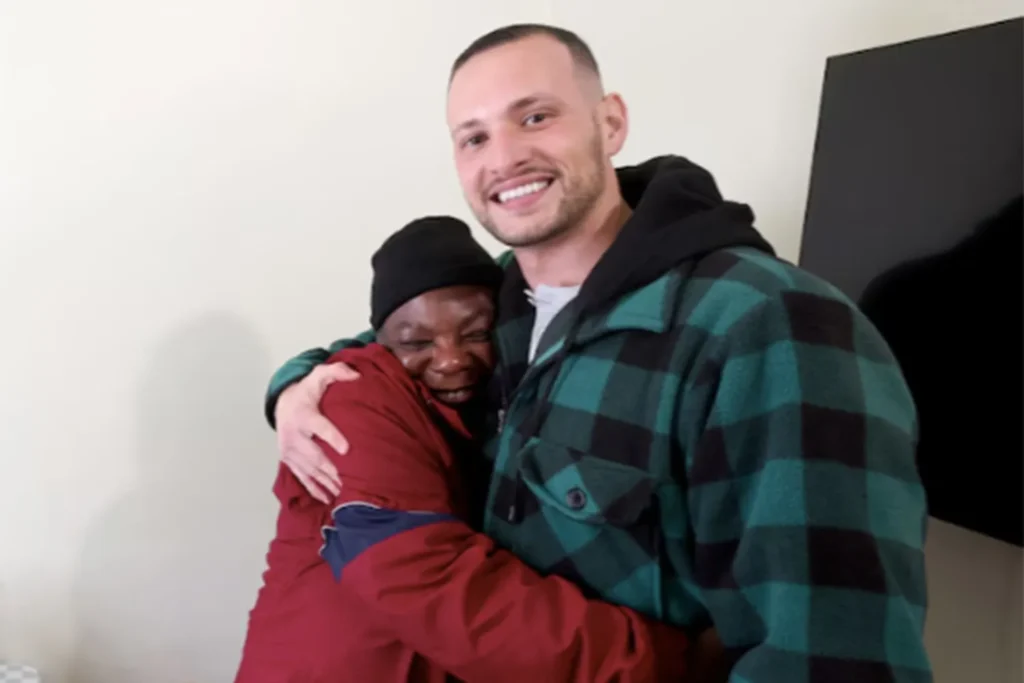
Before anyone knew her as the woman sleeping in a graveyard, Rhea Holmes was a wife planning a modest future with her husband of 26 years, Rev. Eddie Holmes. The couple had scraped together enough to make an offer on a small house in Syracuse, a place that was supposed to be their next chapter after years of shared ministry, music, and shift work. According to reporting on Rhea Holmes and Eddie Holmes, that dream never made it past the paperwork.
Eddie Holmes, described as a minister and musician who also worked as a security guard, died suddenly of a heart attack in 2020 at age 60, leaving Rhea without her partner and without the second income that kept them afloat. One account notes that Eddie Holmes had been a spiritual anchor as well as a breadwinner, which meant his death pulled out both the emotional and financial foundations of Rhea’s life at once. The house they had hoped to buy slipped away, and with it, the sense of a stable future.
From down payment to gravesite, and a bench that became a bed
Faced with funeral costs and a tidal wave of grief, Rhea made a choice that would shape everything that followed. Instead of moving forward with the purchase, she used the down payment to buy a cemetery plot for her husband, complete with a bench where she could sit and talk to him. One social media clip notes that Instead of closing on the house, Rhea poured their savings into that small piece of ground and stone, the one place she felt she could still keep a promise to Eddie.
That decision might sound irrational on paper, but in the fog of mourning it made a certain emotional sense. Another report explains that a grief-stricken Rhea took the money they had saved and invested it in the only place she felt she still owned, her husband’s grave. Over time, that bench stopped being a place to visit and became the place she stayed, a makeshift home in the middle of Oakwood Cemetery where she could cling to the last physical link to the life she had lost.
Grief, eviction, and nights alone in Oakwood Cemetery
Once Eddie was gone, the financial spiral came fast. Rhea slipped into depression, struggled to keep up with work, and eventually lost her job. One account notes that she was Left with little money and little left to live for, and after she fell behind on rent, she was evicted. With no savings, no house, and no family home to fall back on, the cemetery where Eddie was buried started to feel like the only place that still belonged to her.
So she moved in, quietly and without fanfare. Rhea, a 55‑year‑old woman in Syracuse, began spending her nights on that bench, sleeping beside her husband’s grave in all kinds of weather. Another account describes how she would curl up there for months, tucked among the headstones, largely unnoticed by the city around her. It was a dangerous, lonely existence, but in her mind, it was still better than being separated from Eddie and shuffled into a shelter system that felt cold and impersonal.
The patrol stop that turned into an unexpected lifeline
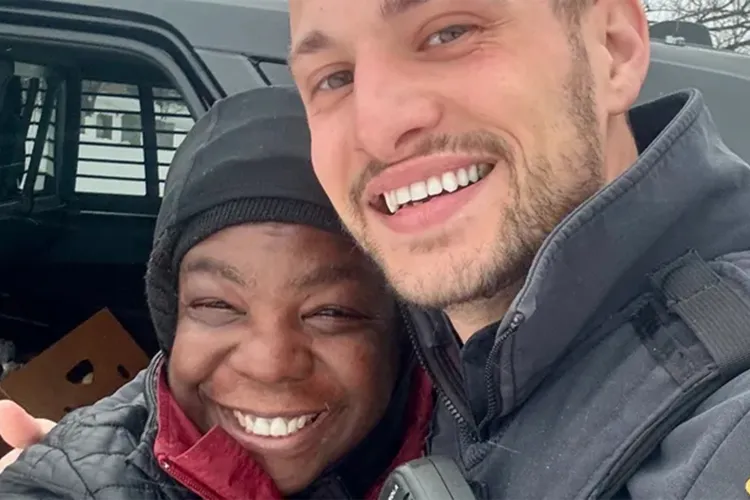
The turning point came on an ordinary day when a Syracuse police officer pulled over to check on a woman walking alone with a suitcase. The officer, identified as Jamie Pastorello of the Syracuse Police Dept, offered Rhea a ride, assuming she was headed to a bus stop or a shelter. Instead, she asked him to take her to Oakwood Cemetery, where she finally admitted that she had been sleeping on her husband’s grave.
That revelation could have ended with a trespass warning or a quiet suggestion to move along. Instead, Pastorello listened. One detailed account notes that Steve Hartman, a Correspondent with CBS, later described how the officer became an “angel” in Rhea’s story, choosing to see her not as a problem to clear but as a neighbor in crisis. A friend eventually connected Pastorello with others in the community, and he began looking for a way to get Rhea somewhere safer than a stone bench in the middle of a graveyard.
A college opens its doors, and a campus becomes a safety net
Help arrived from an unexpected corner of the city: a local college that had empty dorm rooms while students were away. Administrators there heard about Rhea’s situation and decided to offer her a place to stay, treating her not as a liability but as a guest who needed a soft landing. One report notes that a Local College Offered to the Woman Who Was Living in a Cemetery After Her Husband’s Unexpected Death, stepping in where traditional social services had not.
The arrangement was simple but life changing. Rhea, who is 55, moved into a campus residence hall while students were on break, giving her a warm bed, a shower, and a door she could lock. Another account notes that the Local College Offered as part of its broader commitment to the surrounding community, treating Rhea’s safety as part of its responsibility rather than an optional act of charity. For her, it meant finally being able to grieve without shivering through the night.
More from Decluttering Mom: