The decision to have a second child often comes down to one pressing concern that keeps parents awake at night: will they ever get time to themselves again? While deciding whether to have another baby involves countless factors from finances to family dynamics, the question of personal time looms large for couples already stretched thin with one child.
The reality is that with two children, parents rarely get a true break until both kids are older and more independent, as attention and time must constantly be divided between multiple needs happening simultaneously. Licensed clinical social worker Andrew Aaron estimates that a second child is two and a half or three times more difficult than the first, a stark departure from what many couples anticipate.
For parents weighing this life-changing decision, understanding what life actually looks like with two kids becomes critical. The romanticized image of siblings playing together while mom and dad relax doesn’t always match the exhausting juggling act that unfolds when one child needs help with homework while the other demands a snack, a diaper change, and attention all at once.
The Realities Of Having Two Kids: Is A Break Ever Possible?
Parents transitioning to two children often find themselves in a relentless cycle of divided attention and overlapping needs. The question of personal downtime becomes more complex when schedules multiply and each child requires different types of care.
Dividing Attention And Parental Burnout
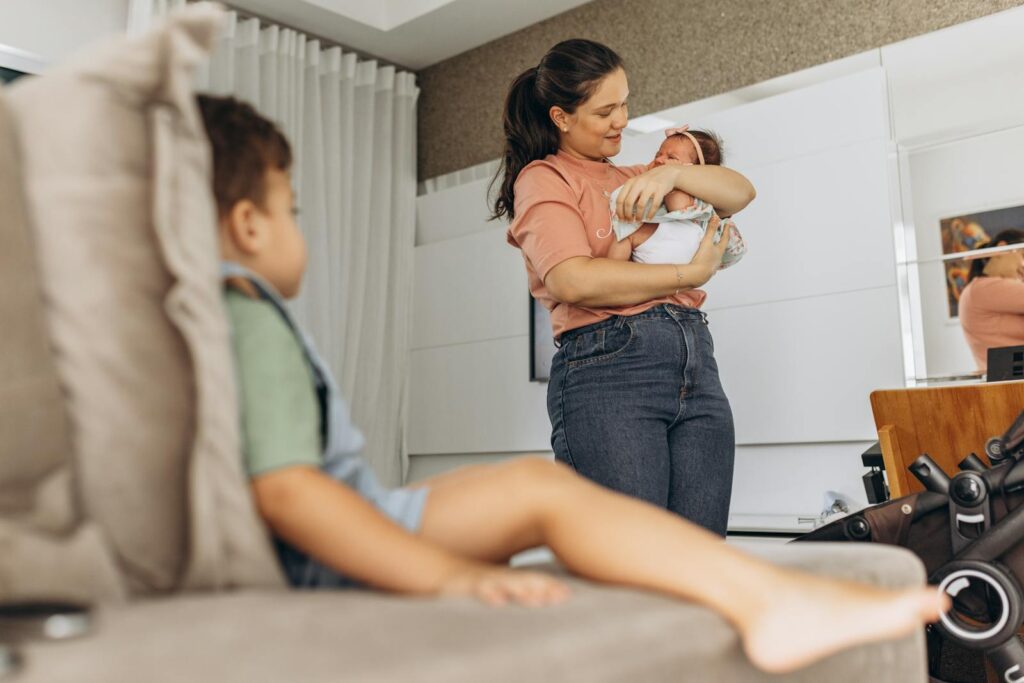
The transition from one to two kids brings a fundamental shift in how parents manage their energy. When a couple has their second child, they quickly discover that the logistical and emotional chaos of dividing focus between two small humans is hard to fathom until it’s actually happening.
Research shows that adding a second child can lead to a decline in happiness for mothers, while fathers’ happiness appears to hold steady between the first and second child. This disparity often reflects the unequal distribution of caregiving responsibilities.
Parents describe the experience as taking a completely different test in a different language after studying the wrong subject. What worked with one child rarely translates directly to managing two. One parent might handle bath time while the other tackles bedtime stories, but someone always needs something at the exact moment the other parent is occupied.
The mental load intensifies as parents track two sets of developmental milestones, doctor appointments, and emerging personalities. When both children are awake and demanding attention simultaneously, the concept of a break dissolves entirely.
Juggling Sleep Schedules And Downtime
Sleep becomes a puzzle with multiple moving pieces when parents debate having a second child. The second baby’s feeding schedule often collides with the toddler’s bedtime routine or early morning wake-up.
One parent might finally get the infant down for a nap only to have the older child need help with a tantrum or potty training emergency. The brief windows of overlap when both children sleep rarely align with when parents have the energy to do anything beyond basic household tasks.
Nighttime presents its own complications. If the baby wakes crying, parents worry about disturbing the older sibling. Some families resort to splitting night duties, with each parent taking responsibility for one child, but this means neither adult gets a full night’s rest.
The age gap between children significantly impacts these scheduling challenges. Parents with a four-year gap report that the older child can entertain themselves during the baby’s needs, creating small pockets of breathing room.
Support Systems And Self-Care Strategies
Families with two kids who maintain some semblance of personal time typically rely on structured support networks. Grandparents, trusted babysitters, or daycare arrangements become essential rather than optional when managing two children’s competing demands.
Some couples establish alternating schedules where each parent gets designated time off while the other handles both kids. Weekend mornings might rotate, with one parent sleeping in while the other manages breakfast and activities.
Parents considering whether they’ll regret not having another child often underestimate how support systems can make or break the experience of having two. Those without nearby family or financial resources for childcare find themselves more isolated.
Trading childcare with other families creates mutual break opportunities. One couple might take four kids for a few hours while the other pair gets uninterrupted time, then reverse the arrangement the following week.
The reality is that breaks become shorter and require more planning. A quick grocery trip alone becomes a luxury rather than an errand.
Weighing The Pros And Cons Of Expanding Your Family
The decision to expand your family involves examining sibling relationships, parenting realities, financial strain, and potential complications like infertility that many couples don’t anticipate when they first consider baby number two.
Benefits Of Siblings And Family Dynamics
Research from the University of Cambridge found that siblings often serve as “first friends” who teach empathy and conflict resolution through shared play. These relationships create built-in companionship that many parents view as invaluable for childhood development.
The long-term advantages extend well into adulthood. A 2023 Journal of Family Psychology study revealed that adults with siblings report lower stress levels during crises, likely because shared childhood experiences create deep understanding between them.
Sibling bonds can become pillars of support during major life events like caring for aging parents or navigating career changes. Many parents cite these future benefits when weighing the pros and cons of having a second child.
However, sibling rivalry represents a real challenge that tempers the idealized vision. Not all siblings become close friends, and some relationships require years of parental mediation before any genuine bond forms.
Parenting Challenges With Two Kids
Parents frequently describe the reality of two children as creating an entirely new ecosystem rather than simply doubling existing responsibilities. The first two years with a new sibling often become what many call “survival mode.”
Time management transforms into a complex juggling act. Soccer practices, piano recitals, and school projects for multiple kids require scheduling that leaves little room for spontaneity or self-care.
The attention split affects both children differently. Firstborns may struggle with jealousy while parents simultaneously worry about giving the second child enough individual focus. One parent managing two different developmental stages—potty training and homework help, for example—stretches capacity in ways a single child never did.
Sleep deprivation returns with full force. Just when parents have finally reclaimed full nights of rest, they’re back to midnight feedings and early wake-ups while still needing to function for an older child’s needs during the day.
Financial And Lifestyle Impacts
The USDA estimates raising one child costs over $310,000 through age 17 in middle-income families. Adding another child means re-evaluating housing needs, childcare costs, and college savings plans that seemed manageable with one.
Major expense categories that double:
- Childcare and preschool tuition
- Healthcare and insurance premiums
- Food and clothing budgets
- Activity fees and summer camps
Housing often requires an upgrade. A second bedroom becomes non-negotiable, and many families find themselves priced out of their current neighborhoods when searching for larger spaces.
Career flexibility suffers for both parents. The logistics of two pickup schedules, sick days, and school events make it harder for either parent to pursue demanding work opportunities or business travel.
Dealing With Miscarriage, Infertility, And The Only Child Decision
Some couples face complications they never anticipated when they decide to expand your family. Miscarriage affects roughly 10-20% of known pregnancies, turning what seemed like a straightforward decision into an emotional ordeal.
Secondary infertility—difficulty conceiving after already having one child—surprises many parents who assume their proven fertility guarantees future success. This challenge forces couples to confront whether they’ll pursue fertility treatments, consider adoption, or embrace having an only child.
Research from the Family Studies Institute shows that only children develop stronger verbal skills and closer parental bonds than outdated stereotypes suggest. Without sibling competition for attention, parents can invest more resources in extracurricular activities and personalized education.
Modern families increasingly embrace the one-child model as a deliberate choice rather than a consolation prize. The ability to maintain career momentum, financial stability, and couple time represents valid reasons for stopping at one that don’t require justification or apology.
More from Decluttering Mom: