

Anyone who has helped an older relative sort through a lifetime of belongings knows the moment. You are holding a casserole dish or a box of figurines, and your mom, dad, grandparent or aunt looks up and asks, “Do you want that?” Instagram creator @thebefreemethod has a simple, kind script for that exact moment, and it has people nodding along.

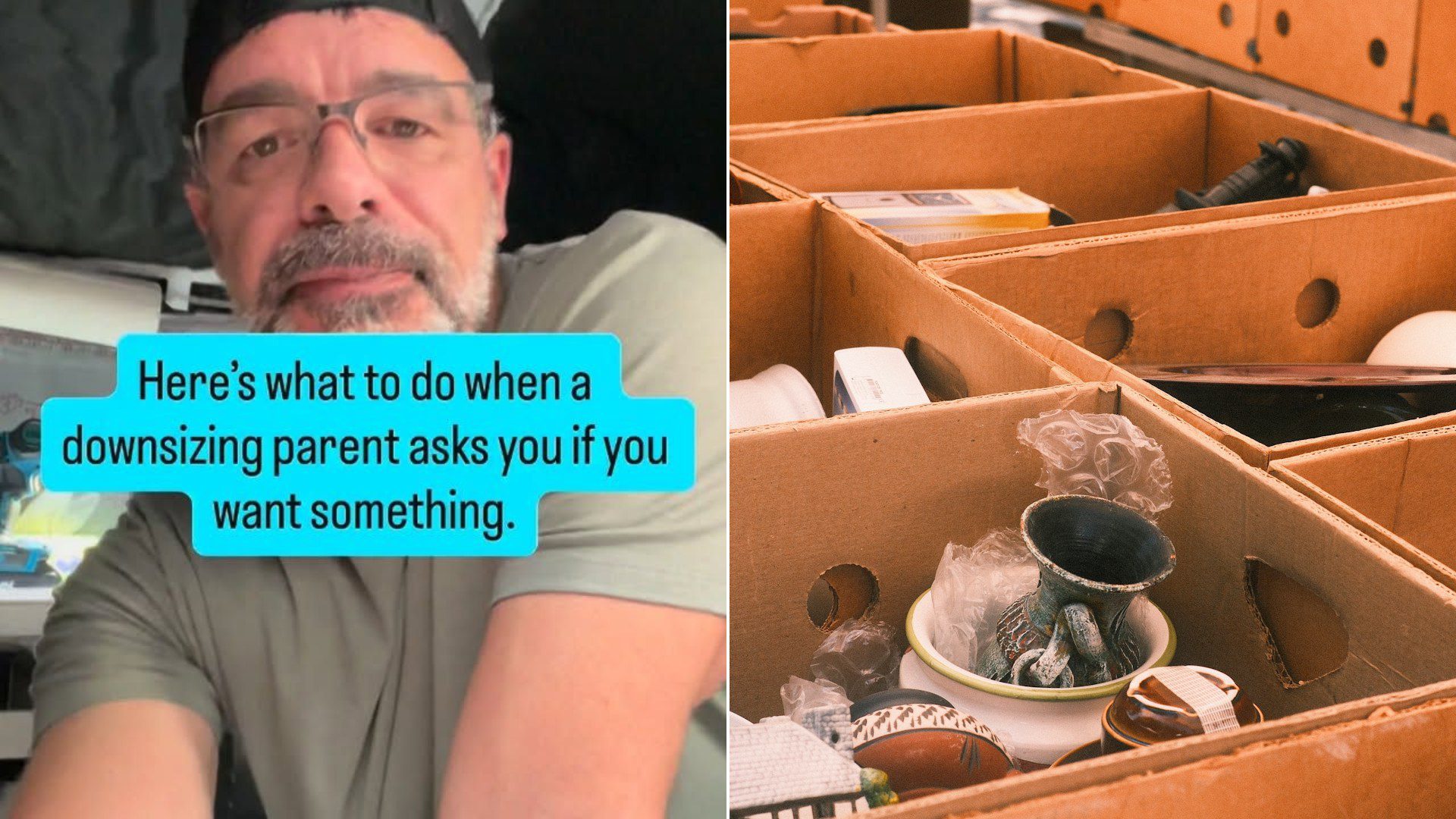
The advice is aimed at anyone helping an elderly parent, grandparent or aunt who is downsizing. Those relatives, the creator points out, are going to offer you a lot of things. The question is how to respond without hurting feelings and without ending up with a house full of stuff you never wanted.
The script: say yes, say thank you, and mean it
Here is what the creator asks you to do. When your relative offers you something, say yes and thank you. Look them in the eyes. If you can, put a hand on their shoulder, or sit down beside them so you are at their level. Then tell them how sweet it is that they thought of you.
After that, the item goes into a box or gets set by the door. You do not have to decide on the spot whether it fits your home, your taste or your budget for space. The goal in the moment is to honor the offer.
The decision comes later, at the end of the day
This is the part that gives people permission to breathe. At the end of the day, the creator says, you go through what is in that box. If there is anything you truly want, take it home with you. If there is anything you do not want, take it straight to Goodwill, guilt free, or to whatever charity you like.
The creator is clear that you do not need to feel guilty about this. The conversation with your loved one is where the kindness happens. What you do with the item afterward is logistics, and the logistics can be handled privately, without anyone feeling rejected.
Why a yes feels so good to the person downsizing
The creator explains what is often going on underneath. The number one thing many older people are trying to do is downsize, and along with that practical goal comes a quiet worry that their life was somehow meaningless. They want to know that someone else in the family likes and appreciates the things they liked, appreciated and collected over the years.
When you say yes, you are telling them exactly that. The creator says it makes them feel so good about their belongings, and about giving them to someone they think will appreciate them. Put plainly, you are doing them a huge favor, even if all you do is drive straight from their house to the donation center with the things you do not want.
The creator adds one more thing: do not be judgy about it. The name of the game is that your relative needs to downsize. The best case is that the things they have cherished for a lifetime go to a family member who loves them. If you want a piece, keep it. If you do not, pass it along.
What the experts say about talking to family first
The creator’s approach fits well with advice from professionals who work with older homeowners. In a Kiplinger Personal Finance article by Cameron Huddleston, an estate transitions founder named Amy Wilson notes that adult children often have their own possessions and no room for more. A real estate professional quoted in the same piece, Kathleen Caulfield Meyer, recommends asking children what they want and sorting through things together, rather than leaving the job for someone to do alone later.
The same article says about 70 million baby boomers are likely weighing downsizing and what to do with their belongings, and cites AARP’s finding that 44 percent of older adults expect to relocate at some point. That is a lot of families having this exact conversation, which may be why a short reel on the topic touched a nerve.
A home care provider’s guide to helping a parent downsize offers a similar playbook. It suggests starting the conversation before the move, learning what your parent wants to keep and what they are willing to part with, and offering meaningful items that will not fit in the new home to relatives or friends who will give them good homes. It also advises setting a pickup time so recipients collect their items promptly, keeping items promised to someone else separate from the rest of the move, and not throwing anything away unless your parent confirms it is trash.
Practical tips for putting this advice to work
- Bring a “maybe” box. Every time your relative offers something, it goes in the box with a smile and a thank you. You decide later, alone, with no pressure.
- Keep the thank you specific. “Thank you for thinking of me, I remember you using this at every holiday” lands better than a generic yes.
- Ask for the story. If something has a story behind it, let your relative tell it. Writing it down or recording it can matter more than owning the object.
- Offer to photograph keepsakes. Some things hold their value in the memory. A photo and a few notes can help a parent let go of an item no one has room for.
- Check what might be worth money. The Kiplinger piece says artwork, antiques, furniture, high-end rugs and jewelry are generally worth selling, so set those aside before they go to a donation bin. It also notes that donating can sometimes be worth more than selling because of the tax deduction, and that you should get a written acknowledgment from the charity for donations in the $250 to $5,000 range.
- Do the drop-off the same day. The creator’s whole method works best when the items you do not want leave your car quickly, before they turn into clutter in your own garage.
- Stay patient. Downsizing is emotional, and a parent who seems slow may simply be saying goodbye to a chapter of life.
The kindness is in the moment, not the object
What makes this reel stand out is how it separates two things that are easy to confuse. Accepting a gift graciously is about the relationship. Keeping the gift is about your own space. You can do the first without committing to the second.
If you are about to spend a weekend helping a parent clear out a house, try the creator’s approach. Say yes, say thank you, look them in the eye, and sort it all out later. Your relative gets to feel that their treasures mattered, and you get to leave without a trunk full of guilt.