

You clear off the counter, buy a few matching baskets, label everything and feel wonderful. A week later the piles are back and the doors are shut again. If that cycle sounds familiar, organizing creator @thedeclutter.co says the problem is not you. It is the order in which you are doing things.

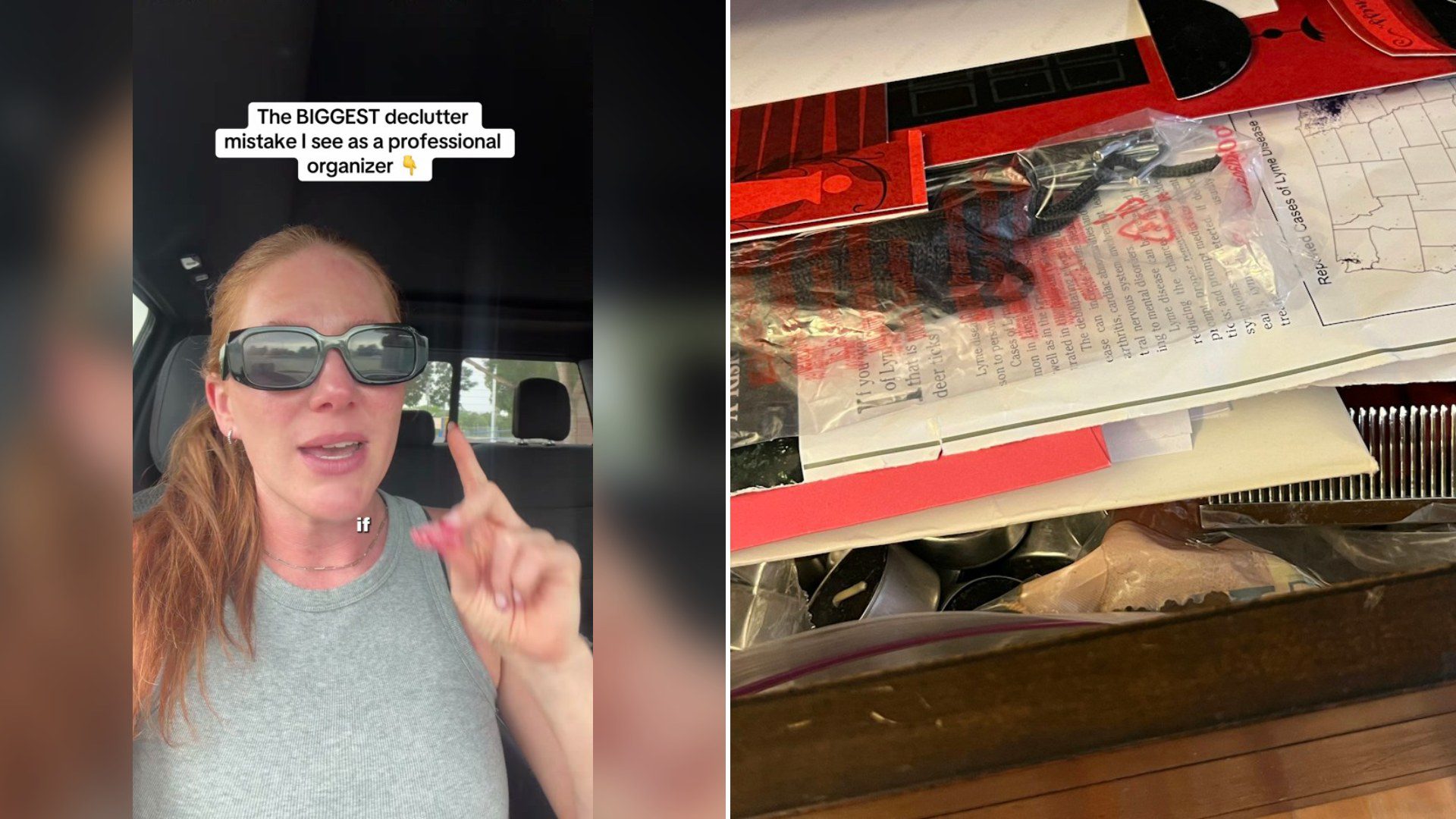
The message is direct: if you want a more organized house, stop organizing all of your clutter. Declutter first, and only then organize. Here is the full explanation.
@thedeclutter.co
Why Organized Spaces Fall Apart
The creator says this is the reason so many people organize and organize, only to find that a week later everything is back where it started. Piles are everywhere again. Doors are closed to hide the mess. People feel overwhelmed. And the biggest mistake they see, they say, is organizing before decluttering.
To explain it, they ask you to picture a linen closet. It is overflowing, and there is no system at all. You decide you are going to organize it today. But the closet is already full of stuff. So you pull some items out, fold a few things, push them back in, buy a cute bin here and there, and shove more things into those bins. When you are done, it might feel for a moment like you are organized. But it does not really feel that way, because there is still too much in the space, and there is nowhere to put the other things that will come into your house.
The creator asks you to raise your hand if you have been there. Chances are, most of us would.
The Simple Rule: Declutter, Then Organize
The advice is a friendly daily reminder: declutter first, then you get to organize. It sounds obvious, but it is easy to forget when a trip to the store for new containers feels so much more fun than sorting through old things.
Think about what organizing really is. It is giving things a home. If you have more things than the space can hold, no system can fix that. You will always end up with extra items that have no place, and those items turn into the piles that cause stress.
A 30 Day Challenge in Small Pieces
The creator mentions running a declutter challenge that breaks the work into 30 days of small chunks, asking for only 10 to 20 minutes a day. The plan goes room by room, and once the decluttering is done, the group moves on to organizing. You do not need to join a challenge to use the idea, though. You can build your own.
How to Declutter Before You Organize
Here is a simple way to follow the declutter first approach, using the linen closet as an example. The same steps work for a pantry, a bathroom cabinet, a garage shelf or a bedroom dresser.
Step 1: Empty the whole space
Take everything out and set it on a bed or a table. Seeing it all at once is eye opening. You may discover you own six sets of sheets for a bed that only needs two.
Step 2: Sort into groups
Put like with like. Towels with towels, sheets with sheets, blankets with blankets. Within each group, decide what is worn out, what does not fit your beds or bathrooms anymore, and what you simply never use.
Step 3: Let go of the extras
Worn towels and stained sheets can often be donated to an animal shelter, which is always grateful for old linens. Good items you no longer use can go to a thrift store or a friend. Put these in the car right away so they do not slide back into the house.
Step 4: Measure what is left
Look at what remains and at the space you have. If the shelf is still stuffed, keep editing. A good rule is to leave a little breathing room so you can easily take something out and put it back without a struggle.
Step 5: Now organize
Only after the first four steps do you bring in bins, baskets or labels. Because you have fewer items, you may need fewer containers than you thought, and they will do far more good.
The Hidden Cost of Buying Containers Too Soon
It is tempting to go shopping for storage products at the very start of a project. They are pretty, they promise order, and they give you a sense of progress. But if you buy before you declutter, you may end up with bins that are the wrong size or number, and you may spend money to store things you would have gotten rid of anyway.
It is far better to wait. Once you have decided what stays, measure the shelf or drawer, count your categories and then pick containers that fit. You will spend less, and the result will look and feel cleaner.
Leave Room for Life to Happen
The creator makes an important point about the “nowhere to put other things that might come into your house.” Homes are not static. Groceries arrive, gifts show up, kids bring home art projects, and seasons change. If every shelf is already packed to the edge, there is no room for any of that.
A healthy home has some empty space built in. That open shelf or half empty drawer is not wasted. It is the buffer that keeps your house working on a busy week.
The Takeaway
If your home never seems to stay tidy, it may not be a lack of effort. You may simply be starting in the wrong place. Pick one overflowing spot this week, empty it, edit it ruthlessly and only then put things back in an orderly way. Do the decluttering first, and the organizing gets a whole lot easier.