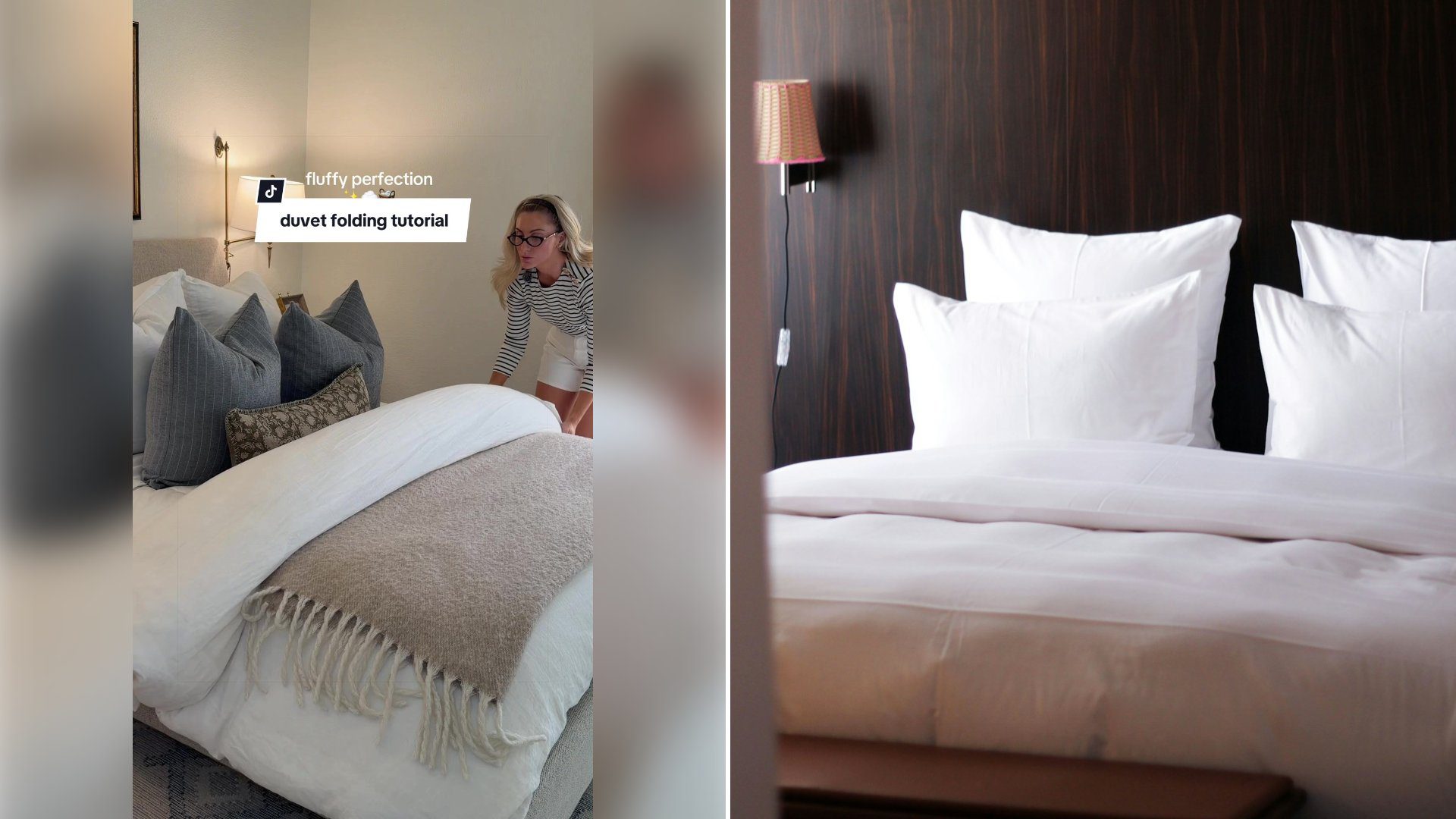
A video from the account tori colli shows her dismantling a Pottery Barn display bed layer by layer, captioned “literally unmade a Pottery Barn display bed to figure out why their beds always look so fluffy. I’m insane but I’ve figured it out and my bed will never be the same.” The discovery, spelled out in her caption: “The biggest fluffy bed hack: use an oversized duvet insert. I have a king duvet insert inside a queen duvet cover.” Tagged #bedding, #bedroom, and #duvet, the video pulled in 165,200 likes, 596 comments, 63.6K saves, and 10,400 shares.
@toricolli literally unmade a Pottery Barn display bed to figure out why their beds always look so fluffy. The biggest fluffy bed hack: use an oversized duvet insert. #bedding #bedroom #duvet #creatorsearchinsights
The technique this video uncovered by taking apart a retail display lines up closely with what hospitality and home staging guidance actually recommends, even though the specific insert-swapping trick came from independent trial and error rather than an industry manual. Marriott’s own consumer-facing bedding guidance recommends choosing a slightly oversized duvet that hangs generously over the sides of the mattress, specifically for the polished, tucked-in look associated with hotel beds, rather than a duvet sized to match the mattress exactly. Professional home stagers and catalog photographers lean on a closely related version of the same principle: pairing a cover sized for the next mattress size up, a king cover on a queen bed, a queen cover on a full, to get extra drape and fullness that a properly fitted cover can’t produce on its own.
What this video does differently, and what makes the “insane” unmaking of a display bed worth the effort, is applying that same oversizing logic to the insert rather than just the cover. A king duvet insert stuffed into a queen cover effectively creates built-in overstuffing, the insert has more total fill than the cover was designed to hold, which produces the rounded, cloud-like loft that’s hard to achieve with an insert sized to match its cover exactly, no matter how much fill weight that insert carries. It’s a more unconventional move than simply buying a bigger cover, since it means shopping two different bedding sizes on purpose rather than one matched set, but it explains why display beds at a store like Pottery Barn, built by people who style them for a living, can look noticeably fuller than the same cover and insert combination styled at home.
The tradeoff worth knowing before copying this exactly: an oversized insert inside a smaller cover will shift and bunch more than a properly matched set, since there’s extra fabric with nowhere specific to settle. Stagers who use this technique typically account for that with closure ties or corner loops inside the duvet cover to anchor the insert in place, a detail that keeps the oversized look from turning into a lumpy mess after a few nights of normal use. For anyone taking this hack home, those internal ties are the difference between a bed that looks like the display model for a week and one that still looks that way a month in.
More from Decluttering Mom
- Mom of Two Opens Her Three Car Garage on a Doom Pile of Boxes, Finds Diapers From a Subscription Still Running and a Sauna Boxed for a Year, Then Clears Enough to Park Inside
- Woman Says She Came Home From a Cleaning Service Visit to a Gas Burner Left On With No Flame, Then Found Her Purse, Tax Documents and Real Silverware in Two Garbage Bags Downstairs
- Homeowner Whose Husband Said He Could Not See the Garage Floor Hauls Out Four Years of Stuff, Patches and Paints One Wall White, Then Hangs Bikes, Helmets and a Vacuum on Rails