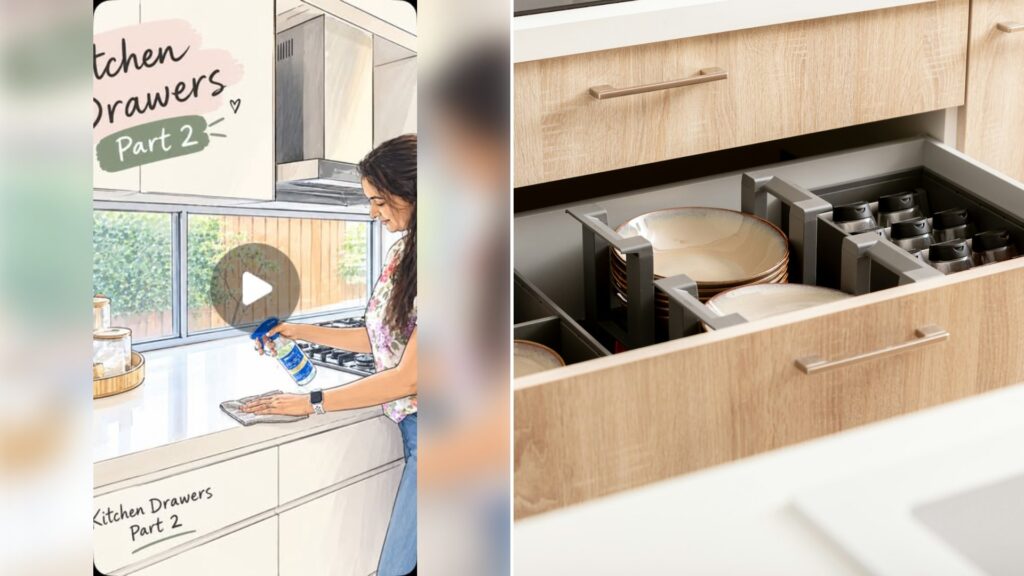
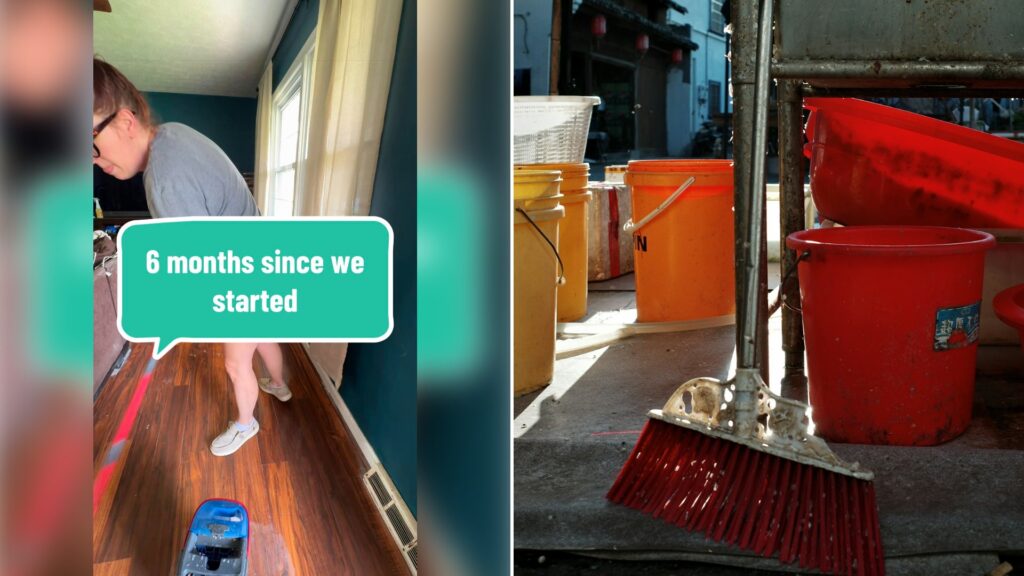
Creator @julialhunt set out to settle an argument that plays out in households everywhere: is it actually faster to clean up a mess the moment it happens, or does it not really matter if you just deal with it later? Her answer comes in the form of a split screen comparison, running two versions of the same mess side by side, one handled immediately and one left to sit and build before being tackled.

The difference in time between the two sides is not subtle. The mess cleaned up right away takes a short burst of effort and is done before it even really registers as a chore. The same mess, left to accumulate, spreads, sets in, and ends up pulling in extra steps, extra time, and extra frustration that simply did not exist in the immediate version. Her core argument, that every mess is really a choice about when you pay for it, not whether you pay for it, is the kind of point that is easy to agree with in theory and much harder to actually act on in a busy household.
There is solid reasoning behind why the delayed version of a mess takes so much longer, and it comes down to how most household messes actually behave over time rather than staying static. A spill left on a counter dries and hardens, turning a thirty-second wipe into a scrubbing job. Dishes left in the sink attract more dishes, since an already-dirty sink lowers the bar for adding one more cup or plate to the pile. Clutter set down “just for a minute” on a table or floor tends to accumulate company, since a single out-of-place item makes it psychologically easier to set a second one down nearby. Each of these is a small example of a mess compounding rather than simply sitting still and waiting to be dealt with.
Time management researchers who study procrastination describe a closely related pattern they call task compounding, where a delayed task does not just sit at the same size and difficulty level, it actively grows the longer it is put off. This happens for both physical reasons, like a stain setting in or clutter attracting more clutter, and psychological ones, since a bigger, more intimidating task becomes easier to avoid, which only gives it more time to grow further. The procrastination cycle feeds itself: delay makes the task worse, and a worse task makes delay more tempting.
There is also a cost that is easy to overlook in this kind of comparison: the mental load of an unfinished task. Productivity researchers have long pointed to what is sometimes called the Zeigarnik effect, the tendency for incomplete tasks to stay active in a person’s mind and quietly drain attention even when they are not actively being worked on. A mess that sits unresolved on a counter is not just a physical problem waiting to be solved later. It is also a small, nagging mental tab that stays open the entire time it’s ignored, which adds a cost to the delayed version of the mess that a simple side-by-side time comparison does not even fully capture.
None of this means every mess needs to be attacked within sixty seconds of happening, and most families do not operate that way in practice. But the split screen comparison makes a point worth sitting with: the total time cost of a mess is rarely fixed. It is a variable that mostly depends on how long it is allowed to sit, and the version of “later” that feels easier in the moment is usually the more expensive one once it actually arrives.
More from Decluttering Mom
- Professional Cleaner Shows How He Vacuums a Whole House Room by Room and Explains Why the Order Matters for a Faster and More Thorough Cleaning Job
- Mom Says One Squeegee Habit After Every Shower Keeps Mold From Coming Back and Shows How Little Time It Takes To Protect Your Bathroom Glass and Grout
- Husband Says Clearing the Kitchen Counters Changed His Wife’s Mood and Explains Why a Cluttered Kitchen Can Weigh So Heavily on the Whole Household