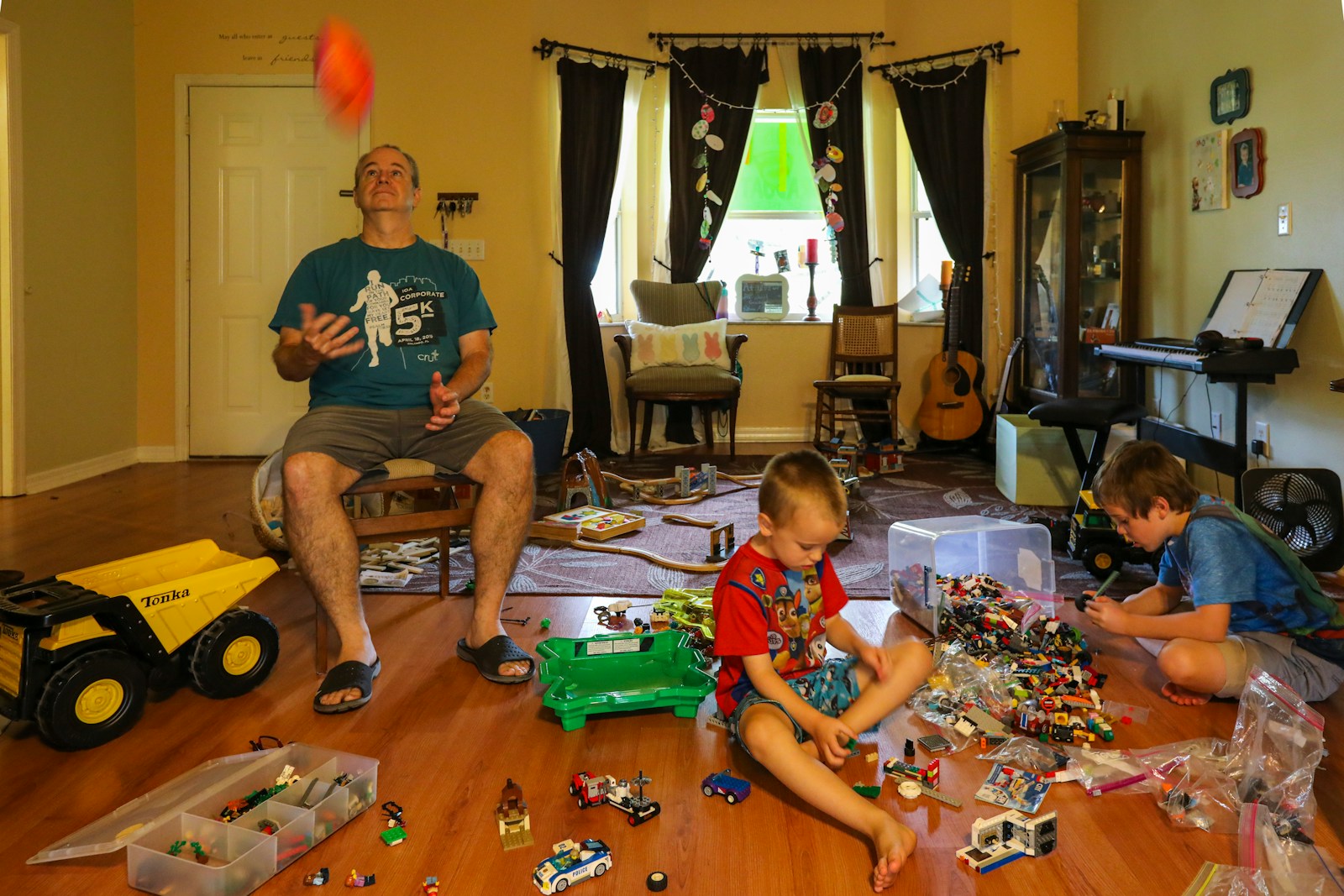
A short Instagram video of a father tidying up before his wife walks through the door has exploded across social media, precisely because it looks so ordinary. By labeling his routine as the “bare minimum,” the dad sparked a wider reckoning over why basic household responsibility still feels exceptional when a man does it, and expected when a woman does. As the clip circulates, men are treating it like a how‑to guide, while mothers are asking why these simple steps are not already standard.
The viral clip that turned everyday chores into a flashpoint
The video centers on a dad who films himself in the late afternoon, moving briskly through his house to reset the space before his partner gets home from work. He straightens the living room, clears dishes, and checks on the kids’ needs, then labels the sequence as the “bare minimum” he believes any partner should handle without being asked. The framing is deliberate: he is not presenting himself as a hero, but as a baseline example of what shared domestic labor can look like in real time.
Viewers first encountered the clip on Instagram, where the account shows the dad walking in the door after work and immediately comparing his routine to what typically happens when a mom walks in. The contrast is stark. Too often, mothers describe dropping their bags only to be met with overflowing sinks, scattered toys, and children still waiting for basic tasks like homework checks or dinner prep. By quietly doing those things himself, on camera, the dad forces a comparison between his “bare minimum” and the reality many women describe as their nonstop default.
Why calling it the “bare minimum” hit such a nerve
Labeling his efforts as the “bare minimum” is what turned a simple chore reel into a cultural Rorschach test. For some viewers, the phrase felt refreshing, a man openly rejecting the idea that he deserves applause for washing dishes or folding laundry. For others, it was infuriating proof of how low the bar has been set, that a father can publicly frame basic parenting as a noteworthy standard at all. The tension lies in that gap between intention and impact, between a man trying to normalize effort and a system that still treats his participation as optional.
Commenters quickly pointed out that when a mother does the same list of tasks, it is rarely framed as any kind of minimum or maximum, it is simply assumed. That double standard is echoed in a widely shared parenting post that bluntly states that when a dad does the bare minimum he is celebrated, while when a mom does everything it is expected. That post goes on to insist that a father is not a “babysitter” but their dad, with an equal and inherent role in the family. The viral video slots neatly into that critique, exposing how language like “helping out” still frames fathers as assistants rather than full partners.
Inside the dad’s routine: what his “bare minimum” actually looks like
Part of the clip’s power is its specificity. The dad does not just say he helps, he shows the sequence: picking up toys before anyone trips over them, loading the dishwasher so the sink is clear, wiping counters, and making sure the kids have what they need for the next day. He moves with the practiced efficiency of someone who has done this often enough to anticipate problems before they land on his wife’s plate. The message is that none of this is complicated, it is simply intentional.
In the original coverage of the video, writer Sarah Aswell notes how the dad’s actions line up with what many mothers say they wish their partners would do without prompting. Instead of waiting for a list, he scans the room and acts. Instead of assuming his workday ends when he steps inside, he treats the home as a second shift that belongs to both adults. The clip’s quiet choreography, from straightening cushions to managing kid logistics, offers a concrete template for men who say they want to do more but claim they do not know where to start.
Why men are “taking notes” instead of rolling their eyes
One of the most striking reactions to the video has come from men who see it not as criticism, but as instruction. In comment sections and duets, husbands admit they had not realized how much mental and physical labor their partners were carrying until they watched another dad narrate his own checklist. The “taking notes” refrain is both literal and symbolic, a sign that some fathers are willing to treat domestic work with the same seriousness they bring to learning a new skill at the office or in the gym.
That willingness matters because it pushes back against the stereotype that men are naturally incompetent at home. The viral clip, and the analysis around it, present a different model: a father who studies what needs to be done, practices it, and then repeats it until it becomes routine. When men publicly acknowledge that they are learning from examples like this, they normalize the idea that domestic competence is not innate to women or foreign to men, it is simply a set of tasks anyone can master with attention and effort.
The praise gap: when dads get gold stars for basics
The enthusiasm around the video also exposes a long‑running imbalance in how society praises parents. Fathers who show up at school pick‑ups or push strollers through the grocery store are often treated like unicorns, showered with compliments for behavior that would barely register if a mother did it. That dynamic is not just anecdotal. In one widely shared story, a mom described how her husband took their children to a public place for a few hours so she could work, only to return with a bewildering tale of strangers applauding him for what she considered routine care.
In that account, captured in a detailed report, the husband was praised by strangers for doing what his wife does every week with zero recognition. She described the experience as a “gold star, apparently, for the bare minimum,” and contrasted it with the silence that greets her own unpaid labor. The viral “bare minimum” video lands in the middle of that frustration, highlighting how quickly a dad can be elevated for tasks that mothers are expected to perform without complaint or applause.
How mothers see the clip: validation and exhaustion in one frame
For many mothers, watching the dad’s routine is a mix of relief and fatigue. On one hand, it is validating to see a man publicly acknowledge that these tasks exist and that they matter. The video gives language to the invisible work that so often goes unspoken, from noticing the overflowing trash to remembering that the kids’ backpacks need to be repacked before morning. On the other hand, the fact that such a video is newsworthy at all can feel like proof of how far there is to go.
Comments from mothers under the original Instagram post describe partners who walk in the door and immediately collapse on the couch, expecting dinner, clean clothes, and calm children to materialize around them. Some women say they would be thrilled if their spouse did even half of what the viral dad calls his minimum. Others note that they already do all of it and more, often while juggling paid work, and still feel guilty for not doing enough. The clip becomes a mirror, reflecting both what is possible and what is still missing in their own homes.
The mental load: why “just ask” is not a solution
Beneath the surface of the video lies a deeper conversation about the mental load, the constant background processing that keeps a household running. The dad in the clip is not waiting for his wife to hand him a to‑do list, he is scanning for needs and acting on them. That shift from passive helper to proactive partner is what many mothers say they crave. It is not just about who takes out the trash, but about who notices it is overflowing in the first place.
Social media posts like the parenting truth that insists “No, he’s their dad” underline that the mental load is part of fatherhood, not an optional add‑on. When men say “just tell me what to do,” they are often asking their partners to remain project managers while they act as task runners. The viral dad’s example suggests a different model, where both adults share the planning, anticipating, and remembering that keep family life from tipping into chaos.
Raising the bar: from viral moment to everyday standard
The popularity of the “bare minimum” clip raises an obvious question: what would it take for this kind of routine to become unremarkable? One answer lies in how parents talk about roles from the start. Couples who treat chores and childcare as shared responsibilities, rather than defaulting to traditional gender lines, are more likely to build habits where both adults know the family calendar, both can pack a diaper bag, and both can manage bedtime without supervision. The video offers a snapshot of that mindset in action, even if it is still rare enough to go viral.
Another answer is cultural. As long as fathers are treated as exceptional for doing basic care, the bar will remain uneven. Stories like the praised husband and the blunt reminders that “these are our kids” push against that narrative, insisting that equal parenting is not a bonus but a baseline. The more often men see examples like the viral dad and treat them as normal rather than exceptional, the closer that baseline comes to reality.
What couples can learn from a 30‑second chore reel
For all the discourse it has generated, the viral video is ultimately a short, practical demonstration of partnership. It shows a father who walks in the door, looks around, and asks, “What can I take off my partner’s plate before she even has to think about it?” That question, repeated daily, can transform the atmosphere in a home more than any grand gesture. It signals respect for a spouse’s time, recognition of shared responsibility, and a willingness to carry the unglamorous parts of family life.
Writers like Sarah Aswell have highlighted how simple shifts, such as a dad taking ownership of the after‑work reset, can ripple outward into better rest, less resentment, and more genuine partnership. Men who are “taking notes” from the clip are not just learning how to load a dishwasher, they are learning how to see domestic work as part of their identity, not a favor. If that lesson sticks, the “bare minimum” might one day stop being a viral talking point and start being the quiet, unremarkable norm.
More from Decluttering Mom: