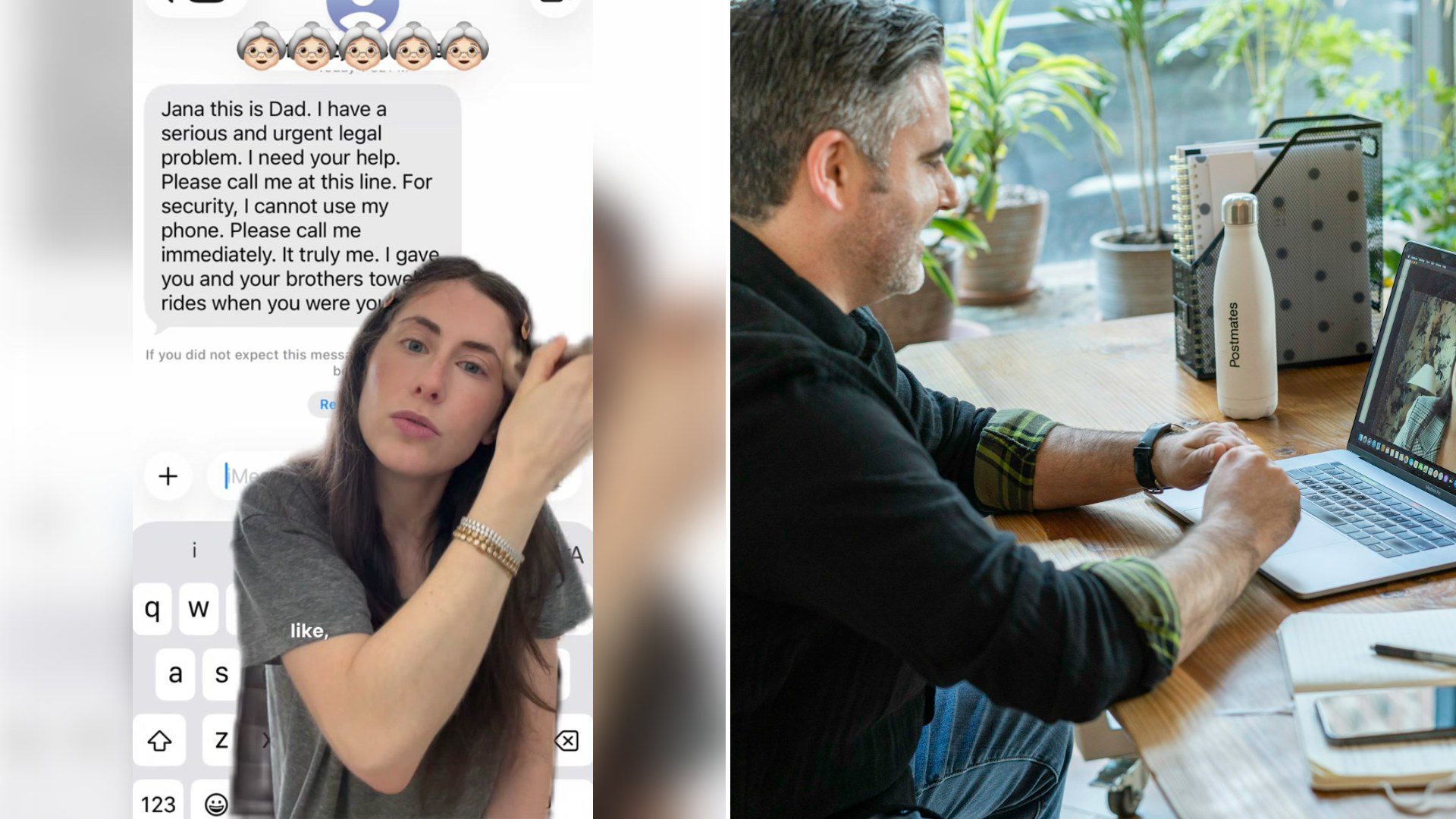
Jana was on a flight from New York to Washington state and had just connected to the plane’s internet when a text came in from a number she did not know. “Jana this is Dad. I have a serious and urgent legal problem. I need your help. Please call me at this line. For security, I cannot use my phone.” To prove it was him, the sender added a family memory: the “towel rides” he gave her and her two older brothers after baths, dragging them across the floor wrapped in a towel.
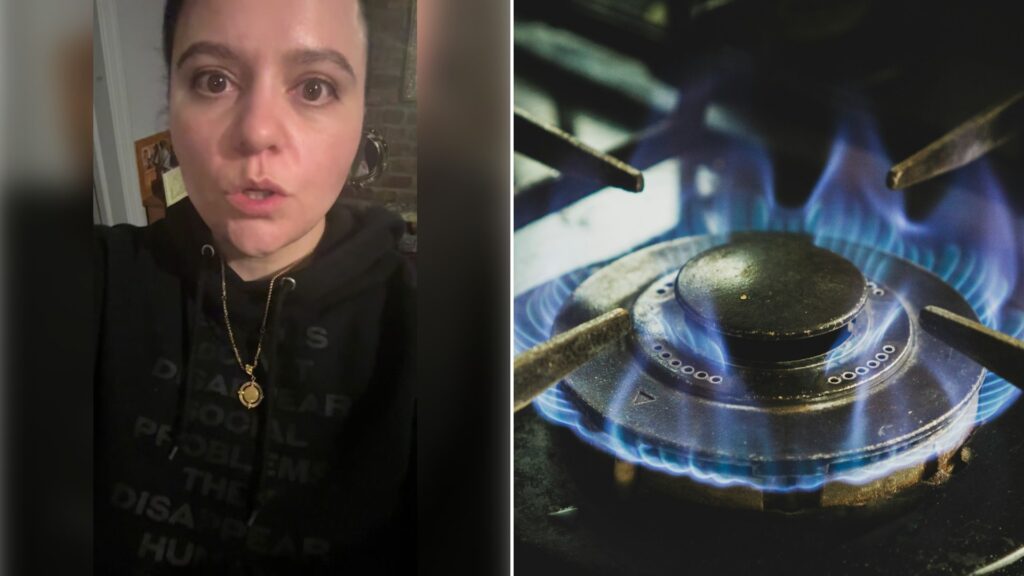
Jana, a lawyer who posts on TikTok as @janarosejana, showed the texts and read out the email that followed in a video posted September 26, 2026. Her caption says where it was heading: she “had to convince my dad not to book a flight to DC to hand deliver FBI Agent Gumpert a check for $300,000.”
“Are you getting arrested?” she texted back. He answered that he could not explain by text and was using the phone of his aunt, who Jana says is in her 90s. She could not call from the plane, so she told him to email, and not from his own account, because “I’m a lawyer. I’m not your lawyer. We don’t have attorney client privilege.”
Fifty minutes later, from the shared account of the band he plays drums in (he is “nearly 70,” she says), came what she calls “the longest email of my entire life,” subject line “Highly Confidential.”
The email, dated 7/16/26 on screen, covers three weeks. It started, he wrote, with a call from “AmEx credit” saying someone in the Washington, D.C. area had tried to buy “9 guns and 20 rounds of ammo” online with a card in his name. The purchase was blocked and he was “connected to the FBI.”
He wrote that he was told the purchase might be tied to a money laundering network and that his name and address were on an offshore account holding $4 million. He signed a confidentiality agreement. “They classified me as a suspect,” he wrote. “For the next 3 weeks I fulfilled every requirement,” including Zoom video meetings and a check in “every 3 hours with my location.” The lead investigator, the man he knew as Agent Gumpert, “learned to trust me.”
The day before the email, he wrote, the prosecutor’s office “elevated me to a defendant.” He was shown a document to freeze his assets, told he would be picked up and held in a detention center in Washington, and offered bond.
“I told them that I did not want to transfer the $300,000 electronically. I wanted to hand deliver the money to DC. That took them totally off guard. I also want someone to review this but did not tell them this.” After that, he wrote, the people on Zoom turned “extremely unorganized” about where he should bring the money, and no police came. “So I’m either pushing back on the real FBI and they will arrest me, or this is the most elaborate cyber identity theft in history.” Every interview had been on Zoom, he noted, and no agent had come to him or asked him to an office. “They will be calling me back by 4 PM.” Jana says she got the email at about 3:50.
Among about 15 attachments, she says, was the confidentiality agreement he had printed, signed, scanned and sent back. She asked her partner in the next seat to search one thing, “whether or not the FBI ever Zooms.” “Four seconds later,” she says, he told her the FBI never does, and she texted her dad: “It’s a scam.”
“Really?” he wrote back. By her account he was looking up flights and “had somehow collected the $300,000” as a check made out to the FBI. She told him to block the numbers, not to buy a flight, not to call the agent’s line, to report it on a nonemergency line and not 911, “and put the $300,000 back in the bank.” He “doesn’t totally buy it,” she says, so she told him to search “FBI scam” himself. The video does not say whether he had sent any money during the three weeks before that.
Jana opens by saying she and her father do not have “the best of relationships,” though “he’s not a monster of a person,” and that he did not pay toward her college or law school. Once she knew he was not being arrested, she says, she could not stop laughing: “We know that my dad has $300,000, and we know that he’s been saving it for a rainy day.” She adds, “Not funny to be scammed, it’s only funny because it’s my dad.”
What Her Dad’s Own Email Gives You to Use With a Parent
Read the email’s checklist to your parents before anyone calls them: a card company that transfers the call to a federal agent, a confidentiality agreement, weeks of video meetings with nobody ever seen in person, location check ins every three hours, and a deadline that afternoon. Her dad wrote every one of those down himself and still was not sure.
Make one family rule: no money moves until one relative has read the paperwork. The email reached Jana because he wanted “someone to review this” and did not tell the callers he was asking.
Pick your proof of identity now. He was texting from a borrowed phone, and the towel rides are how she knew it was him. Agree on a memory like that with your parents, one that has never been posted anywhere, for the day a message arrives from a strange number.
Do not call back on any number the callers supplied. Jana’s instruction was specific: not the agent’s line. Use the number printed on the card, or look up the agency’s public number yourself.
Then follow her order: stop answering, block the numbers, cancel the trip, put the money back, report it on a nonemergency line. Keep every email and attachment for that report.
More from Decluttering Mom
- Parent’s Viral Warning About an AI-Generated FaceTime Scam Targeting Families Is Spreading Fast, Breaking Down Exactly How the Fake Call Tries to Fool You Into Answering
- Pregnant Mom Thinks a Podcaster Cleared Her Entire Baby Registry, Learns Every Purchase Was Fake, Then Watches More Than 40 Strangers Step In to Buy the Gifts for Real
- Teacher Gets A Huge DOD Deposit Out Of Nowhere, And Her Family Has No Idea Who To Call Before Touching It