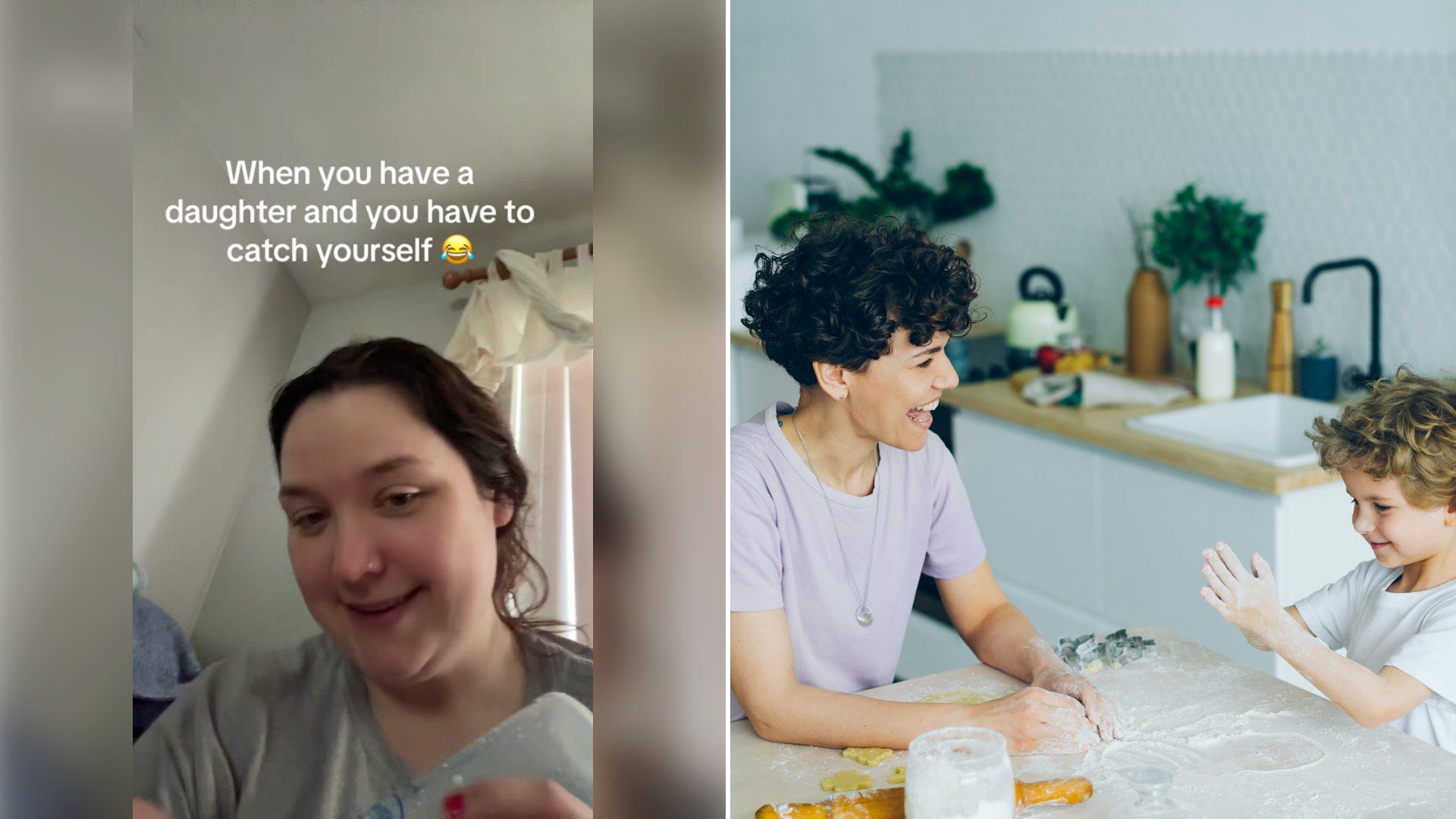
@marisatothemoon did not need a long explanation for the video she posted in September. The text sitting over her face for the full 28 seconds does the job: “When you have a daughter and you have to catch yourself,” followed by a laughing emoji.
The clip is filmed from below, the way a phone looks when it is propped in a lap. She is in a gray T shirt with her dark hair pulled back, a window with cream curtains behind her, and she spends nearly all of it looking down past the camera, talking and smiling. About halfway through, her eyes go wide and her mouth drops open before she looks back down and carries on. Near the end she breaks into a grin.
The caption is where she spells out what she means. “Girl moms gotta watch ourselves lol,” she wrote. “I’m still gonna call her my beauty girl, but she needs to know that she is so much more than what she looks like at the same time.” She tagged it #daughter and #girlmom and closed with two red hearts.
It is a small confession, and a specific one. She is not announcing that she will stop telling her daughter she is beautiful. She says plainly that the nickname stays. What she is catching is the habit underneath it, the way praise for a little girl can slide toward appearance every time unless a parent is paying attention. Her fix is in the last four words of the caption: “at the same time.” Both things get said.
That balance is what makes her post useful for other moms of daughters, because it does not ask anyone to give up a pet name they love. It asks them to add to it. Here is what that can look like in an ordinary day.
Keep the nickname and widen the list. There is nothing wrong with “beauty girl.” It simply should not be the only title she hears. Rotating in “my brave girl,” “my funny girl” or “my hard worker” gives a child several answers to the question of who she is, and none of them depend on a mirror.
Pair the compliment. When “you look so pretty” comes out, and it will, finish the sentence with something she did. “You look so pretty, and you picked that whole outfit yourself.” “I love your hair today, and I love how kind you were to your friend.” The first half is affection. The second half tells her what her mom notices.
Get specific about effort. General praise fades quickly, while a concrete observation sticks. “You kept working on that puzzle until it clicked” or “you asked a really good question at dinner” points at persistence and curiosity, things she controls and can do again tomorrow.
Catch it with a laugh. The tone of her post matters as much as the message. She writes “lol” and adds a laughing emoji. A mom who notices that every compliment this morning was about a dress does not need to feel guilty or rehearse a script. She can just add the missing half and move on.
Listen to the self talk, too. Children hear how the adults around them describe their own looks. A mom who tells her daughter she is more than her appearance and then criticizes her own reflection is sending two messages. Saying something neutral or kind about herself out loud is part of the same habit.
Bring relatives in gently. Grandparents, aunts and family friends often greet a little girl with a comment about her dress or her curls. Nobody needs a lecture. A simple nudge works, such as “ask her what she built today” or “she has a new favorite book she wants to tell you about.”
Make it a bedtime sentence. One line at lights out about something she did that day, such as how she helped, what she figured out or what made everyone laugh, takes ten seconds and guarantees the other half of the message gets said daily.
None of this cancels out the sweetness of telling a daughter she is beautiful, and this mom is clear that she has no plans to stop. Her point is the part that comes after the comma: “she needs to know that she is so much more than what she looks like.”
More from Decluttering Mom
- Mom Writes a Ten Second Letter to Her Daughter Thanking Her for Loving Her Through the Heartbreak and the Days She Says She Was Hanging on by a Thread
- My Life Flashed Before My Eyes Talking To My Daughter About Boys
- Girl Mom Films Her Husband Coming Home and Gets About Three Full Seconds With Him Before Their Daughter Cuts In With What About Me and She Says She Would Not Have It Any Other Way