

Every parent has served a meal that did not quite work out. One dad found out about his the honest way, from his toddler daughter, who had very strong feelings about her pasta and not quite enough words to explain them.

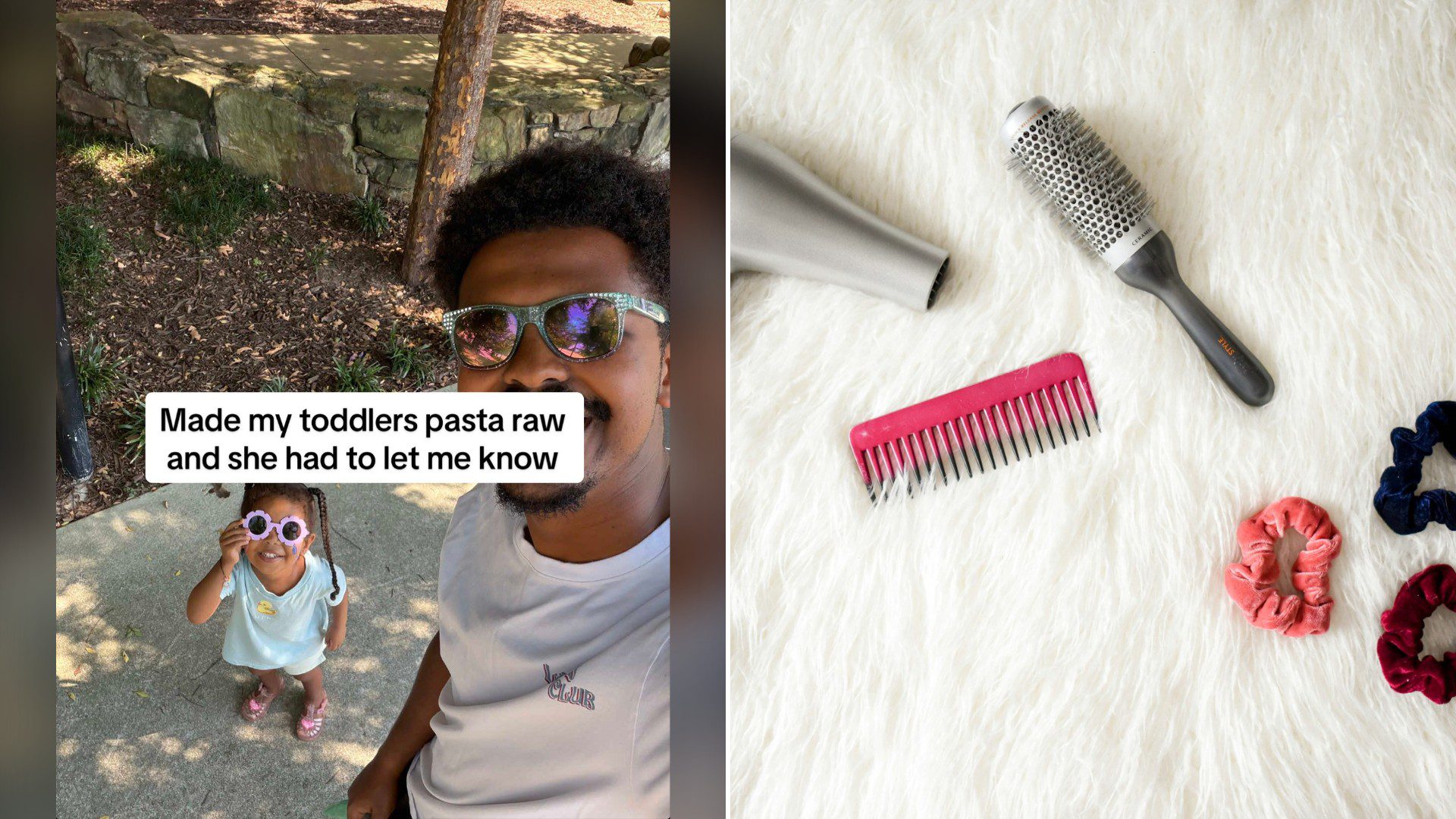
Dad and creator @naz.habte shares the whole conversation, which happens while he is busy styling her curly hair at the table.
@naz.habte
A hair day and a pasta problem
The scene is a plain home kitchen table. Dad, wearing a San Antonio Spurs jersey, stands behind his little girl and works on her curly hair. A yellow tub of hair product and a few hair ties sit on the table, and colorful artwork is taped to the wall behind them. Her plate of pasta is in front of her, and she is clearly not happy with it.
As the on screen text explains, he had undercooked her pasta, and she was trying to find the words to tell him. She starts mid sentence: “Because this one is too fresh.” Then she checks that he understands, asking, “You know what fresh means?”
Finding the right word
Dad says he knows what fresh means, but she is not done explaining. She tells him it means “not ready,” that it is “like it’s defrosted,” and that it means “like not good.” She is working hard to describe a texture she does not have a word for yet, and she gets surprisingly close.
Instead of brushing her off, Dad puts the hair tools down and says, “Let me try this.” He samples her pasta with a spoon, and a loud crunch is clearly heard. “You see!” she says. He answers, “You’re right. They’re not ready.” He asks whether all of them are like that, and she says, “Yep!” He finishes with a simple apology: “You’re right. My bad on your pasta.”
It is a small moment, but it is a good one. A toddler said something was wrong, a parent listened, checked it out for himself and admitted she was right.
What this moment teaches
Toddlers often use the words they already know to describe something new. “Fresh” and “defrosted” are not exactly accurate, but they point in the right direction. When a parent takes the time to work out what a child means, it shows her that her words matter, and it encourages her to keep explaining herself.
The apology matters too. Children learn how to handle mistakes by watching adults handle theirs. A calm “my bad” shows that being wrong is not a big deal and that fixing it is what counts.
How to cook pasta that is ready every time
Undercooked pasta happens to everyone, especially on a busy night when kids are tugging at your sleeve. A few habits can help.
- Start with plenty of boiling water. Pasta needs room to move around, and it should go in only once the water is boiling.
- Salt the water. It seasons the pasta from the inside as it cooks.
- Stir early. Give it a stir in the first minute or two so the pieces do not stick together.
- Set a timer. Check the package for the recommended time and set an alarm so you are not guessing.
- Taste before draining. Pull out one piece a minute or two before the timer ends and bite into it. It should be tender all the way through, with no hard, chalky center.
- Save a little pasta water. A splash can loosen a sauce if the pasta seems dry.
Pasta for little kids is often cooked a bit longer than the firm bite many adults like, because it is easier to chew. If your toddler seems to be struggling with her food, that is worth noticing. Cutting pasta into smaller pieces can also make it easier to eat.
Common questions about toddlers and mealtime talk
Why do toddlers use words that do not quite fit? Their vocabulary is still growing, so they stretch the words they have. It is a normal stage, and it often leads to the funniest things kids say.
Should I always agree with my toddler’s complaints about food? Not always, but it helps to listen first. In this case a quick taste settled the question. If a meal is fine and your child just wants something else, you can acknowledge her feelings and still keep dinner moving.
How can I help my child describe what she is feeling or tasting? Offer a few words. You might say, “Is it hard? Crunchy? Too hot?” Giving choices helps her learn new vocabulary without pressure.
The takeaway
Sometimes the best feedback in the house comes from the smallest person at the table. When your child tells you something is not right, even in her own words, it is worth stopping to listen. You might hear a crunch, and you might owe her a pasta apology.
Credit for the original post goes to @naz.habte on TikTok.