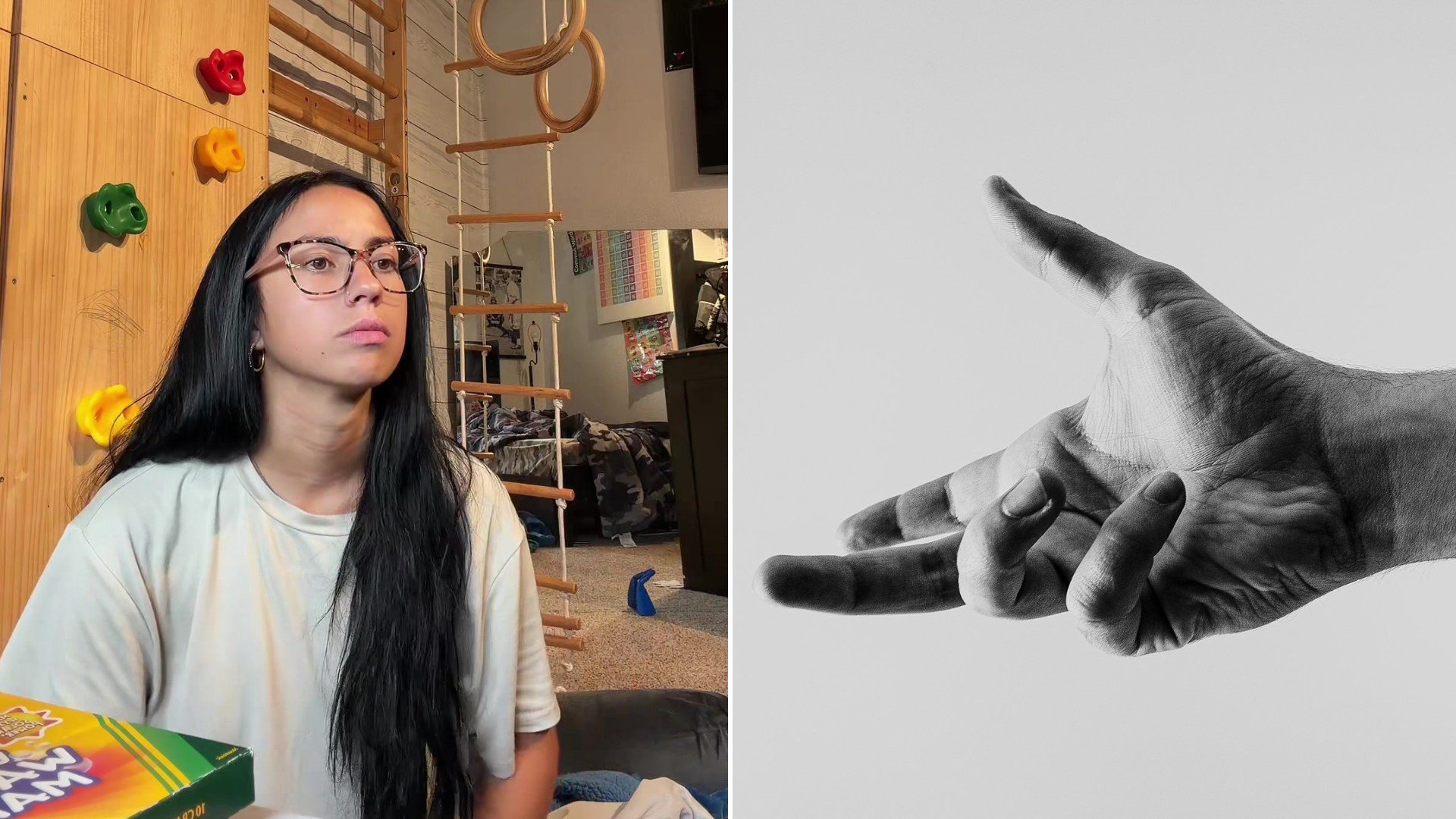
A deaf mother on TikTok is drawing widespread praise for a video showing her calmly, clearly disciplining her son after a moment of frustration over losing a game, using sign language to lay out his options and expectations with striking precision.
@brittneynolte Emotionally regulating boys that dont like to lose…. is not for the weak #parenting #signlanguage #deaf #boymom #asl ♬ original sound – Brittney
“Emotionally regulating boys that don’t like to lose… is not for the weak,” she wrote in her caption, tagged with #parenting, #signlanguage, #deaf, #boymom, and #asl. The video captures her son struggling with a familiar childhood flashpoint, difficulty accepting defeat during a game, and shows the mother working through it with him calmly but firmly, communicating in American Sign Language throughout.
What makes the video particularly striking is the clarity of the communication itself. Rather than raising her voice or escalating alongside her son’s frustration, the mother outlines his options and what’s expected of him with visible precision, using ASL to spell out the situation in a way that leaves little room for confusion or negotiation. There’s something notably effective about the structure sign language imposes on a disciplinary conversation: it requires deliberate, sequential communication, one clear sign or phrase at a time, which naturally slows the exchange down and keeps it from spiraling into the kind of back-and-forth escalation that can happen in a heated verbal argument between a frustrated child and a frustrated parent.
Difficulty losing gracefully is an almost universal challenge among young children, tied to still-developing emotional regulation skills and a natural, age-appropriate difficulty processing disappointment. Boys in particular are often the subject of parenting content addressing this exact struggle, since a competitive streak paired with limited emotional vocabulary can turn a simple game into a full-blown meltdown in seconds. The mother’s caption, dryly noting that this kind of regulation “is not for the weak,” speaks to just how much patience and consistency it takes to walk a child through these moments without simply shutting the behavior down through punishment alone.
Her approach, laying out clear options and expectations rather than issuing a blanket punishment, reflects a style of discipline that leans heavily on structure and predictability. Rather than a vague “calm down” or an open-ended consequence, she appears to give her son concrete choices, a method that gives a dysregulated child some sense of control over the outcome, while still making clear that certain behavior, presumably poor sportsmanship or an outburst over losing, isn’t acceptable and has consequences attached to it.
The video also offers viewers a rare, normalized glimpse into parenting within a Deaf household, where sign language isn’t a special accommodation deployed for a single moment but simply the family’s everyday mode of communication, including during discipline. For many viewers, watching a full, nuanced parenting interaction conducted entirely in ASL, with captions or context making the exchange accessible to hearing audiences, offers both representation and a genuinely useful window into how clearly structured communication can support emotional regulation in kids, regardless of the language being used to deliver it.
The video’s enormous reach, nearly 7.8 million views, and the creator’s substantial following reflect how much this particular combination, effective parenting technique paired with authentic representation of Deaf family life, resonated with a broad audience well beyond the Deaf community itself.
Helping Kids Handle Losing With Grace
Learning to lose gracefully is a skill most children build gradually, not something they arrive with naturally, and it often takes repeated, patient guidance before it sticks. Child development experts generally recommend giving kids clear, calm language for their disappointment in the moment, rather than dismissing or minimizing the feeling, since naming an emotion is often the first step toward regulating it. Offering structured choices, as this mother did, can help a frustrated child feel some sense of agency even while a boundary is being firmly held. Practicing games and activities specifically designed around taking turns and losing, in low-stakes settings, can also help build the skill over time. Ultimately, staying calm and consistent as the adult in the moment, even when a child is not, tends to model the exact regulation skills parents hope their kids will eventually internalize for themselves.