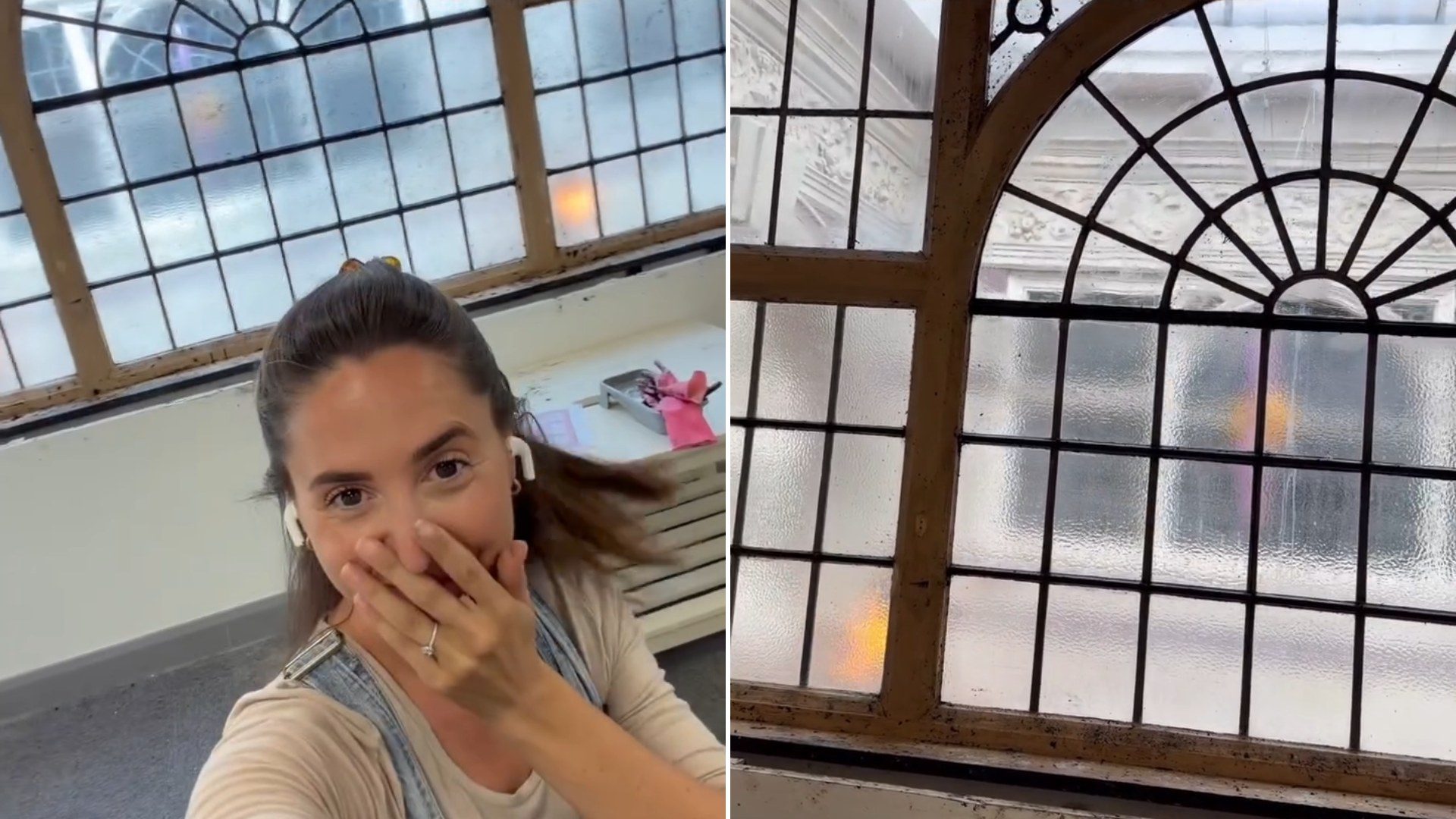
A demolition crew tearing into an interior wall during what was supposed to be a routine remodel found a historic stained window sealed completely inside it, untouched since the wall went up decades earlier. The discovery is documented in the creator’s own Instagram reel, which has drawn attention well past the account’s existing follower base.
Key Points
- The window was found sealed inside an interior wall during a remodel, with no prior indication it was there.
- It had reportedly gone untouched for decades, based on the video.
- The demolition happened during what the creator describes as a routine remodel, not a project aimed at uncovering anything.
- The creator’s Instagram account has about 3.1K followers.
Sealed-up windows like this one tend to surface in houses old enough to have gone through at least one major renovation without the original feature ending up in an architectural salvage yard. When an addition gets built against an exterior wall, or a room gets reconfigured, a window that used to face outside can end up facing directly into a new interior space. Removing it outright carries real risk for older leaded or stained glass, so the simpler move for a past contractor was often to just wall over it and move on to the next job. Building permits and records for that kind of interior change were also far less consistently tracked decades ago than they are now, which is part of why a feature like this can vanish from a home’s known layout entirely, with no record left behind to tip off a future owner or contractor.
That decision effectively freezes the window in place. No sunlight fading the glass over the decades, no re-glazing, no accidental cracks from years of exterior weather exposure. Crews working gut renovations and demolitions in pre-1940s housing stock report finding preserved features like this with some regularity, though most don’t turn up as intact as this one appears to be.
Stained and leaded glass windows in particular carry real value on the architectural salvage market once they’re rediscovered, since original hand-cut and hand-leaded panels are labor-intensive to reproduce and largely impossible to match exactly to a specific building’s era. That’s part of why restoration specialists generally advise against removing an intact panel like this one without a plan already in place, since a piece that survived decades sealed inside a wall can be damaged in minutes by an improper removal.
For now, the window is exposed for the first time in years. Whether it gets restored, reglazed, or built back into the finished room is a decision that falls to the homeowner or the contractor overseeing the project.