A dentist and mom who posts as dena.thedentist shared ten “odd rules” her kids live with at home, and the first one sets the tone for the rest: “Juice is only for special occasions. Water is the default.”
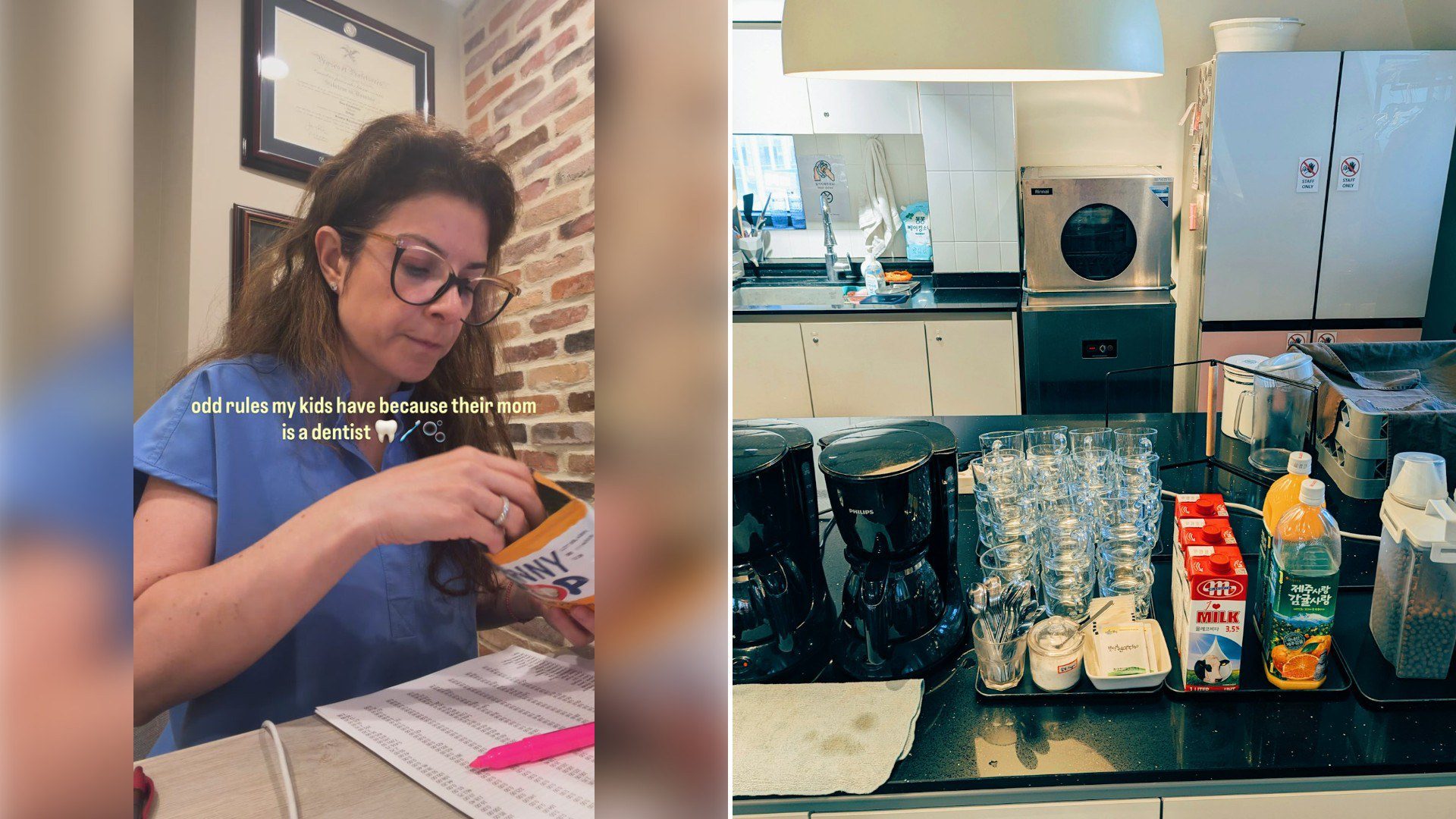
The reel itself is nine seconds long and gives almost nothing away. She sits at a desk in a blue top with paperwork and a pink highlighter in front of her and framed documents on the brick wall behind, snacking from a bag of popcorn while one line of text stays on screen: “odd rules my kids have because their mom is a dentist.” The list is in the caption, numbered one to ten.
After the juice rule comes the one most households will find strangest: “We brush before breakfast, not after.” The third is about what follows a treat: “Everyone drinks water after sweets.”
Several of the rules are about how and when the family eats. “No grazing all day,” she writes. “We eat, then give our teeth a break.” Chewy candy gets its own line: “Sticky gummies and fruit snacks are treats, not everyday snacks.” And there is a backup plan for days away from the bathroom sink: “Xylitol gum after meals if we’re out and can’t brush.”
Bedtime appears twice. Rule six reads, “Bedtime means brushing and flossing. No exceptions.” Rule ten closes the list by saying it again in different words: “Nobody goes to bed without clean teeth, even after the longest day.”
The remaining two are about equipment. “Toothbrushes get replaced every 3 months or after being sick,” she writes, and for kids who play sports, “Sports = mouthguard. Every time.”
She follows the list with a disclaimer. “I’m not a perfect mom, and my kids definitely aren’t perfect patients,” she writes. “But these are the little habits we stick to in our house because I know what can happen when we don’t.”
Read as a whole, the list is less strict than the word “rules” suggests. Nothing on it is banned outright. Juice still shows up on special occasions. Sweets are assumed to happen, which is why there is a rule for what comes after them. Gummies and fruit snacks are still allowed as treats. What she is controlling is how often these things turn up, how long they go on, and what the family does afterward. Water comes up twice, as the everyday drink and as the thing everyone has after sweets.
The wording is worth noticing too. The rules are written as “we,” “everyone” and “nobody,” not as instructions aimed at the children. In her telling, these are house habits that the adults follow as well, which is a much easier thing to hold a child to than a rule that applies only to them.
She does not explain the reasoning behind each rule in the post, so parents who are curious about a particular one, especially brushing before breakfast, have a ready question for their own dentist at the next checkup. In the meantime, the list sorts neatly into things a family can try without much effort.
Four of the rules cost nothing and need no shopping. Making water the default drink, having everyone drink water after something sweet, closing the kitchen between meals instead of allowing all-day snacking, and never skipping the bedtime brush are all changes to routine. A family could start any one of them tonight.
Two of the rules work best when they are tied to a calendar or a bag. Replacing toothbrushes “every 3 months” is easy to forget and easy to automate: set a repeating reminder on a phone, or swap them at the start of each season, and keep a spare pack in the bathroom cabinet so a brush can be changed after an illness without a trip to the store. “Sports = mouthguard. Every time” only holds up if the mouthguard lives in the sports bag and not in a drawer at home.
The gum rule is a packing job. If the plan for meals out is gum when nobody can brush, it needs to be in the car, the diaper bag or a coat pocket before the family leaves the house. She specifies xylitol gum, so check the label when buying it.
The fact that bedtime is on the list twice says which rule she treats as the one that cannot slip. If a household is going to adopt only one thing from the ten, her own emphasis points there: teeth get cleaned before sleep, “even after the longest day,” including the nights when everyone is tired and it would be easier to skip it.
Her closing line is a useful way to think about the whole list. She calls these “little habits,” and says her kids “definitely aren’t perfect patients.” The aim in her house is not a perfect record. It is a short set of defaults that everyone knows, repeated often enough that they stop feeling odd.